Take your time — and keep your options open
The first few months after a divorce are not a good time to sell a jewel. Decisions made on emotion are often regretted later, even if the amount itself was not large. If in doubt, put the ring in an envelope for six months and revisit it then; it costs nothing and keeps all options open.
Also consider alternatives to selling: melting it down into a new piece (for yourself or a child), passing it on within the family, or having it repurposed into something wearable. See repurposing inherited gold for the rationale; this also applies to personal rings. Only when selling truly feels like the right step should you proceed to the practicalities.
The first few months after a divorce are not a good time to sell a jewel.
What a plain gold wedding ring realistically fetches
Most wedding rings are plain gold bands, 14 or 18 carat, without stones. For this type of ring, the price is almost entirely determined by the gold weight. There is no collector's value, no rarity, no maker's premium — the intrinsic value is what counts.
Calculate the intrinsic value as follows: weight in grams × gold fineness × current gold price per gram. For 14-carat, multiply by 0.585; for 18-carat, by 0.750. A buyer will typically pay eighty to ninety-five percent of that (the difference covers melting loss and margin). More on the logic in when a jewel is worth more than its gold price.
Rings with a signed interior (e.g., a Dutch maker like Bonebakker or a renowned French house), with special engravings, or with stones can fetch above the gold price. Older rings (pre-1930) with a specific style are also sometimes sought by collectors. For everything else: it's the gold price, and nothing more.
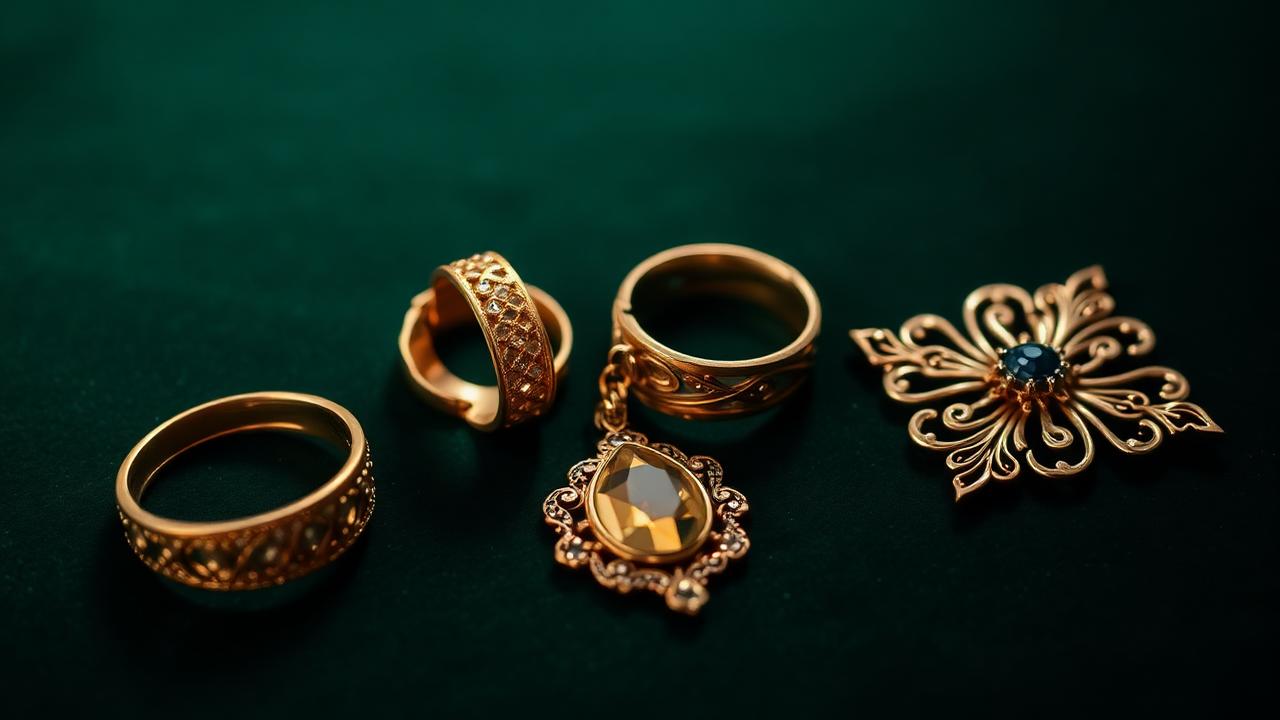
Three avenues: purchase (buy-in), repurposing, or consignment
Purchase (buy-in) at gold price is the quickest route. A vintage-specialised jeweller or a gold buyer will pay out within a day; the price is predictable because it's tied to the daily rate. Important: always ask for an offer from two or three addresses — differences of ten to twenty percent are normal, even for the same weight and fineness. More on the logic in when a jewel is worth more than its gold price.
Repurposing is an intermediate solution: the ring is melted down into something new — a pendant, stud earrings, a ring for a child. Financially, this is not always cheaper than buying a new jewel (melting and processing takes time), but emotionally, it keeps the material in the family. See the repurposing guide.
Consignment is only worthwhile for rings that fetch above the gold price — so signed, exceptionally old, or with stones. For plain gold bands, consignment is not sensible: the dealer makes no profit from it, and you'll just get it back in a drawer. For the broader context of choosing between channels: selling vintage jewellery — the step-by-step guide.
Practical considerations
Only sell the ring that belongs to you. In a community property regime, the wedding ring may formally be joint property until the divorce is finalised; consult a solicitor or notary if there's any doubt. Selling what is joint property before the settlement is complete can be reversed later.
Ask for a written receipt with weight, fineness, and the amount paid. For tax purposes, a single ring is not an issue, but for your own records, it's useful to know what happened, with which ring, on what date. Payment at reputable addresses is by bank transfer; cash payments above a certain amount are no longer common with many buyers and sometimes not even permitted.
If you doubt whether it's worth more than just gold (signed work, unusual style, special stone)? First request a free value estimate based on photographs. If there's an indication, a brief appraisal or second opinion is cheaper than accepting an incorrect offer — the complete overview of that trade-off moment is in appraisal or estimate.