What we mean by an antique wedding ring
In the trade, 'antique' is broader than the museum definition of a hundred years old. For wedding rings, it usually means a ring from the period 1850-1950, so Victorian, Edwardian, art nouveau, art deco or retro. Rings from 1950-1980 fall strictly under 'vintage'. Both categories are interesting, but the manufacturing quality and materials are fundamentally different.
For the purchase of an engagement or wedding ring from these periods, three things are characteristic: the metal is usually 18-carat gold or platinum (not 9-carat, which is a later British mass-produced item); the stone is usually an old diamond with a rose-cut, mine-cut or European-cut; and the setting is handmade, which you can recognise by irregularities and the thickness of the bezel edges.
In the trade, 'antique' is broader than the museum definition of a hundred years old.
Periods and how to distinguish them
Victorian (1837-1901) is a long period with much variation. Early-Victorian (up to 1860) is romantic with symbolic motifs (hearts, anchors, baskets of flowers); Mid-Victorian (1860-1885) is austere, often in black enamel or onyx for mourning rings; Late-Victorian (1885-1901) is exuberant with clusters of diamond and coloured gemstones. Core material: 15- or 18-carat yellow gold.
Edwardian (1901-1915) is the period of fine platinum work with much millegrain, openwork filigree and a central old European or transitional cut diamond. These rings appear white and light, and are structurally more delicate than their solid Victorian predecessors.
Art deco (1920-1935) is geometric, symmetrical, and often uses calibré-set coloured gemstones (sapphire baguettes, emeralds) alongside the central diamond. Retro (1935-1950) returns to solid yellow gold or rose gold with large coloured semi-precious gemstones, and has thicker, more sculptural bands. For style identification: see the style guides.
What to check upon purchase
Examine the inside of the ring: fineness mark, maker's mark, any engravings (initials, wedding date). An original wedding inscription adds provenance and emotional value, but does not carry a market value premium. Ask the seller about the original ring size and whether the piece has been re-sized (enlarged or reduced). Re-sized gold is identifiable with a loupe by a fine solder seam on the underside of the band.
Assess the gemstone: is the setting secure, are the claws straight, is there no wobble? Old European and old mine cuts often have inclusions and are not 'perfect' by modern standards; this is typical of the period and not a reason for rejection. What is a reason for rejection: chips (broken edges), cracks and very deep scratches on the table surface.
Look at the band itself. An Edwardian platinum band worn through on the underside to a thickness of less than a millimetre is a repair project in the making. For daily wear, there must be structural material under the finger, or you must take into account at the time of purchase that the band will need to be reinforced within a few years.
Ring size and re-sizing
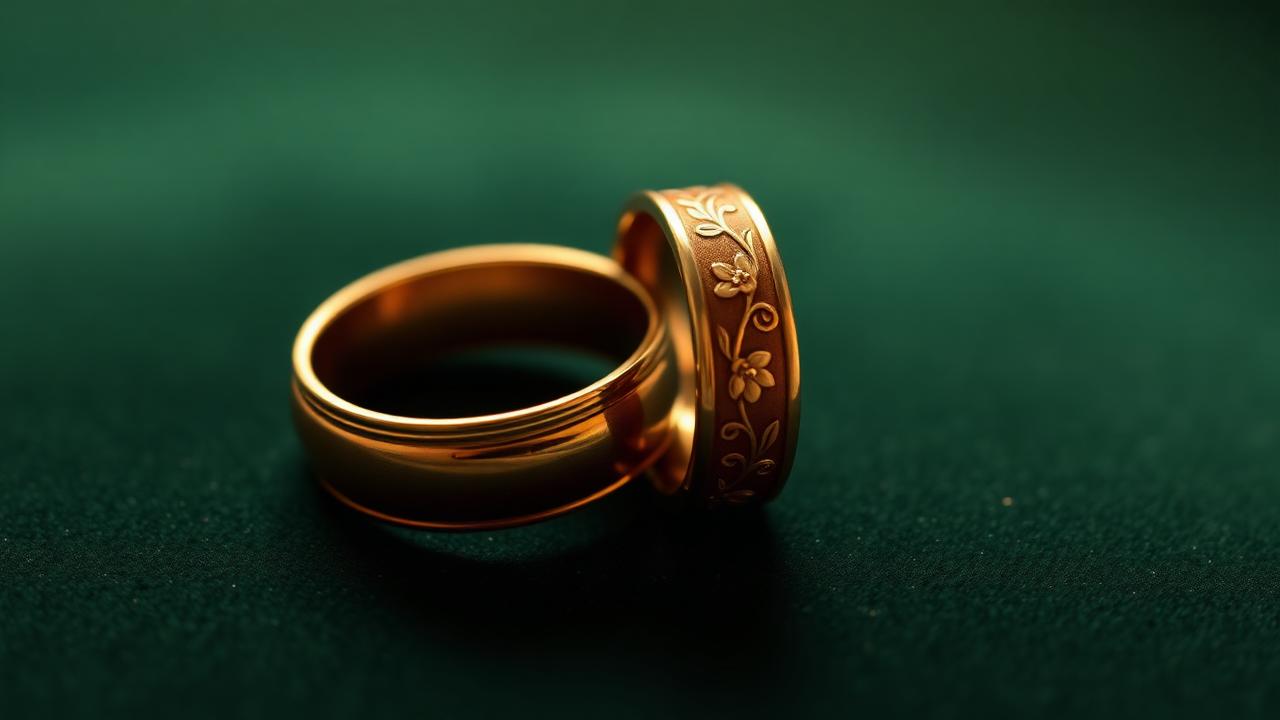
Antique rings exist in the size worn by their first owner. Anyone who needs a different size must have it re-sized (enlarged or reduced). This is possible for almost any ring by half to a full size, and much more for simple plain bands. For rings with a continuous pattern on the band (memory, eternity, calibré-set gemstones), re-sizing is very limited without affecting the design.
Measure your size carefully before purchase; see the ring size guide. For vintage pieces, allow a margin of about half a size for any later re-sizing; for larger discrepancies, ask a goldsmith or appraiser to look at it before purchasing.
Where to find an antique wedding ring
Antique and vintage jewellers, specialized webshops, auction houses, and fairs are the regular channels. In the Netherlands, you can find specialized addresses via our address guide. For international purchases, London (Bond Street, Grays Antique Centre) has traditionally been the centre for Edwardian and art deco pieces; Paris for French art deco; Antwerp for Flemish and Belgian pieces.
Marketplaces and online auctions offer lower prices but also higher risks of incorrect dating, concealed repairs, or fake gemstones. Buy there only from sellers with a return policy and an explicit description of fineness, cut, and period. For more expensive purchases (from a few thousand euros), an appraisal beforehand is a wise investment.
Maintenance for everyday wear
An antique ring for daily use should be taken off during heavy manual work, exercise, and showering (soap can damage old settings over time). Polish with a soft cloth, not with aggressive cleaners; see the maintenance guide. Have the setting checked annually by a goldsmith, especially for Edwardian platinum pieces.
Insure the piece based on a recent appraisal value (see insurance guide) and keep a good photo and description. In case of loss of an antique ring, an equivalent replacement is almost impossible, but a good file makes claims processing more accurate.
Budget and value retention
The lower limit for a nice antique gold or platinum ring with a rose-cut or European-cut diamond in the Dutch market is around six hundred euros; for a good Edwardian or art deco solitaire with a stone of half a carat or more, you should expect two to five thousand euros; for larger or signed pieces, the price quickly rises to five-figure sums. When purchasing from a reputable antique dealer, you should expect a correct period description, a fineness statement, and a visible return or guarantee policy.
Antique rings retain their value better than modern mass-produced items because the supply is limited and demand is stable: the intrinsic value of gold and diamond forms a base, while the collector's value of a good period piece is structurally higher. Those who buy and keep for the long term can usually recoup a realistic price upon sale after ten or twenty years; a short-term resale always results in a loss due to sales margins. See when a jewel is worth more than its gold weight for the underlying logic.