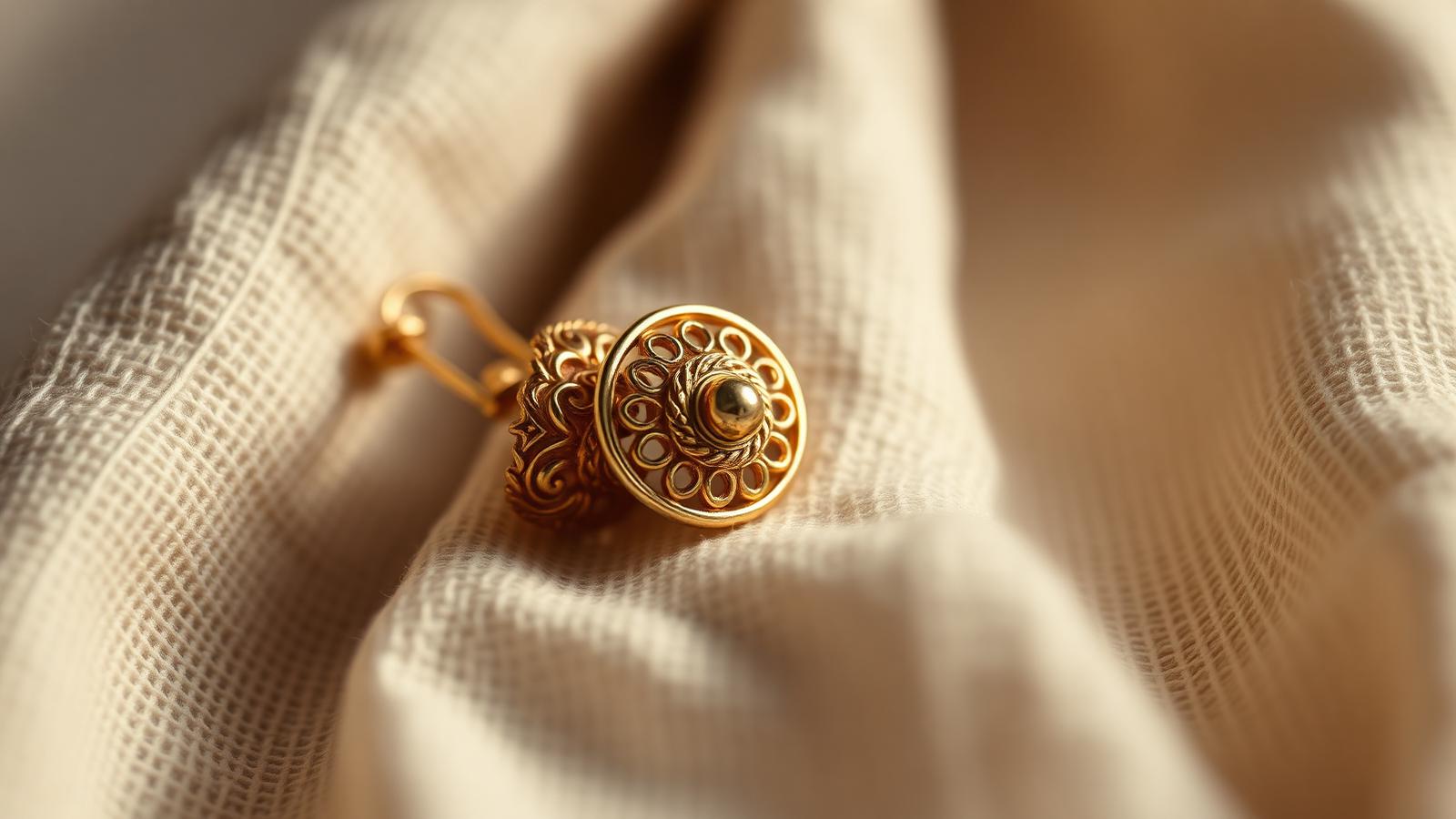
History and meaning
The Zeeland button has been made since the eighteenth century by silversmiths and goldsmiths in Walcheren, Zuid-Beveland and Tholen. It originated as a functional button on men's shirts in regional dress — the distinguishing detail of a wealthy farmer or artisan — and grew into a broad jewellery repertoire: earrings, brooches, pendants, cufflinks, hatpins and the central ornament on strings of coral. Its heyday was between 1830 and 1900, with a second life in the nineteenth and twentieth-century regionalism movement.
Socially, the button conveyed status. Large buttons with a double sphere or enamelled heart belonged to bridal wear and Sunday attire; smaller models for everyday clothing. Inheritance passed through the daughters; new pieces were often made with melted-down gold from an older piece, so the material continued to circulate in the family for generations. For the broader context of traditional costume jewellery, see the guide to regional jewellery.
The Zeeland button has been made since the eighteenth century by silversmiths and goldsmiths in Walcheren, Zuid-Beveland and Tholen.
Old versus modern made work
Zeeland buttons are still made today. A modern button from a Zeeland or Schoonhoven goldsmith is not an imitation — it is a living craft that continues in the same tradition. What distinguishes the vintage market is the historical work from the eighteenth and nineteenth centuries: that is a separate collecting market with its own price level.
In addition to continuous artisanal production, there is a category of later tourist versions from the mid and late twentieth century. These are machine or semi-machine made, lighter in execution and lack the fine wire definition of handmade work. They have no historical value but do have use value as a wearable souvenir.
How to recognise age
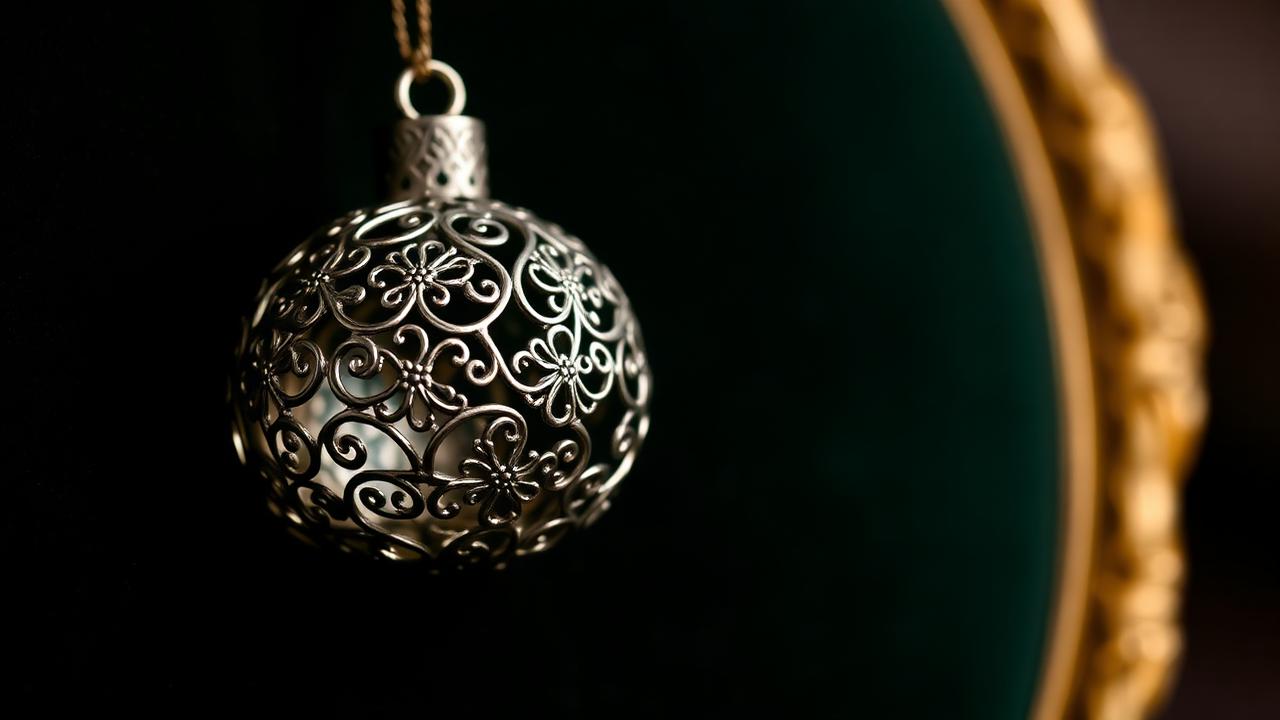
First, look at the wire itself. Historic work uses fine, hand-drawn wire with a slightly irregular diameter — visible under a loupe. Modern but handmade work has uniform wire with machine precision; tourist work often has thicker and sometimes pressed rather than drawn wire. The soldering work further tells the story: with old handmade work, the solder points are small, discreet and sometimes slightly unevenly distributed — with factory-made work, the soldering is more visible and regular.
Next, look at the spherical shape. An old button has a slightly irregular, somewhat flattened sphere with visible manual construction lines. Modern buttons are rounder and more symmetrical. On the back, look for hallmarks: Dutch gold or silver hallmarks with a date letter and a maker's mark (see Dutch hallmarks). The absence of a hallmark on a small piece is not proof of imitation — historically, not every tiny jewel was stamped — but on a large example, you can expect a full set of marks.
Finally, the patina. Old work has a matte, warm gold colour with sometimes subtle oxidation traces in the hollows. Modern work shines more brightly and does not yet have a 'memory'. Be critical of a large, brand new button offered as antique — that is a contradictory story.
Value in bandwith
For nineteenth-century handmade work in solid gold, prices for a single button are in the order of several hundred to well over a thousand euros, depending on weight, size, condition and completeness. Silver examples are more affordable and start low in the double digits for small buttons up to several hundred for large, well-executed pieces. Sets (for example, a pair of earrings plus a brooch) are valued separately.
For modern handmade buttons, the new price of the workshop applies plus what the second-hand market is willing to pay for it — usually a fraction of the new price. Tourist work has virtually no collector's value and mainly follows the metal value. For context on gold clasps and completeness of traditional costume strings, see the value guide hub and the coral price guide.