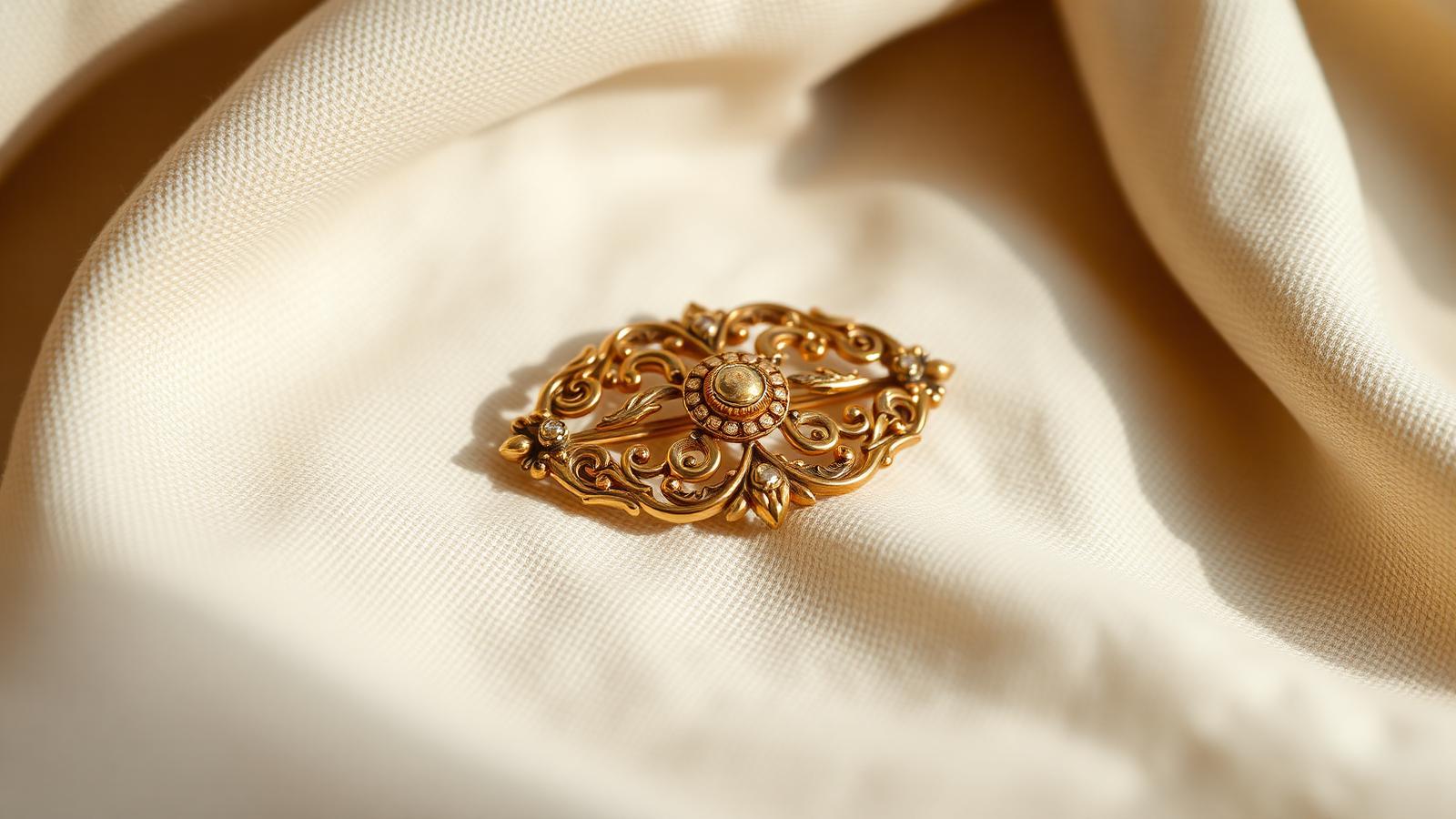
What are doublé and gold-filled?
Doublé (French: doublé d'or, plaqué or) and gold-filled (American, GF) refer to a thick layer of gold mechanically rolled or soldered onto a base metal — usually a copper alloy or brass. The gold layer is significantly thicker than electroplating and can withstand decades to hundreds of years of normal wear without the underlying metal showing through. In the Netherlands, on older pieces, you may see the hallmarks 'DOUBLÉ', 'PLAQUÉ OR', 'ROLLED GOLD', 'RG' or American marks such as '1/20 12K GF' (meaning: 1/20 of the weight is 12-carat gold).
What it is not: solid gold. Therefore: no gold hallmarks (lion, date letter), but one of the aforementioned designations. Anyone who finds a 'gold' heirloom without a Dutch gold hallmark should expect gold-on-base-metal — especially on watch cases, brooch pins, necklace clasps and bracelets.
Doublé (French: doublé d'or, plaqué or) and gold-filled (American, GF) refer to a thick layer of gold mechanically rolled or soldered onto a base metal — usually a copper alloy or brass.
Gold plating — the thin skin
Gold plating (English: gold plating, 'GP') is a much thinner gold layer, electrolytically applied to a base metal. Modern electroplating is measured in micrometres; for common costume jewellery, a layer of 0.5 to 2 microns is typical. This layer visibly wears off with wear — first at contact points (inside of a ring, back of a brooch pin), later also on visible surfaces. Where the underlying metal shows through, you usually see a greyish or reddish colour where the gold was.
Hallmarks: 'GP', 'plated', 'gilt', 'plaqué' (confusingly sometimes also used for thin plating), or no marking at all. Modern plated work without a mark is often identifiable by its sharp machine-made edges and uniform gold colour without patina.
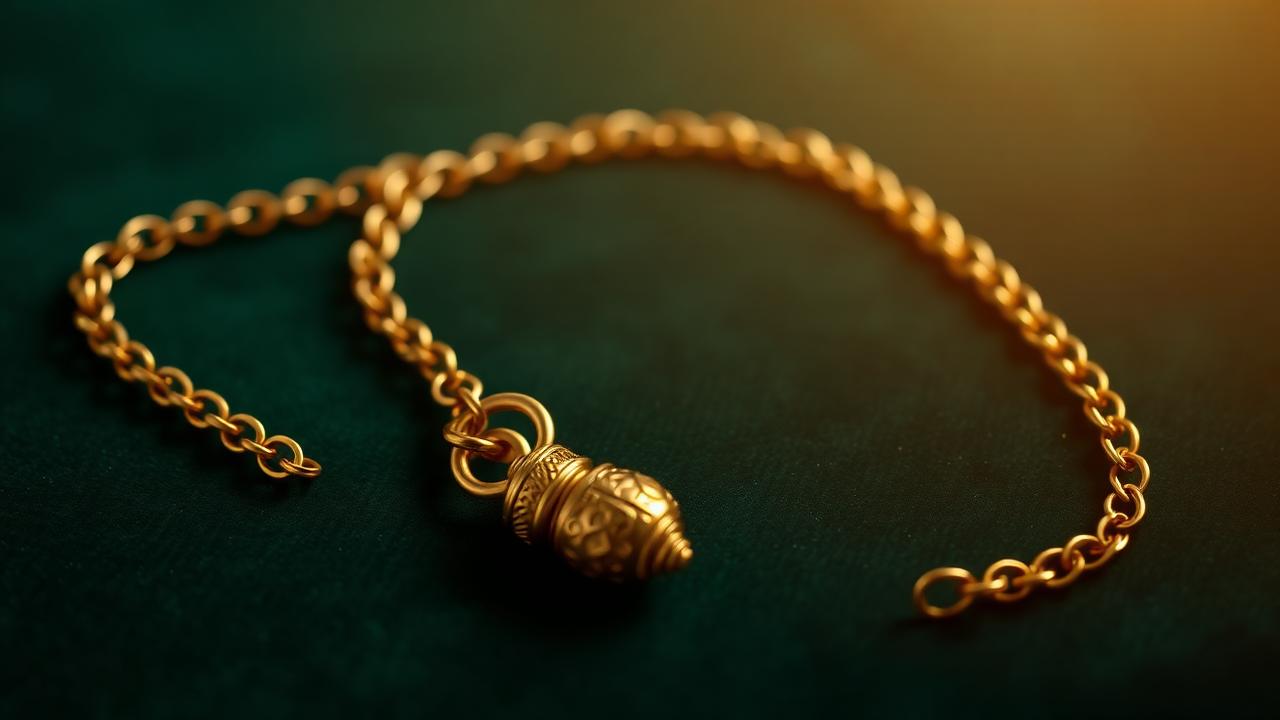
Pinchbeck — a distinct nineteenth-century category
Pinchbeck is named after the London watchmaker Christopher Pinchbeck (c. 1670–1732), who developed a brass alloy that looks remarkably like gold and retains its colour for a long time. In the first half of the nineteenth century, pinchbeck was widely used for jewellery — necklaces, brooches, lockets, watch chains — as an affordable alternative to gold at a time when gold was barely accessible to middle-class customers.
Crucially for the collector's market: early Victorian pinchbeck (roughly 1820–1860) does have its own collector's value. It has become a historical material, associated with a specific jewellery culture — large lockets with hairwork, pendants with forget-me-nots, repoussé bracelets. Later nineteenth-century pinchbeck and twentieth-century imitations are not in the same commercial category. For pieces from this period, a specialist with knowledge of early Victorian work is advisable.
How to identify it
Magnifying glass first. Look for hallmarks on clasps, brooch pins, ring bands, or the back. The presence of a Dutch gold hallmark (lion) excludes doublé/plated/pinchbeck — then it is solid gold. The presence of 'DOUBLÉ', 'RG', 'GF' or similar confirms the doublé category.
Next, look at contact points and wear spots: where the gold layer has worn through, you will see the base metal. With doublé, this takes a long time; with plating, you will see it after years of daily wear. With pinchbeck, the colour does not wear off — the entire alloy is 'gold-like', so you won't find a worn-through spot in the same sense. However, pinchbeck oxidises over time to a deeper coppery yellow that an expert can often recognise from a distance.
For the definitive test between gold and non-gold in doubtful cases: see our guide on identifying real gold at home. For how to read Dutch and foreign fineness marks: the hallmark guide.
Why some pieces do have value
The exceptions to 'not real gold means no value' are important. Early Victorian pinchbeck with hairwork or enamel; large gold-filled American watch chains from the late nineteenth century; high-quality doublé costume jewellery from workshops also known under their own name (see the brands-hub). For these categories, a second appraisal is worthwhile before choosing the melt route — melting doublé or pinchbeck is largely pointless anyway, as the gold yield is minimal.
And even where collector's value is limited, wearability is not. A well-made doublé brooch or necklace is and remains a jewel that fulfils its function — and that is ultimately what jewellery is made for.