What is hairwork?
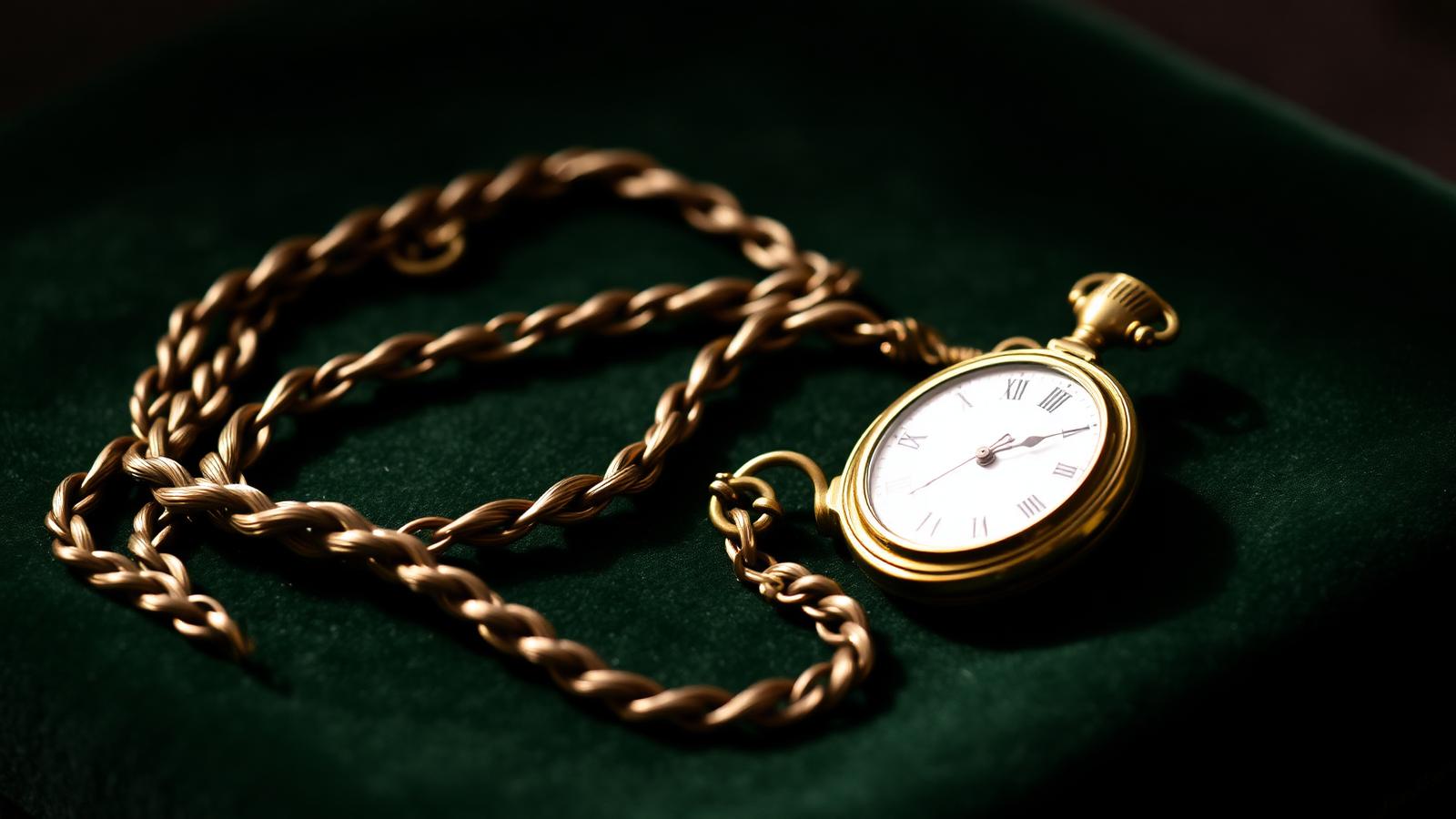
Hairwork (Dutch: haarwerk, German: Haarschmuck) includes jewellery in which human hair is the primary material. It ranged from small inlaid tufts in a locket or ring, to fully braided watch chains, bracelets, and earrings. The hair was processed by specialised hairworkers: a distinct craft within the jewellery sector, with its own techniques and training schools in France, Germany, and England.
In the nineteenth century, it was not uncommon to have a lock of hair incorporated into a jewel as a memento of a love, an engagement, or a deceased person. For mourning, there were specific forms (see mourning jewellery); for love and friendship, likewise. Both categories use the same techniques, but the presentation (black enamel vs. gold setting) reveals the intention.
Hairwork (Dutch: haarwerk, German: Haarschmuck) includes jewellery in which human hair is the primary material.
Techniques — braiding, weaving, table work
There are three main techniques. Palette work is the most common in lockets: the hair is laid flat on a surface, sometimes formed into a miniature scene (flowers, urns, weeping willows). Table work is a more advanced technique where hair is braided on a wooden table with holes and weights into hollow tubes or flat bands; watch chains and bracelets were made this way. Early nineteenth-century Swedish and German work is known for the quality of this braiding.
For recognising high-quality hairwork: the braid is regular, with an even thickness along its length; the clasp is usually a small gold or gold-filled end piece; and the whole feels lighter than expected, as hair is a light material, even in a thick chain.
How to preserve hairwork
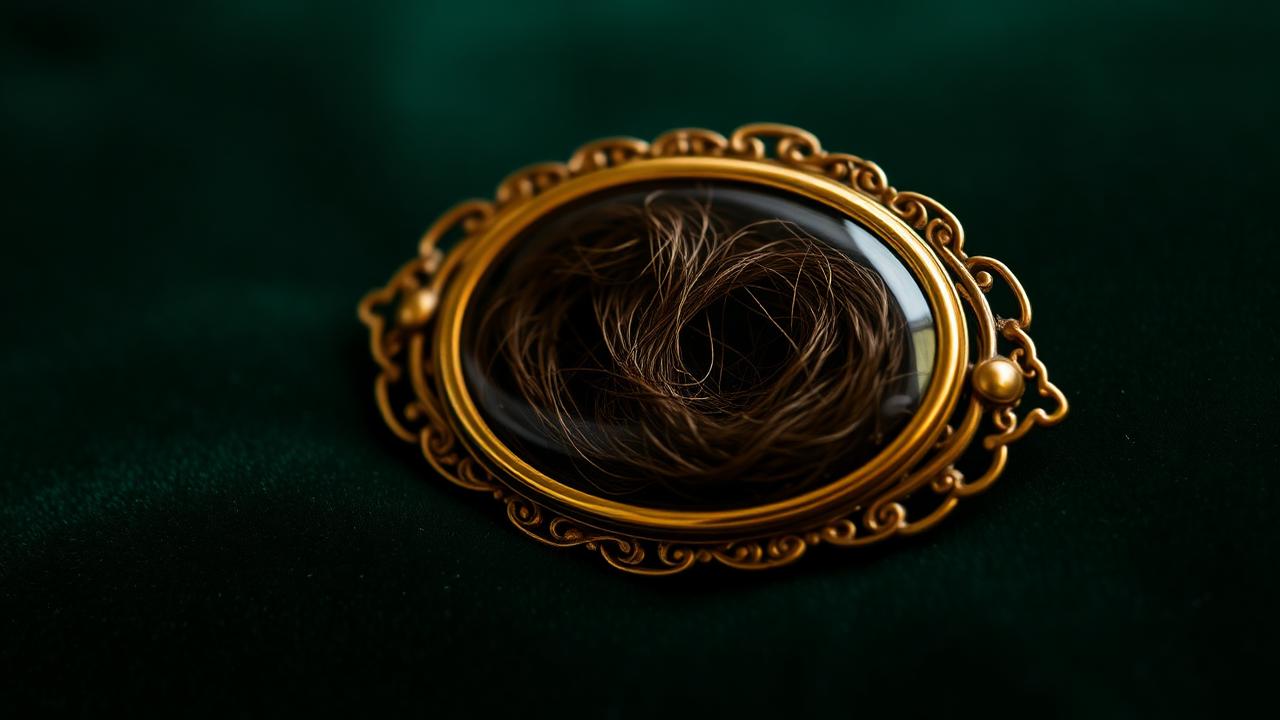
Human hair is surprisingly durable, provided it is stored dry and dark. The greatest risks are UV light (discolouration, embrittlement) and moisture (mould growth, stickiness). Store hairwork jewellery in a dark box with a sachet of silica gel; do not wear it daily. Clean only dry: a soft brush to remove dust. Never use water, soap, or solvents, as the braid can irreversibly discolour or come undone.
For lockets with hair in a glass compartment: the glass can be polished with a soft cloth, but do not open the compartment unless by a specialist, as the original seal is often part of the preservation system. If the inlay has come loose, restoration is possible, but seek a specialist in nineteenth-century hairwork (not every jeweller has this experience).
Family significance
If you inherit a piece of hairwork, you are carrying an intimate memento. For the original owner, this hair (often from a mother, a spouse, a child) was a physical presence, not a curiosity. In contemporary collecting circles, hairwork has only been valued again for its worth in recent decades; museum collections in the Netherlands (the Jewellery Museum, Amsterdam Museum) have important examples of it.
For context on locket forms and which portraits or images appeared in combination with hair, see lockets. For the mourning variants (black enamel, years, initials), see mourning jewellery.