The Dutch silver industry in jewellery
Dutch silverwork for jewellery focused on several recognisable categories: filigree brooches and pendants (especially second half of the nineteenth century), regional clasps and 'oorijzers' (ear irons, see regional jewellery), repoussé and chased work for brooches and belt buckles, and art nouveau and art deco pieces from the early twentieth century. For settings with garnet (Bohemian work) and marcasite, silver became the standard material.
Dutch factory production largely came from a few large houses; those who see the usual hallmark set on heirlooms are often looking at work from that tradition. For the biographical and workshop side of this manufacturer's silver: Van Kempen & Begeer as a maker, and in a broader sense the editorial makers-hub.
Sterling silver (925) is the most common standard in modern Dutch work, but older Dutch pieces were often made in the traditional Dutch silver fineness of 833. Both are real silver; the difference in copper alloy is marginal for value but important for determination.
Dutch silverwork for jewellery focused on several recognisable categories: filigree brooches and pendants (especially second half of the nineteenth century), regional clasps and 'oorijzers' (ear irons, see regional jewellery), repoussé and chased work for brooches and belt buckles, and art nouveau and art deco pieces from the early twentieth century.
Recognising Dutch silver in jewellery
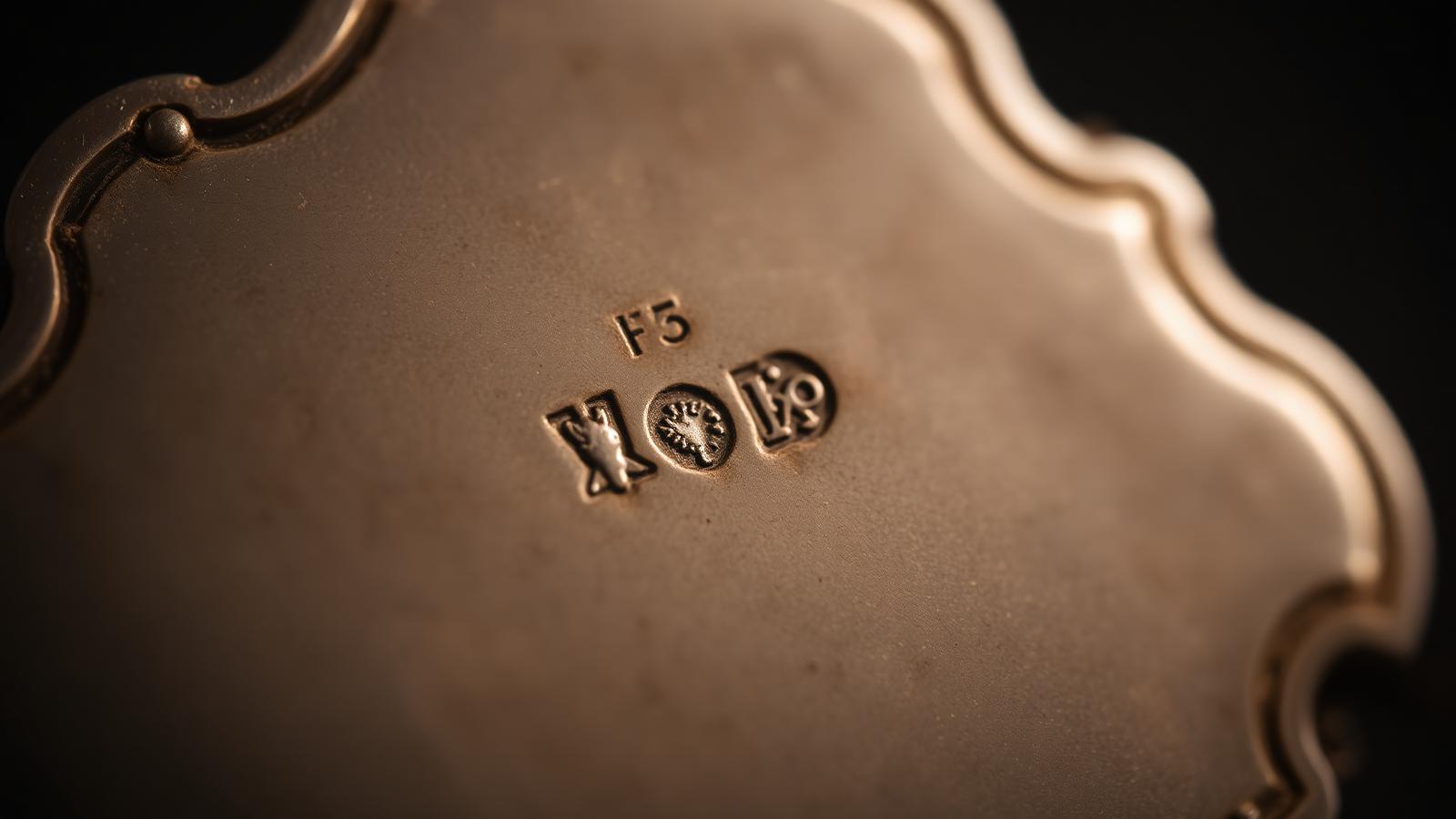
The key is the hallmark set. Since 1814, the Dutch large-work mark has consisted of four marks together on one piece. The first is the fineness mark: a standing lion for first fineness and a walking lion for second fineness. Until 1953, there was a number (1 or 2) under the lion, and the finenesses were 934 (first) and 833 (second); from 1953, this number was replaced by a Roman I or II, and the finenesses became 925 and 835. This difference — Arabic numeral versus Roman numeral under the lion — is immediately a useful dating point: before or after 1953. Next to the fineness mark are the Minerva head as the assay office mark (the letter in the helmet identifies the office), a date letter indicating the year of assaying, and the maker's mark of the manufacturer or goldsmith. Small silverwork (too small for the full set) bears the small sword mark as a small-work mark instead. For the complete explanation per period and per office, see the Dutch hallmark guide.
Besides the hallmarks, there are stylistic pointers. Dutch filigree is generally tighter and more geometric than its Italian counterpart. Dutch repoussé work often shows floral motifs with sharp edge definition — a typical quality of Schoonhoven craftsmanship. Edge and hinge techniques are precise and solid, made to be worn and to last for generations.
Maintenance and recognition of antiquity
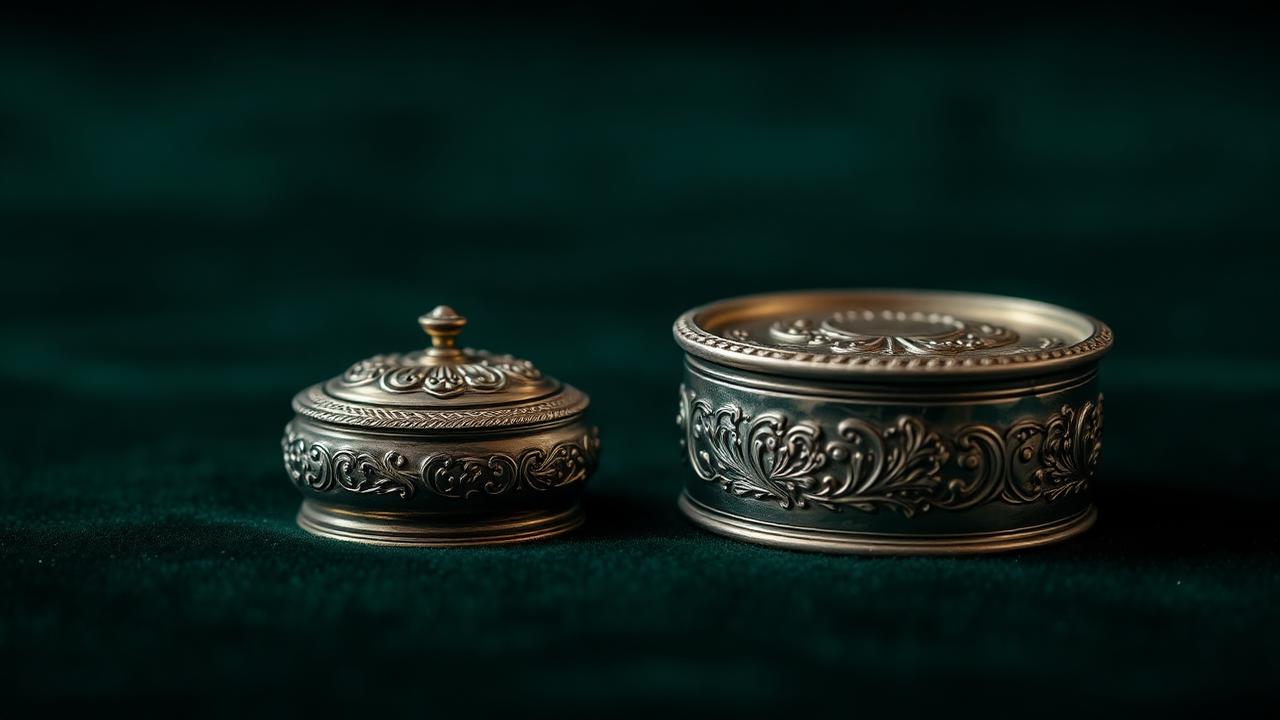
Dutch silver slowly oxidises to a warm patina. Polishing silver to a mirror-new shine removes this patina and (in older pieces) some of the depth effect of repoussé work. For collectible and heritage pieces, careful polishing with a soft cloth and silver polish on the flat areas is enough; the relief seams can remain dark.
More about maintenance in maintenance and care.
Onderhoud en herkenning van oudheid
Nederlands zilver oxideert langzaam tot een warme patina. Wie zilver poetst naar spiegelnieuw glans, verwijdert die patina en (bij oudere stukken) een deel van de dieptewerking van gedreven werk. Voor verzamel- en erfgoedstukken is voorzichtig poetsen met een zachte doek en zilverpolitoer op de vlakke delen genoeg; de reliëfnaden mogen donker blijven.
Meer over onderhoud in onderhoud en verzorging.