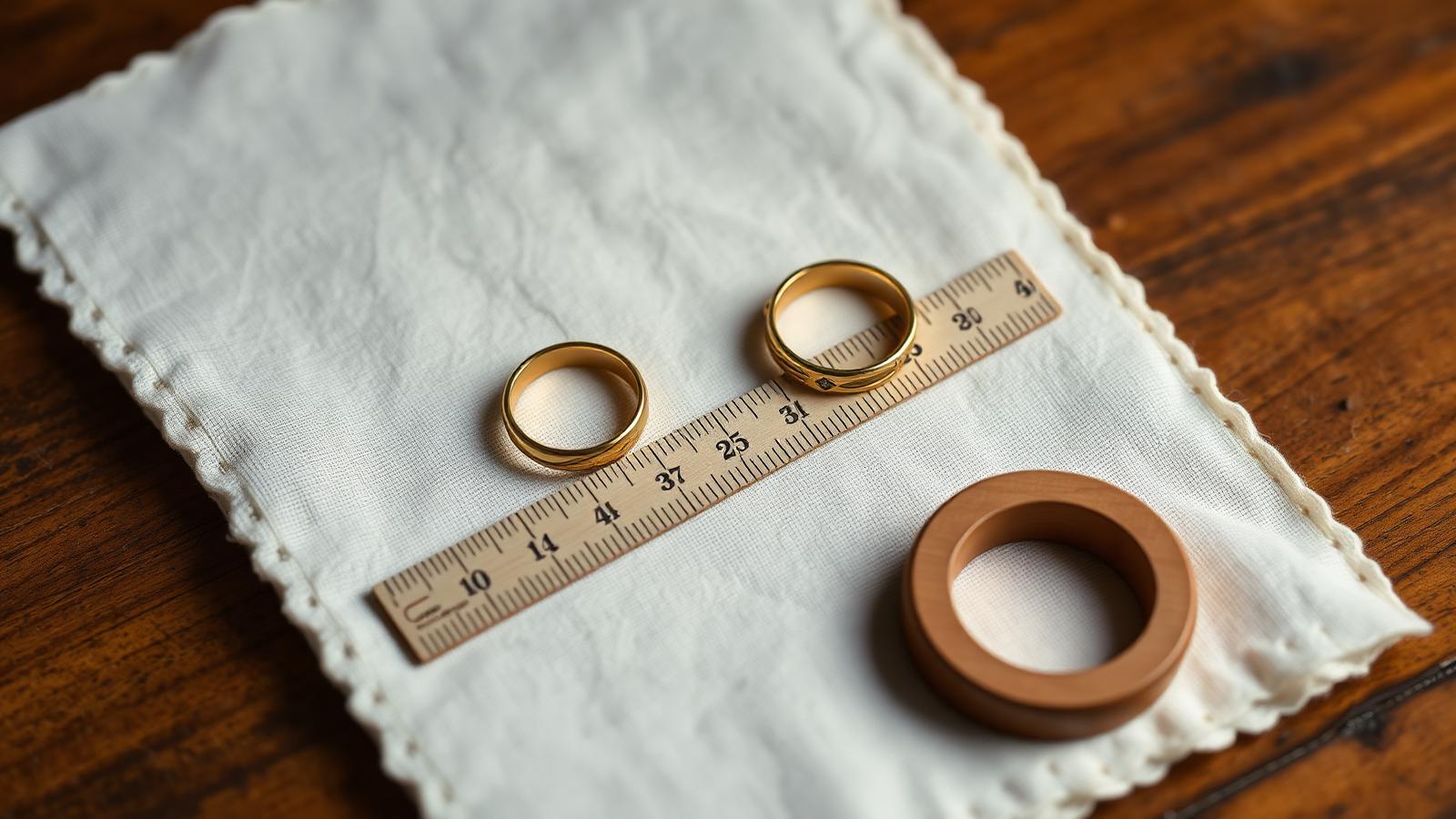
Two Reliable Methods at Home
The simplest way is to use an existing ring that fits well on the same finger. With callipers or an accurate ruler, measure the internal diameter — the cross-section of the open space, measured from the inside of the band to the inside on the opposite side. Multiply that diameter by 3.14 (pi); the number in millimetres is the Dutch ring size. An internal diameter of 17.0 mm thus gives a ring size of 53.
If that doesn't work, the circumference method is the alternative. Take a thin strip of paper about half a centimetre wide, wrap it snugly (but not constrictingly) around the finger where the ring should sit, mark where the strip overlaps, and measure the length in millimetres. That number is directly the ring size. Measure on a day with normal temperature; fingers swell in heat and shrink in cold.
Measure two or three times, at different times of the day, and take the average. Also measure on your dominant hand — which is usually half to a full size larger than the non-dominant one — and for rings with a wide band, account for approximately an extra half size: the wider the band, the tighter the fit feels.
The simplest way is to use an existing ring that fits well on the same finger.
Dutch Size, EU, US, and UK — the Conversion
In the Netherlands, the ring size is equal to the internal circumference in millimetres. Belgium and France use the same series; in the rest of Europe, similar numbers apply (sometimes rounded). The United States and United Kingdom use letters and numbers that have no direct relation to the circumference, making conversion unavoidable.
The table below shows the most common sizes. If your size is between two values, choose the closest one and have the goldsmith fine-tune it; a difference of 0.5 mm is already noticeable for wearing comfort.
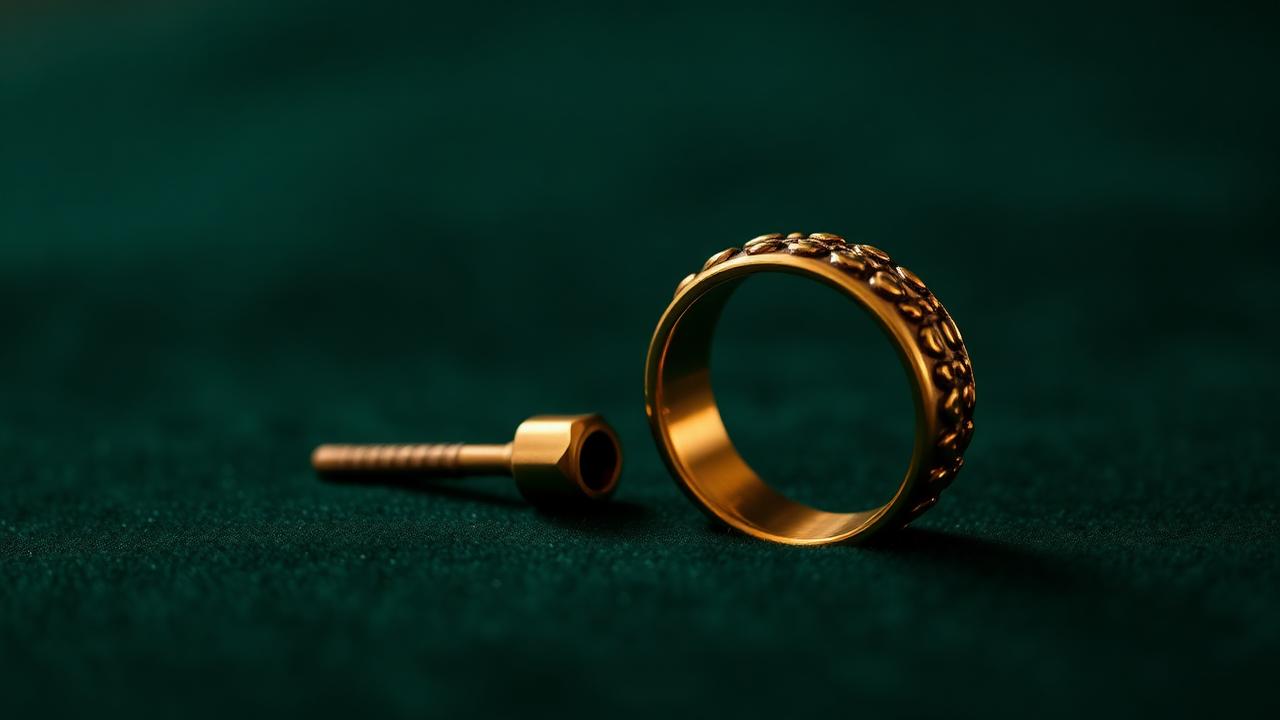
Why a Vintage Ring Sometimes Cannot Be Resized
A plain band ring in gold or silver can usually be made one to two sizes smaller or larger without problems. As soon as the ring is worked or set, it becomes more difficult. With an eternity ring, the stone setting runs all around, without interruption — there is no place where the goldsmith can solder without disturbing a stone. Resizing is then only possible by removing the entire setting and rebuilding it, which is costly and compromises the original signature of the piece.
Hollow bands (popular in the sixties and seventies, and for large rose gold retro rings) are also difficult to resize: the wall is thin, and stretching or soldering causes the band to deform or tear. Rings with engraving or millegrain all around run the same risk — enlarging breaks the pattern, while reducing causes uneven shrinking of the patterns. And with marquise rings, the head size is proportional to the band width; reducing it too much causes the shield to rotate uncomfortably on the finger.
For non-adjustable rings, there are two alternatives: a ring guard (a small internal fitting that reduces the circumference), or accepting that the ring is worn on another finger or on a chain. For more expensive pieces, a sound second opinion from a vintage jewellery specialist is advisable before any alterations are made — a well-intentioned adjustment can reduce collector's value.
If in Doubt: Go Half a Size Up
If you are in doubt between two sizes, take the larger one. A ring that is slightly too loose can easily be corrected with an inexpensive guard or a minor adjustment; a ring that doesn't fit over the knuckle won't go on the finger. For a gift: inquire indirectly (for example, by asking a jeweller for an explanation with an existing ring) or choose a category of jewellery where size does not play a role — more on that in our gift guide.
Overview in one table
| Dutch size (circumference in mm) | Internal Diameter (mm) | US | UK |
|---|---|---|---|
| 48 | 15,3 | 4½ | I |
| 50 | 15,9 | 5¼ | J½ |
| 52 | 16,6 | 6 | L |
| 54 | 17,2 | 6¾ | N |
| 56 | 17,8 | 7½ | O½ |
| 58 | 18,5 | 8¼ | Q |
| 60 | 19,1 | 9 | R½ |
| 62 | 19,7 | 9¾ | T |
| 64 | 20,4 | 10½ | U½ |
| 66 | 21,0 | 11¼ | W |
Vintage rings were often made in half or whole Dutch sizes. American and British sizes are approximate — a goldsmith can fine-tune.