Step 1 — Determine what you have
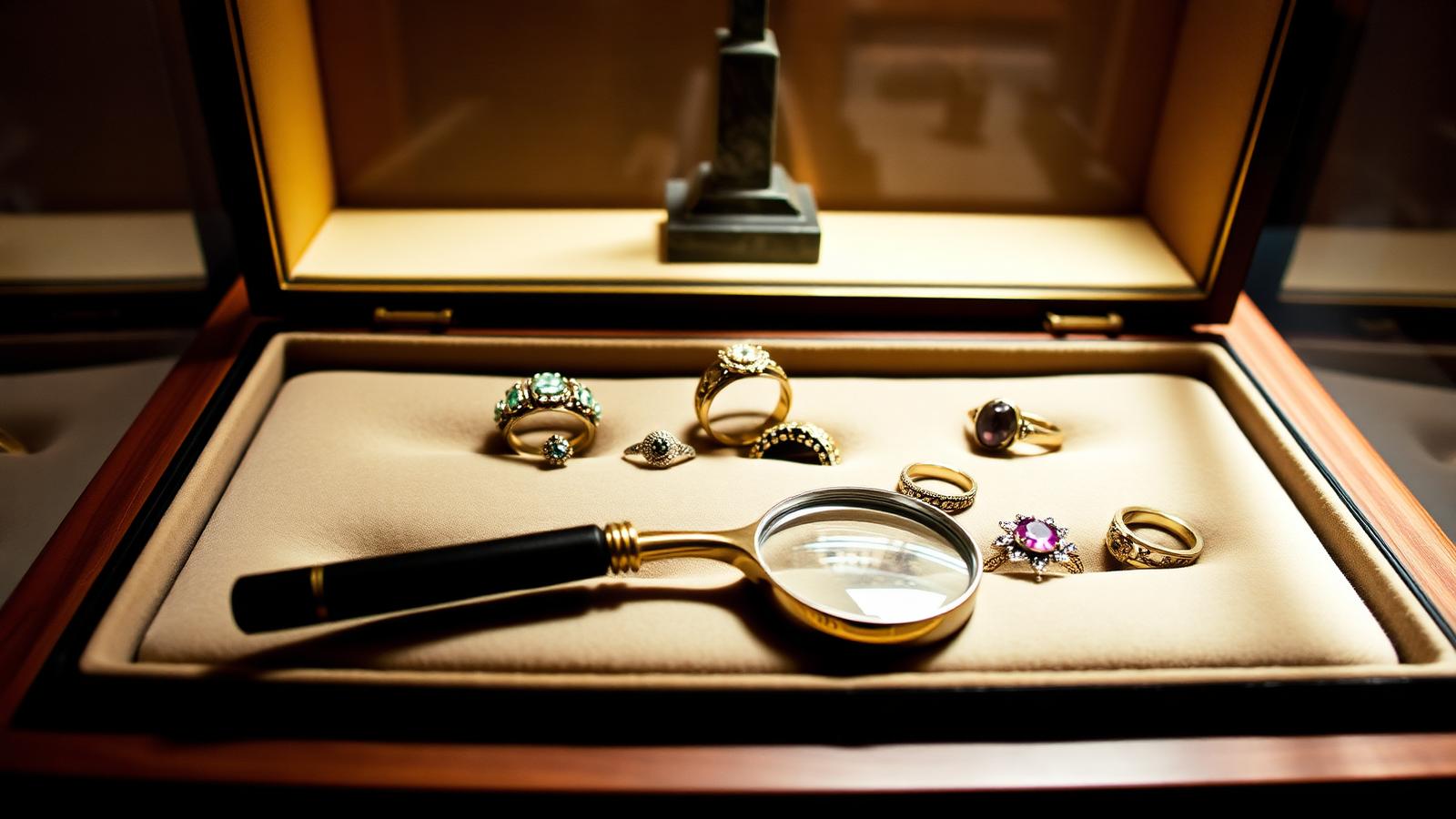
Before a price makes sense, you need to know what you're looking at. Turn the piece over and look for hallmarks: on the inside of a ring shank, on the back of a brooch, on the clasp of a necklace. Photograph these hallmarks in macro mode (phone camera, good lighting, possibly a loupe against the lens). Compare them with the hallmark guide: the fineness mark tells you the material and fineness, the date letter or assay office mark often indicates the country and period, and the maker's mark identifies the maker.
Then estimate the period. A sleek geometric brooch with platinum and old brilliant-cut diamonds points towards art deco; an asymmetrical floral motif with plique-à-jour enamel towards art nouveau. The style guides provide identification points for each period. This initial assessment doesn't have to be final — it mainly determines whether you're dealing with a generic buyer or a specialist.
Before a price makes sense, you need to know what you're looking at.
Step 2 — Document carefully
Good photos are the currency of any remote appraisal. Four shots per piece suffice: top view, side view, close-up of any stones or engraving, and the hallmarks. Use daylight by a window, no flash, and a neutral background (grey or cream). Measure and note sizes (ring size, width of a necklace, height of a brooch) and weight in grams with a kitchen scale.
For the precise method, see photographing jewellery for appraisal. Save all photos for each piece in a folder. If you want to compare multiple offers later, you can send the same package directly without re-photographing.
Step 3 — Request free advice or an appraisal
At this point, you don't yet know what it is or which route makes sense. For most pieces, free advice based on your photos is sufficient: within a few working days, a specialist will tell you what it is and which subsequent route is appropriate — to keep and care for it, to have it appraised, or to sell it through a suitable channel (buyer, auction, or consignment). Where possible, a rough value estimate will be included.
For pieces with a specific reason — insurance, distribution in an estate, a sale with notarial involvement — a sworn appraisal is required. The difference, and when each document is appropriate, is detailed in appraisal or estimate. How such an appraisal works in practice (types, costs, what should be in the report) is covered in having jewellery appraised. Do not skip this step: without an estimate, you won't know if an offer is reasonable.
Step 4 — Choose the right channel
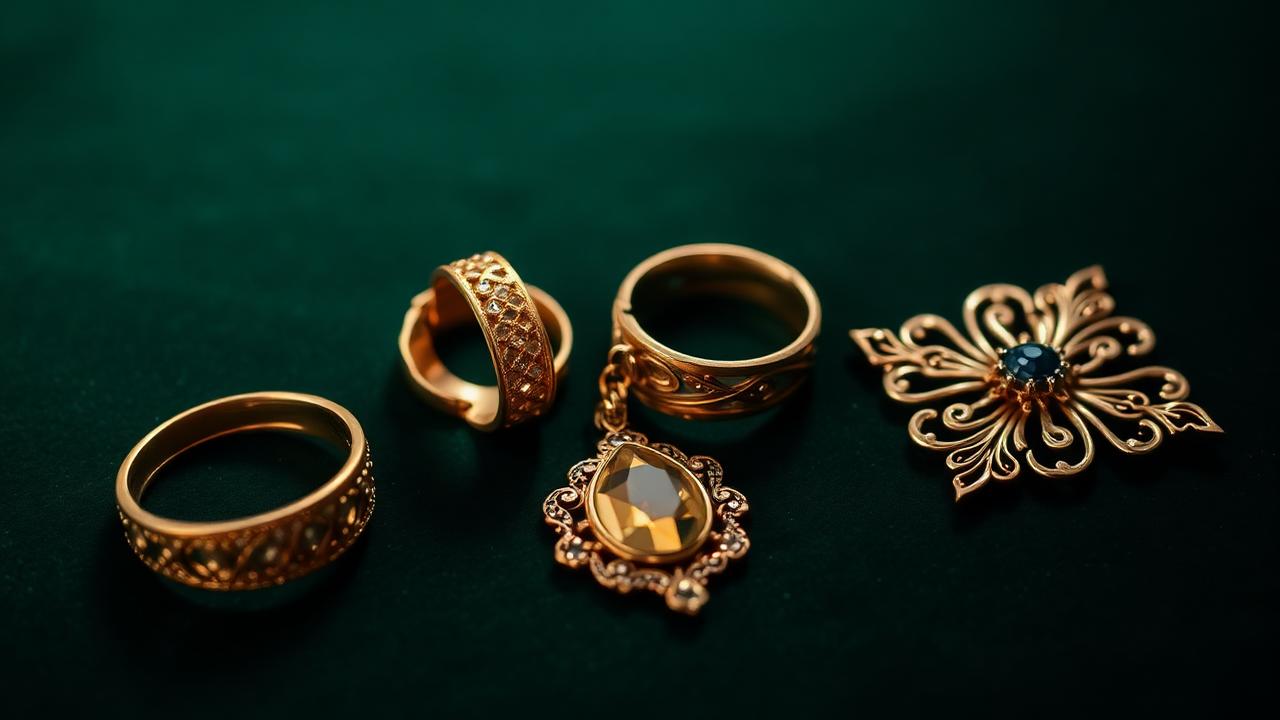
There are four realistic routes: direct purchase by a specialist shop, consignment (the shop sells on your behalf), auction (online or traditional), and private sale. Each channel has its own price, time, and risk profile. Common gold links sell faster by direct purchase than at auction; a signed Art Deco piece, however, might fetch more through consignment or auction than through direct purchase.
The channel comparison sets out the four options side by side, with cost structure and lead time. The general rule: the more unique the piece, the more a specialist or auction channel pays off; the more generic, the less difference there is and the more sensible a quick direct purchase.
Step 5 — Compare at least two offers
For valuable pieces, a comparison is in order. Two independent offers (three is better) for the same piece, with the same photos, quickly show whether an offer is market-conforming or a lowball. Differences of thirty percent between two legitimate buyers are normal; differences by a factor of two mean that one of the two is not specialised in what you are offering.
Don't just consider gross amounts. With consignment and auction, buyer's premium and commission are deducted; with direct purchase, you receive the net price directly into your account. For a complete picture, use the same comparison method as a value guide: what factors does each party consider, and which do they disregard?
Step 6 — Complete the transaction safely
The last step is the most underestimated. A legitimate buyer will ask for identification and register the purchase; this is not distrust but a legal obligation (dealer's register). For distance sales, insured and tracked shipping is appropriate — with the party bearing the shipping costs agreed upon in writing beforehand. For amounts over a few hundred euros, payment is preferably made by bank transfer, not cash.
For details, including how to recognise unsafe patterns in private sales, see selling jewellery safely. Taking this step seriously not only ensures a fair price but also keeps your records clean for any insurance or tax declarations.