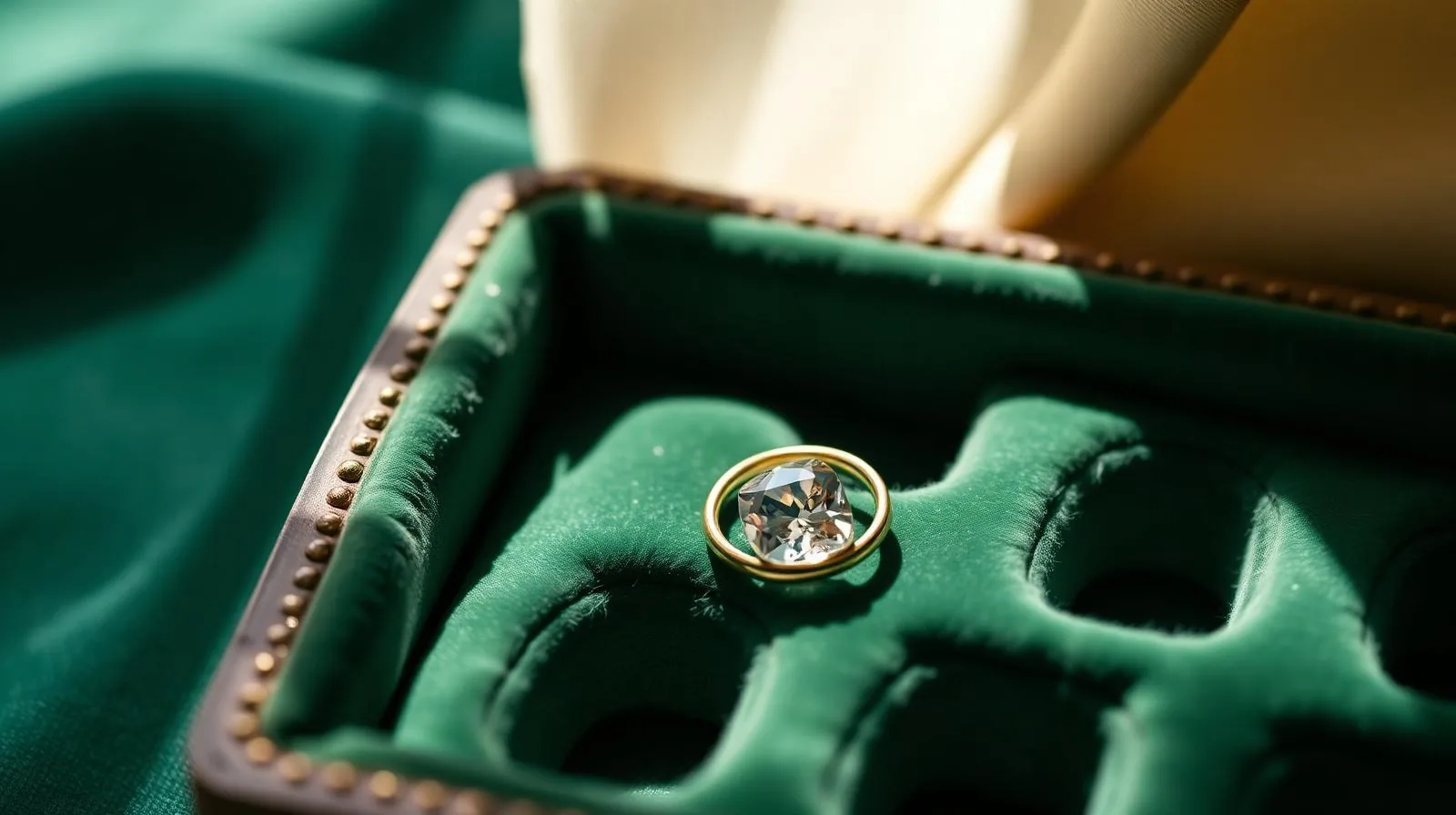
De waardefactoren
Een taxateur weegt bij deze categorie een vast aantal criteria. Hieronder leggen we ze uit, in de volgorde waarin ze doorgaans worden bekeken.
Intrinsic value versus collector's value
For simple rings without added design value, the gold value is the baseline. For anything handmade, signed, or period-typical, a collector's premium is added. Roughly expect a factor of 1.5 to 5 difference between pure melt weight and collector's value for beautiful period work.
Weight and fineness
The caratage is stamped — 14kt (585), 18kt (750), or 22kt (916) are the most common. Weigh the ring on kitchen scales. Deduct an indicative ten to fifteen percent for any stones and paste, and you have a rough estimate of the gold value. For 18kt, the rule is: weight × 0.75 × daily gold price = lower limit.
Recognisable period
Retro (1935–1950). Large gold rings with citrine, aquamarine, or amethyst. The 'tank ring' with asymmetrical band work is a collector's classic.
Mid-century (1950–1965). Classic solitaire rings with old brilliant-cut diamonds. Pure, timeless, consistently in demand.
Bombé & cocktail (1960–1975). Oversized work, often with turquoise, coral, or sculpted gold sections. Strongly increased in the recent market.
Engraving and condition
Personal initials or dates in the inner ring slightly depress the collector's value. Historical engravings (royal dates, guild inscriptions) or goldsmith signatures, however, increase the value. Wear to the inner ring (thinned band), traces of previous enlargement or reduction, and the setting of the stones are heavily weighted. An original setting is more valuable than a modern resetting — even if it is technically superior.