Gold — simply and without polishing powder
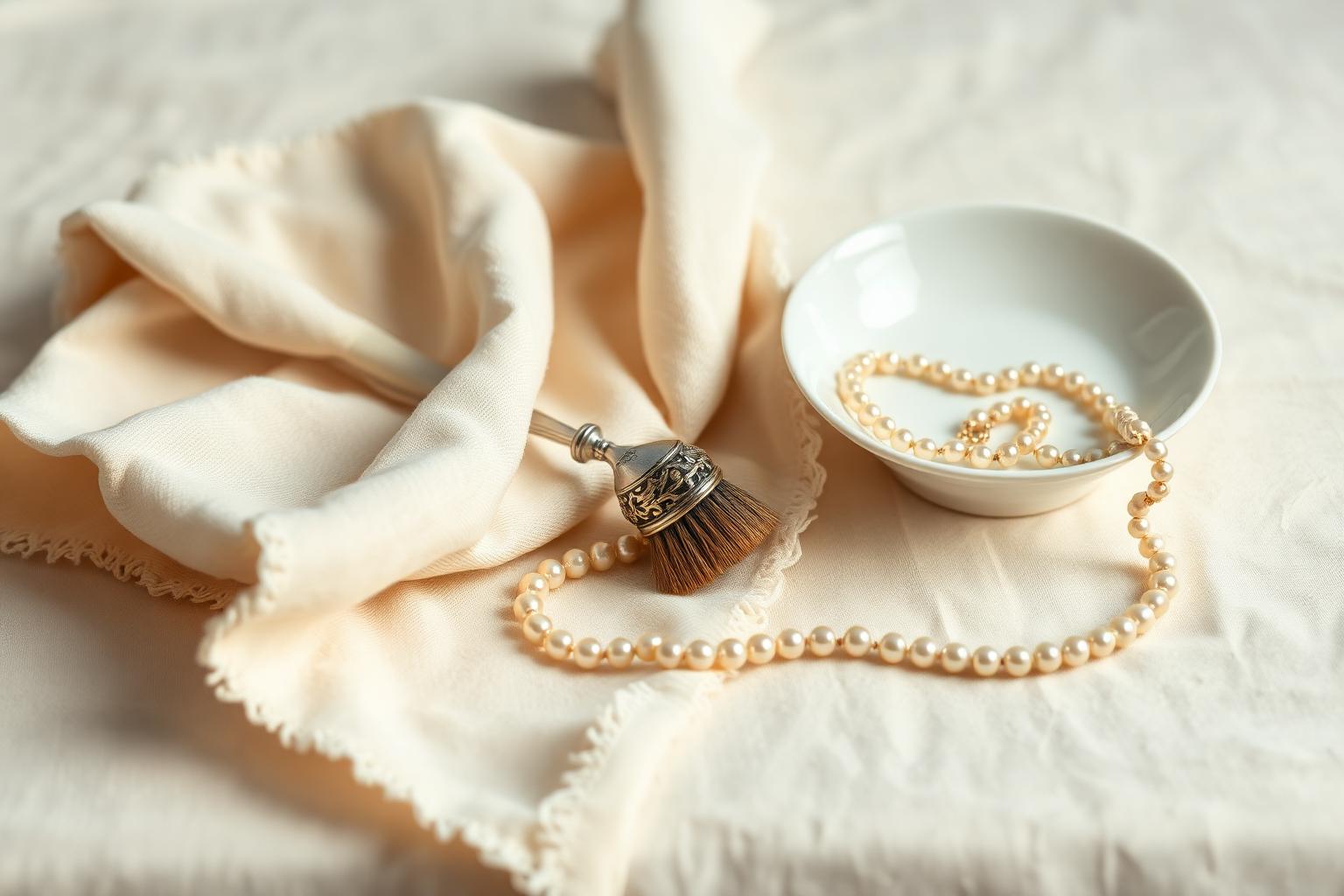
Gold barely oxidises; there is rarely an urgent need for cleaning. For daily care, a soft cloth suffices — an old, washed cotton T-shirt is perfect. Lightly rub after wear to remove skin oils and cosmetic residues. For heavier dirt: lukewarm water with a drop of neutral soap, a soft child's toothbrush for the setting, dry with a lint-free cloth.
Never repolish. A piece of jewellery develops a soft, warm surface texture over decades of wear. Polishing this away for a 'newer' look simultaneously removes delicate engraving, old hallmarks, and proof of the piece's age. Always request cleaning without polishing during repairs, and be explicit: 'the patina must remain'.
Ultrasonic cleaning is usually safe for solid gold without stones, but with old pavé work, small stones can come loose. When in doubt: don't do it.
Gold barely oxidises; there is rarely an urgent need for cleaning.
Silver — consciously preserving patina in antique work
Silver does oxidise — that is the black layer that appears on old work. With modern silver, this layer is undesirable and is polished away. With antique silver, it's the opposite: the black layer in the deep parts of the decoration is deliberate; without this contrast, the relief falls flat and the legibility of the engraving disappears.
For nineteenth-century and older Dutch silver, Bohemian garnet work, and German filigree: only polish the raised areas with a soft cloth and leave the deep-seated black intact. This way, the relief remains visible. Silver polishing cloths from the supermarket are too aggressive; at most, use a clean microfibre cloth without polishing agents.
For twentieth-century sterling and later, you can use a light silver polish, but only on the smooth surface. Ultrasonic cleaning is not recommended for silver with old faceted stones (garnet, marcasite).
Pearls — the most fragile material in the box
Pearls are porous and absorb everything: perfume, hairspray, hand cream, soap, chlorine. They must never be immersed in water and never come into contact with chemical cleaners. For daily care: wipe them with a lightly damp cloth after wear and store them loosely, wrapped in soft cotton.
Pearl necklaces should be restrung on silk cord every ten years. More often if worn regularly. A good stringer knots between each pearl — this prevents wear and limits damage if the cord breaks. To identify: lay the necklace on a table; there should be a small knot between each pearl.
Storing pearls in an airtight plastic bag is fatal — pearls will then dry out and crack. Store them in a ventilated fabric pouch in a moderately humid room (not in the bathroom, but in the wardrobe).
Opal — porous and sensitive to temperature
Opal contains up to 20 per cent water. With rapid temperature changes (hot tap, cold draught after a warm room), the stone can crack — the dreaded crazing. Clean opals only with a dry soft cloth. Never ultrasonic, never steam clean, never immerse in water.
Do not store opals in a safe where the air is too dry. Vintage opal rings from Victorian work are often already affected by decades of wear; a light network of hairline cracks is almost standard and no reason for replacement.
Enamel and plique-à-jour — dry cleaning only
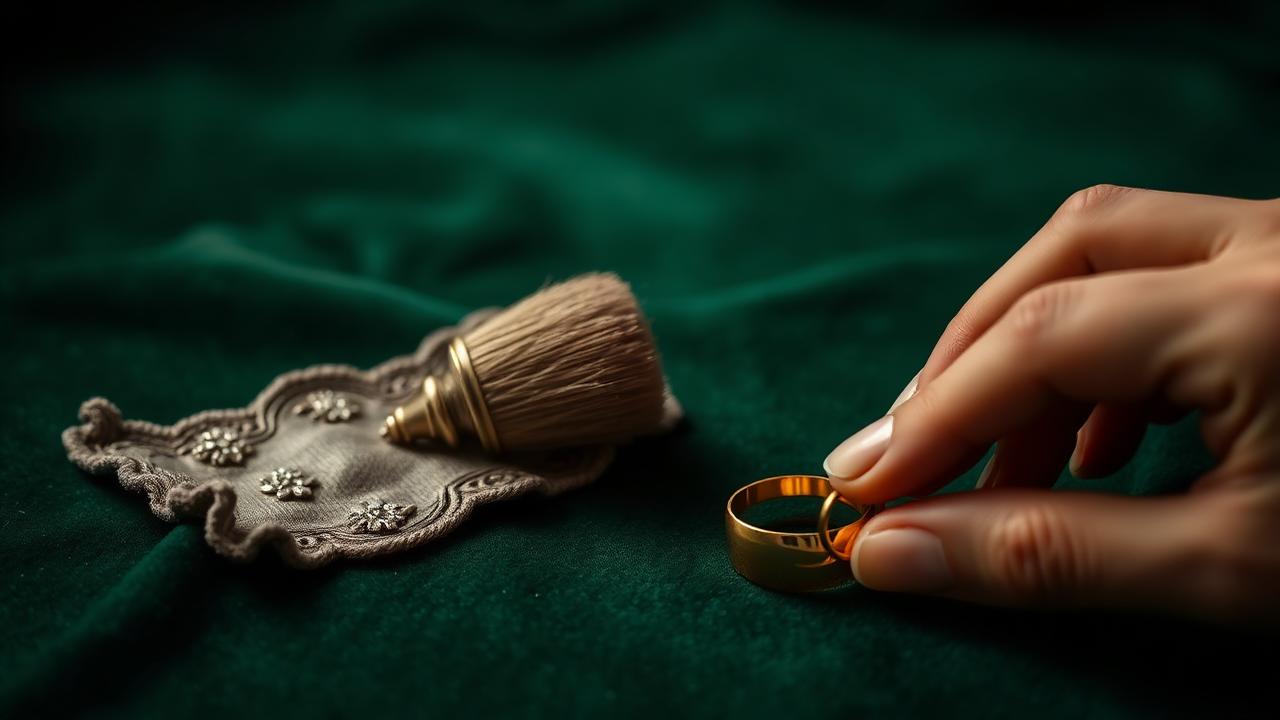
Enamel is glass fused onto metal. The connection between glass and metal is not infinitely strong; sharp temperature changes and mechanical pressure cause hairline cracks. Clean enamel only dry with a soft brush (a make-up brush is perfect). Never in water, never with an abrasive cloth.
Plique-à-jour — enamel without a backing, as in art nouveau dragonflies and fan brooches — is even more fragile: the glass cells are thin and break with slight pressure. Only wear these pieces on special occasions, store them on their own cushion with nothing on top.
Cracks in enamel cannot be repaired without permanently altering the original colour. Accept the hairline cracks as part of the history and focus on preserving the rest.
Jet — light and fossil, thus fragile
Jet is fossilised wood from the Whitby region in Yorkshire and was used in Victorian mourning jewellery. The material is light and warm to the touch, but breaks if dropped. Clean jet with a dry cloth and nothing else — no water, no oil, no wax. Store jet pieces separately, not stacked with metal that can scratch.
Coral — porous and sensitive to acid
Coral is calcium carbonate and reacts to every acid — perfume, perspiration, vinegar vapour. Wipe coral with a soft cloth after wear. Never in water, never with soap. Red coral can fade due to prolonged contact with skin acid; store it loosely in a cotton pouch.
For red corals in Dutch folk costumes — such as the Volendammer and Zeeland strings — see the red coral value guide. These historical strings are museum-worthy and deserve extra careful handling.
Foiled settings — NEVER in water
A foiled setting is a technically common but often unrecognised phenomenon by laypeople: a closed metal setting where a thin coloured foil is placed behind the stone to enhance its colour. Examples include Georgian garnet rings, Victorian rock crystal brooches, and the classic marquise ring with turquoise plaque.
Water is fatal for foiled settings. The foil is not hermetically sealed; moisture penetrates behind the stone, damages the foil, and the stone permanently loses its colour. Clean foiled settings exclusively dry with a soft brush. Do not wear them when washing hands, in the bathroom, or in the rain.
Recognise a foiled setting by the closed back of the setting — you cannot see through the stone as you can with an open setting. When in doubt: keep it away from water. The same applies to red corals: they are not foiled settings, but their surface cannot tolerate water.
Storage — separate, ventilated, without constricting neighbours
Ideally: each piece separately in a soft cotton pouch or a lined jewellery box. Chains hung loosely to prevent tangling, rings not stacked, brooches on a cushion without clamps. Avoid airtight plastic bags — silver oxidises faster in them due to trapped moisture, pearls dry out, and enamel 'sweats'.
For larger collections, a jewellery drawer with partitioned velvet or leather lining works better than a box: each piece visible, nothing stacks. Avoid cedar wood: the essential oils from cedar can damage certain stones.
Store in moderate humidity (40 to 60 per cent). Too dry: pearls crack, opals craze. Too humid: silver oxidises extremely quickly, steel rusts.
Wearing — perfume first, jewellery last
Apply perfume, hairspray, and hand cream before putting on jewellery; otherwise, a dull layer will settle on the stones, cumulatively showing up only after years. Swimming (chlorine and seawater) is a reason to leave any vintage jewellery at home — pool water bleaches gold, tarnishes silver, and damages all porous stones.
Sports: take off vintage pieces. Sleeping: remove rings and earrings. Showering: leave it at home. Rule: anything that can cause moisture, friction, or chemicals is a moment to leave the jewellery in its box.
What you never do
Never ultrasonic for antique settings, enamelled work, opals, pearls, turquoise, garnet, coral, jet, or foiled settings. Only diamond, ruby, and sapphire in solid modern settings tolerate ultrasonic safely.
Never silver polish on gilded work. Gilded silver (vermeil) has a thin layer of gold that can be removed by silver polish in a few applications. For gilded work: only dry wipe with a soft cloth.
Never household cleaning products — bleach, ammonia, toothpaste, drain cleaner, glass cleaner. They damage gold, permanently discolour silver, attack stones, and sometimes remove the patina in one session.
Never steam on antique work. Steam cleaners work for modern diamonds in sturdy settings; with vintage work, they can sometimes loosen settings and damage foils and enamelling.
Never dry polish with a polishing wheel. That is for a goldsmith during restoration; not for home use. One session with a polishing wheel can permanently render a hallmark illegible.
Overview in one table
| Material | Cleaning | What you never do |
|---|---|---|
| Gold (solid) | Lukewarm water + mild soap, soft cloth | Repolishing |
| Silver (old, with relief) | Only raised areas with soft cloth | Polishing away deliberate patina |
| Silver (modern sterling) | Silver polishing cloth on smooth parts | Ultrasonic for marcasite |
| Gilded (vermeil) | Only dry wipe | Using silver polish |
| Platinum | Lukewarm water + soap | Ultrasonic for old setting |
| Pearls | Damp cloth, store loosely | Immersing, chemicals, plastic bag |
| Opal | Dry cloth | Water, ultrasonic, temperature shock |
| Enamel / plique-à-jour | Dry brush | Water, pressure, ultrasonic |
| Jet | Dry cloth | Water, oil, stacking |
| Coral / red coral | Soft cloth after wear | Acid, water, perfume |
| Foiled settings | Exclusively dry brush | Any contact with water |
When in doubt: dry and gentle. For valuable or museologically relevant pieces, always consult a goldsmith with vintage experience before doing anything.