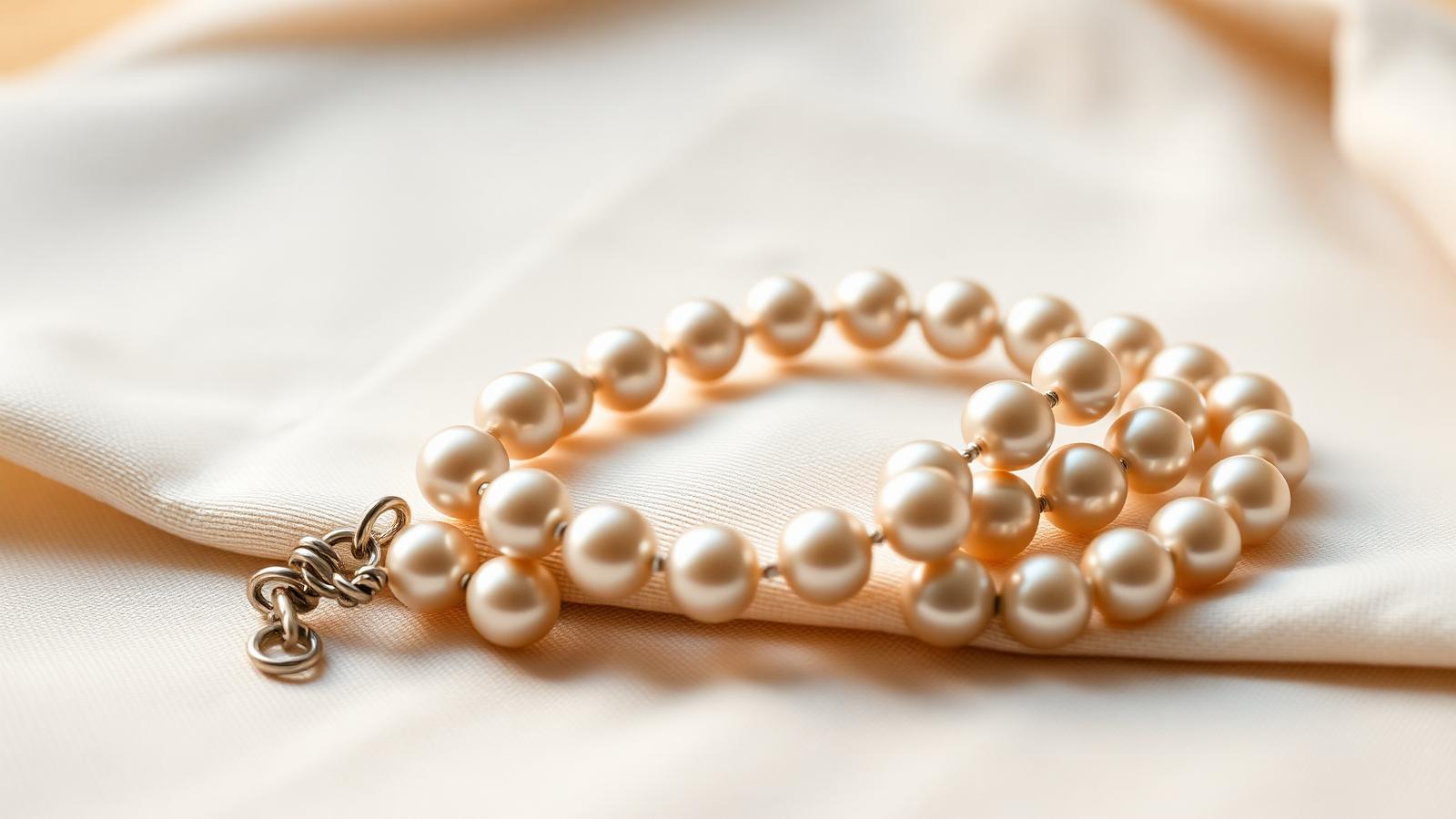
Why there is a knot between each pearl
In a classic strung pearl necklace, there is a small knot in the thread between each pearl. There are two reasons for this. Firstly: it prevents the pearls from rubbing against each other while being worn — without the knot, the nacre surface would wear down at the contact point. Secondly: if the thread breaks, at most one pearl will fall to the ground instead of the entire strand falling apart.
Necklaces without inter-knots (sometimes found in cheaper fashion necklaces) lack this protection. In quality work, and certainly in vintage and antique necklaces, you should expect to find knots. If they are absent in an old necklace, it was likely unprofessionally restrung at some point.
In a classic strung pearl necklace, there is a small knot in the thread between each pearl.
When to have them restrung
Rule of thumb: with daily wear, every two to four years; with occasional wear, every eight to ten years. Reasons to intervene sooner: the thread between the knots becomes visibly worn or dark, the necklace feels slack or becomes longer than usual, or a pearl is loose between two knots. An old necklace can snap without warning — check regularly by gently pulling on the end.
Restringing is a job for a specialist. It requires the correct thread thickness, proper knot placement, and the appropriate finish at the clasp. For addresses: search the address directory for goldsmiths with the 'bespoke work and repair' tag; not every jeweller has the craftsmanship for quality pearl necklaces.
Silk versus modern thread
Traditionally, pearls are strung on silk. Silk has the right suppleness, drapes beautifully around the neck, and holds knots well. Disadvantage: silk is not impervious to moisture, slowly oxidises, and wears out after years of wear.
Modern stringing also uses polyester or nylon threads, or braided synthetic thread. These are more durable, less sensitive to moisture, and less prone to breaking, but they have a slightly different drape than silk. For a vintage necklace with historical value, silk is usually the correct choice; for a daily worn modern necklace, synthetic thread is more practical.
Discuss the choice with the specialist who will do the restringing: they can adjust the thickness and type to suit the pearl size and the clasp.
What makes pearls vulnerable
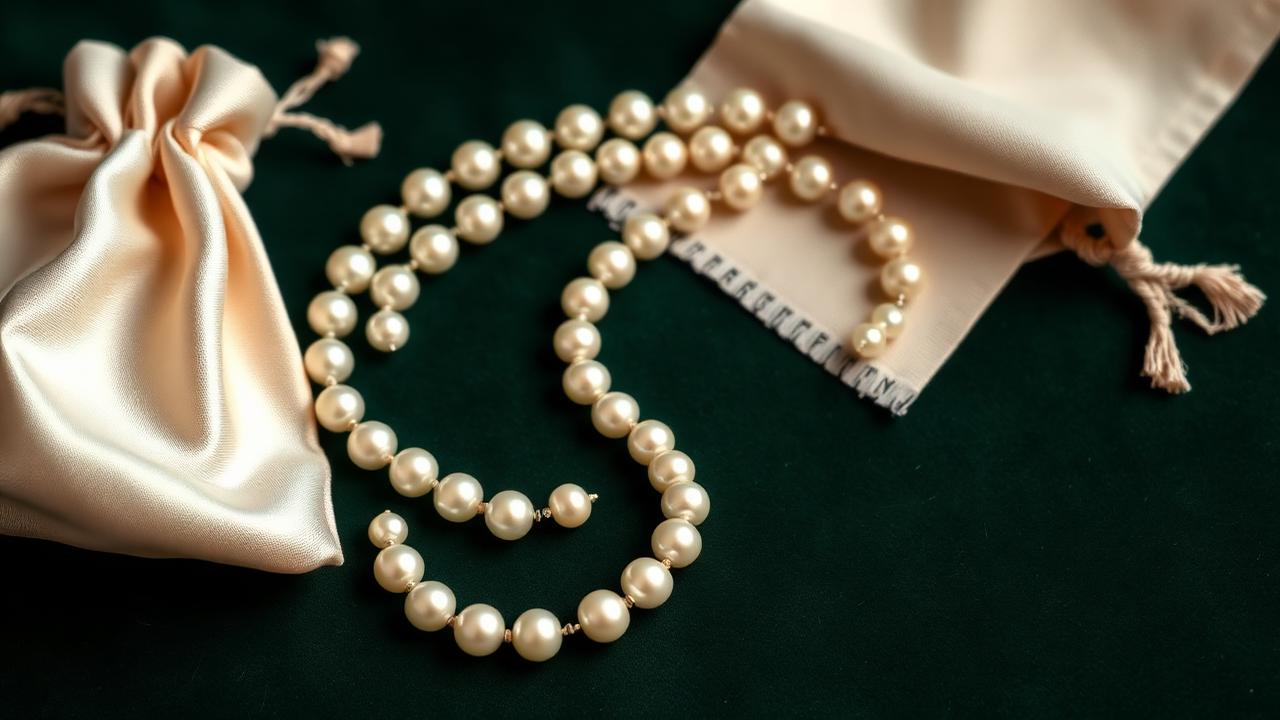
Pearls are organic — nacre consists of layers of calcium carbonate with a thin protein cement — and react to what they touch. Avoid: perfume, hairspray, deodorant, aftershave, and sunscreen. These substances contain acids and solvents that can damage the nacre. Therefore, put pearls on last — after perfume, after hair and make-up — and take them off first. Sweat is also slightly acidic; clean a pearl after wearing with a soft, slightly damp cloth and let it dry on a flat surface.
Furthermore, avoid dry air (prolonged storage in a safe with desiccant: pearls can crack), direct sun (discolouration and hardening), and contact with hard surfaces (scratches on nacre). Store pearls separately from other jewellery in a soft cloth or a pearl-specific pouch.
Cleaning — gently
Only clean with a slightly damp, soft cloth (microfibre or soft cotton). No ultrasonic bath, no steam cleaner, no silver polishing cloth, no soap or dishwashing liquid — all these agents can damage the nacre or weaken the thread. For stubborn dirt: contact a specialist.
For the clasp, however, normal cleaning is allowed: it is usually made of gold or silver and deserves the maintenance appropriate for that material. Just make sure the cleaning agent doesn't get on the pearls.
What an old necklace tells you
If you inherit a pearl necklace, the first question is usually: are these real pearls? In short: nacre pearls feel slightly cool to the first touch (glass feels colder, plastic feels neutral), have minimal surface irregularities visible under a loupe, and have a slight 'grittiness' if you gently rub a pearl between two teeth — real nacre feels sandy, imitation feels smooth. For definitive identification, a specialist is needed; for context, see the price guide for vintage pearls.
Restringing is the first careful step for a presumed old necklace. Combine it with a check of the clasp (often gold, with its own hallmark and historical value) and a general condition assessment.