Germany: half moon, crown and imperial marks
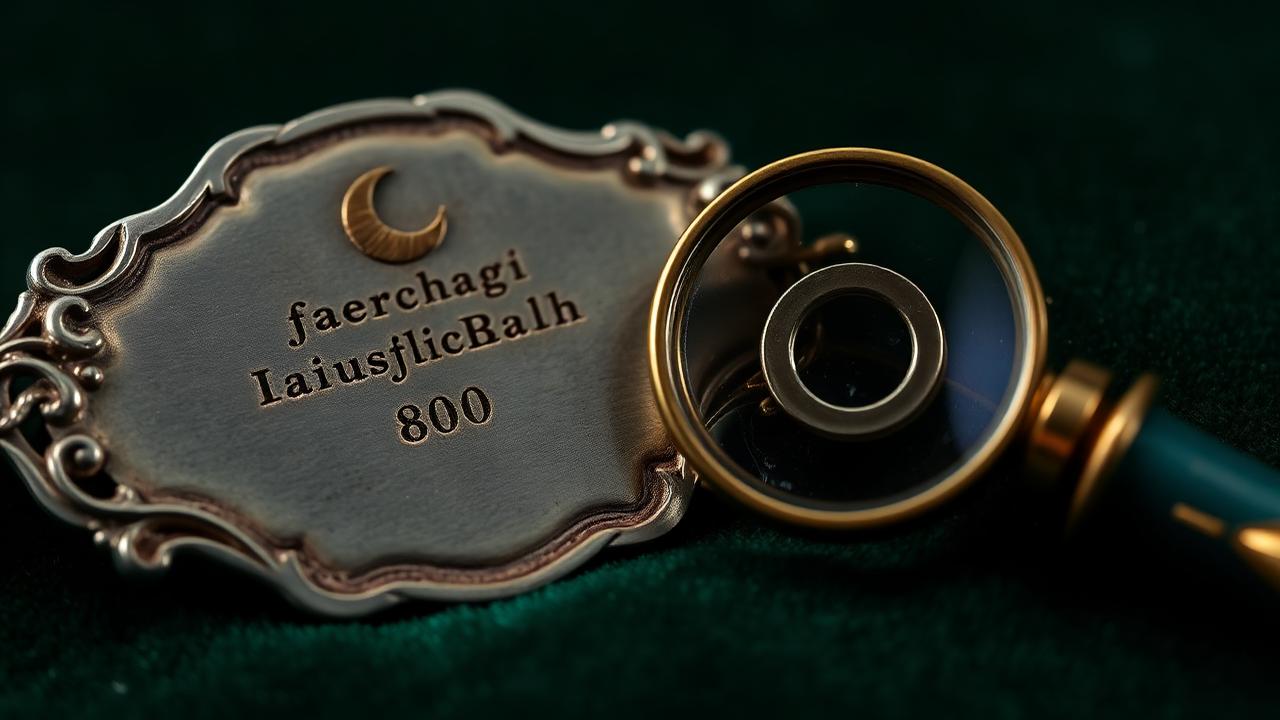
Based on the imperial law of 1884, Germany introduced a mandatory figurative imperial mark for precious metals from 1888. For silver, this is the combination of a half moon and an imperial crown (Halbmond & Krone), always struck together and usually combined with a fineness number in parts per thousand. Common German silver finenesses are 800, 835, 900, and 925. For gold, the same law introduced an imperial crown in a sun mark, also combined with the fineness in parts per thousand (e.g., 585 or 750) and a company mark or maker's mark. On German gold watch cases, this imperial mark remained mandatory until 1976; afterwards, the obligation was abolished, but many German workshops still voluntarily strike the marks out of tradition.
German work from the period before 1888 may be marked inconsistently; provincial hallmarks from the numerous German states (Prussia, Bavaria, Saxony, Hesse) differ. These provincial marks are a specialism; for precise determination, consult a specialised source.
Based on the imperial law of 1884, Germany introduced a mandatory figurative imperial mark for precious metals from 1888.
Austria: animal head hallmarks with the Diana head prominent
In the second half of the nineteenth century, Austria introduced a system of figurative animal head hallmarks. The best known is the Diana-head, in profile, as a silver hallmark; for gold, separate animal heads applied, which varied by fineness and period. Characteristic of the Austrian system is that a letter within the hallmark indicates the assay office – an A for Vienna, with other letters for the other offices. For the exact set of animal heads, finenesses and office letters, the official Austrian register (or a specialised publication) is the designated source; do not be guided by lists that link city attributes to animals when determining – these are often incorrect in practice.
Bohemian work (now Czech Republic) from the late nineteenth century is often weakly marked or unstamped. For garnet jewellery, the absence of a hallmark is more often the rule than the exception – due to thin material and weights below the weight threshold.
Switzerland and Scandinavia
Switzerland has had a mandatory hallmarking system since the end of the nineteenth century. Swiss precious metal control uses figurative hallmarks that vary by metal and period; they are mainly known from watch cases, where the marks are still visibly struck today. When determining, do not invent a fixed link between an animal and a fineness: the marks have changed over time, and their meaning is period-specific. For exact determination, the official register of the Swiss precious metal control (Bureau central du contrôle des métaux précieux) is the designated source.
Sweden has had the three crowns mark on silver for centuries – three crowns in a triangular composition, combined with a town mark and a date letter. Danish silver marks (the well-known '3 tårne' or Danish town mark) are similarly systematic. Twentieth-century Scandinavian work is almost always fully hallmarked.
Russia: the kokoshnik profile
In 1899, Russia introduced the kokoshnik profile – the profile of a woman's head with a traditional Russian headdress – as a national fineness mark. Work from before 1899 does not bear this kokoshnik, but instead town and assay marks that vary by assay office. In 1908, the kokoshnik design was changed, so that work from the Tsarist era (until 1917) broadly falls into three hallmarking periods: before 1899, 1899–1908, and 1908–1917. In addition to the kokoshnik, a fineness number in zolotnik, the old Russian system (56 for 14 carat gold, 72 for 18 carat, 84 for silver), almost always appears.
For Soviet and post-Soviet work, other systems apply which vary by period. When in doubt about a Russian piece, a specialist source is indispensable; the supply of reproductions of Fabergé-like work is large, and authentic stamps are well documented by major auction houses and museums.
United States: no mandatory hallmarking system
The United States – unlike Europe – does not have a mandatory government hallmarking system. American manufacturers are only bound by the National Gold and Silver Marking Acts, which stipulate that a fineness indication must be struck along with a maker's name or registered trademark. There is no assay office, no date letter, and no figurative hallmark.
American work therefore typically bears a fineness in carats (14K, 18K), sometimes with the addition 'PLAT' for platinum or 'STERLING' for 925 silver, plus a maker's name or trademark. This is legally sufficient – but for verification, it means that there is no independent body that has checked the fineness. For valuable American pieces (Tiffany, Cartier New York, Harry Winston), an XRF measurement at a specialised jeweller is therefore the recommended extra step.