Paris, 1954. Dior presents its H-Line in the salons. In the gallery below, Van Cleef & Arpels displays a collection of parures — matching sets of necklace, earrings, brooch and bracelet. A woman of standing wears such a parure complete: one tone, one design, from dusk till dawn. It is a return to formal elegance after fifteen years of improvisation, and it is greeted with relief.
The mid-century period is a time of recovery and renewed affluence. The war is over, platinum returns, diamonds are readily available again, and haute joaillerie reclaims its place in Place Vendôme. Grace Kelly, Audrey Hepburn, and Jackie Kennedy define the taste: classic, discreet, superbly made.
The world in which this emerged
The 1950s are conservative in fashion: tailored jackets, wide skirts, gloves, hats. Jewellery must match — not dominant, but present. The parure (harmonious set of multiple pieces) is the quintessential form. For daywear, the smaller variant is worn (brooch plus earrings); for evening, the complete set.
In haute joaillerie, Van Cleef & Arpels reclaims its place with the Mystery Setting (invisible setting) and the first transformable pieces — necklaces that can be disassembled into bracelets and clips. Cartier launches the Panthère motif under Jeanne Toussaint, which remains their signature to this day. Boucheron works on the first 'Question Mark' necklaces without a clasp.
In the ordinary shop, tastes are sleeker and more subdued than in the retro years. The solitaire ring returns as the engagement standard. Cluster rings (flowers of small diamonds around a central stone) are the best-selling style.
The 1950s are conservative in fashion: tailored jackets, wide skirts, gloves, hats.
How to recognise it
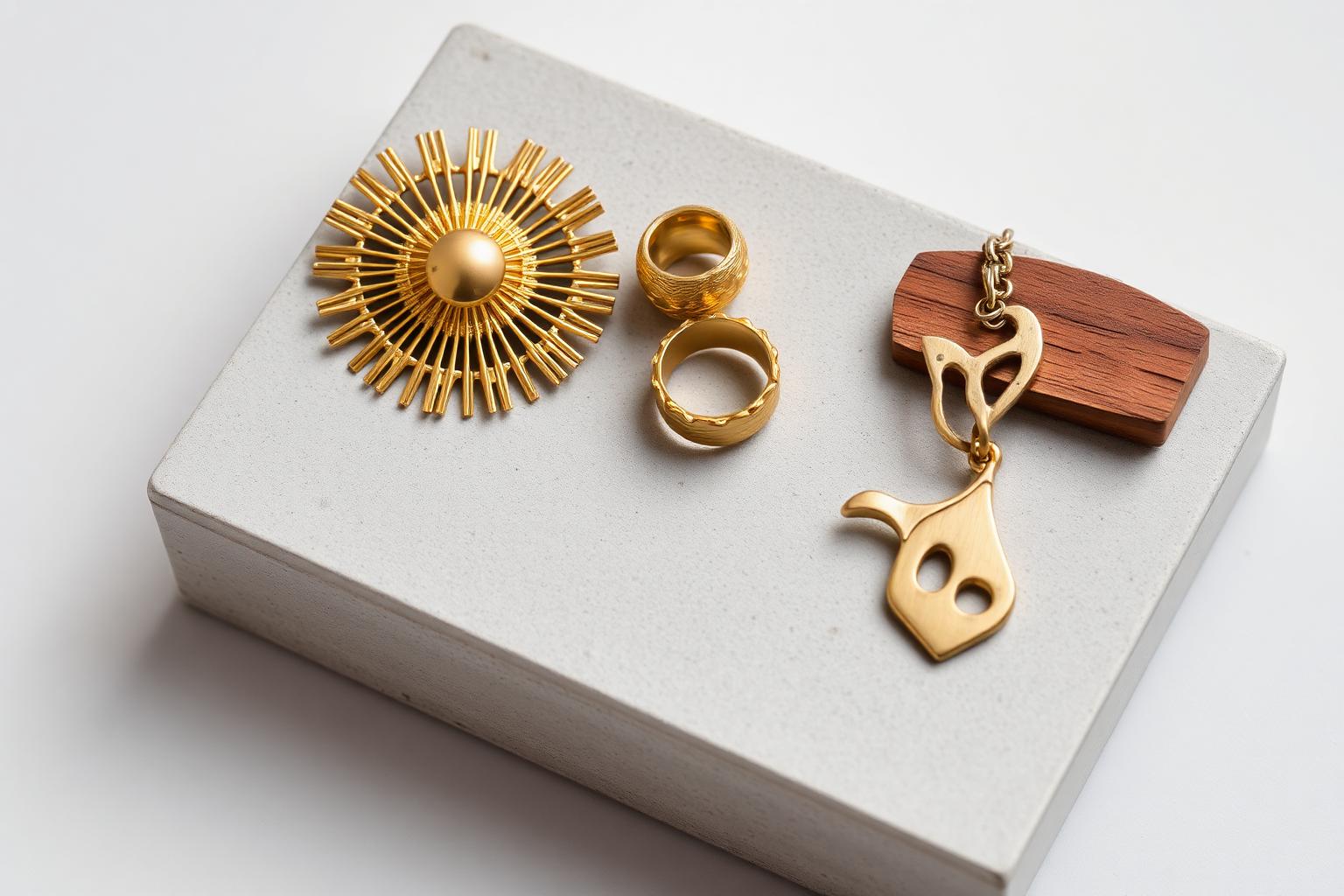
Return of platinum in haute joaillerie, yellow gold for daylight jewellery. Textured gold is a strong period indicator: gold worked into patterns (Florentine finish, hammered, brushed) to catch light in different ways. These techniques emerged from circa 1955 and remained dominant for the rest of the period.
Cuts are now almost exclusively modern brilliant — old cuts go out of production. Turquoise, coral and classic Ceylon sapphires are the coloured gemstones that stand out; emeralds and rubies are more traditionally set in classic surrounds.
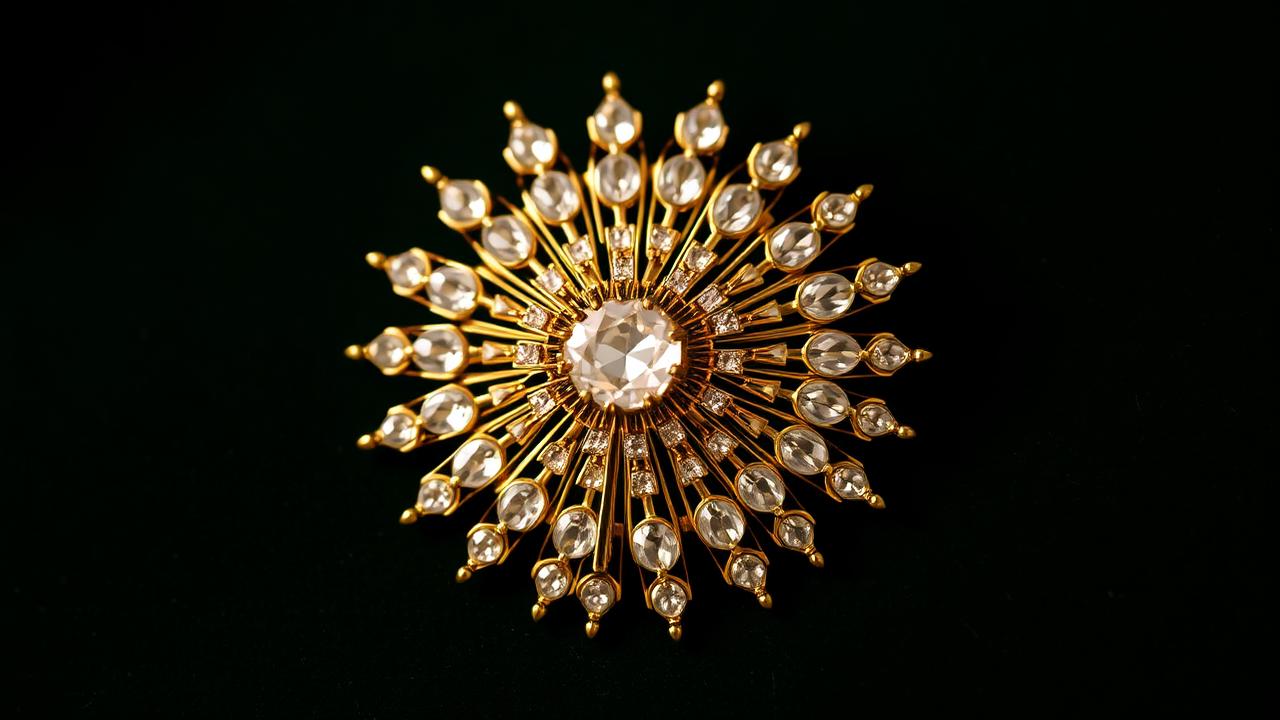
Compositions are symmetrical, with floral or star motifs at the core. The 'spray' brooch (a spray of flowers and leaves) is a classic mid-century form executed by all houses.
Return of platinum in haute joaillerie, yellow gold for daylight jewellery.