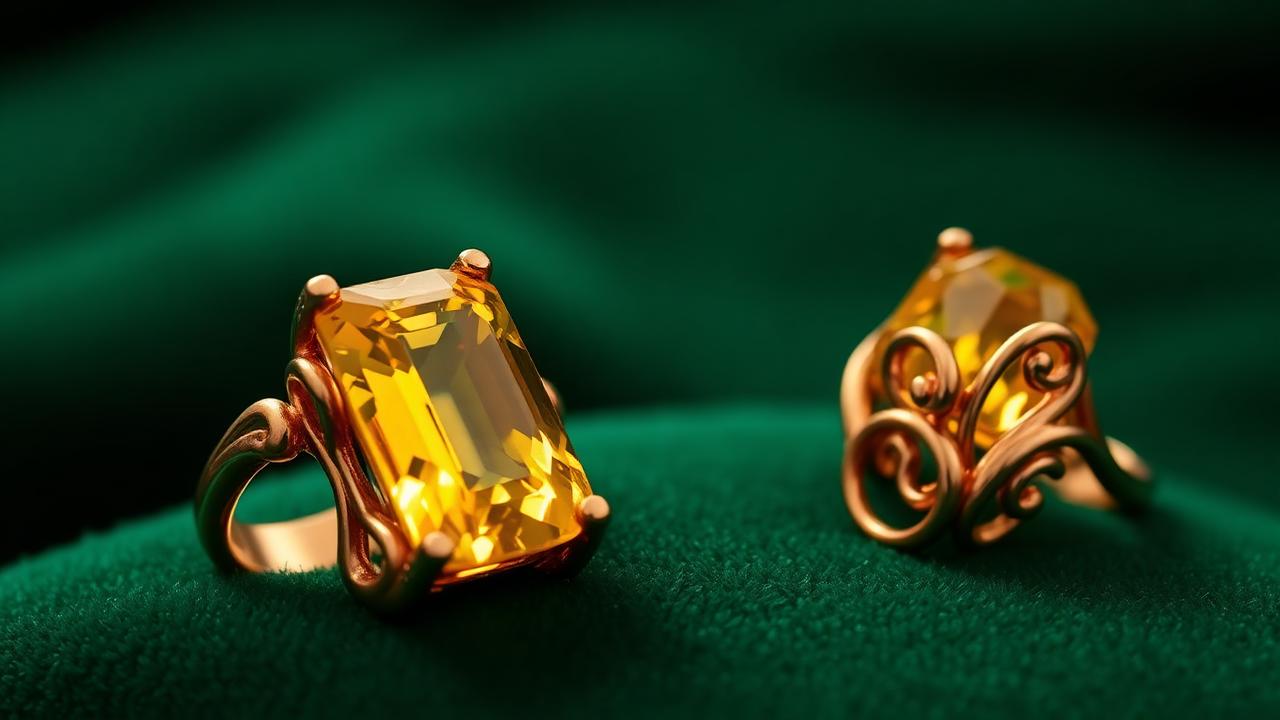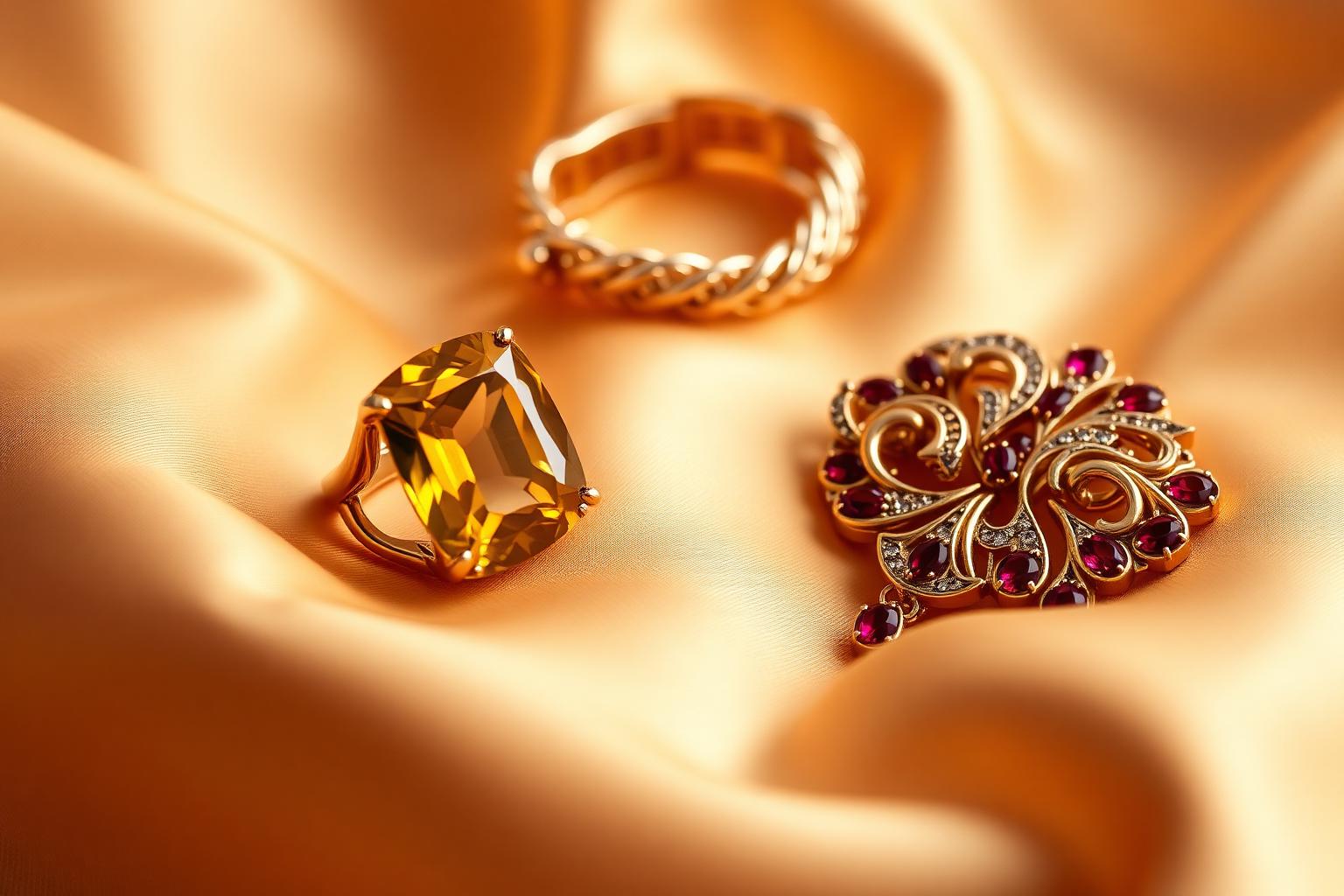
Los Angeles, 1943. Rita Hayworth is photographed on the set of Cover Girl between two scenes. On her wrist is an enormous rose gold bracelet, made up of wide bevelled links reminiscent of the tracks of a tank. On her finger, a cocktail ring with a citrine as big as a dice. To accompany her, platinum and diamond are absent: they are rationed. What remains is gold in many karats, in sizes meant to banish the war.
The Retro period arose out of necessity. From 1935 onwards, global scarcity already began to creep into jewellery artistry. From 1940, platinum was officially prohibited for non-military use in the United States — it was needed for catalysts and the war industry. Diamonds from South Africa barely reached Europe. What remained was gold, in all karats, and the ingenuity of the workshops.
The world in which this emerged
Hollywood is the artistic engine of this period. While Paris was under occupation and London endured the Blitz, jewellery fashion was created in Beverly Hills. Film stars such as Joan Crawford, Bette Davis, Marlene Dietrich, and Rita Hayworth wore the new silhouettes on the silver screen. Costume designers like Adrian collaborated with jewellers like Paul Flato and Trabert & Hoeffer-Mauboussin. What you saw in the film, you wanted to own.
Van Cleef & Arpels fled from Paris to New York in 1940 and opened a temporary boutique there. Cartier moved part of its production to America. This migration merged European craftsmanship with American taste and generated a distinct 'retro Hollywood' style that remained dominant until 1950.
Fashion itself changed with the times: broad shoulders, cinched waists, wide skirts (from 1947, Dior's New Look). Jewellery had to handle that scale — modesty was not an option.
Hollywood is the artistic engine of this period.
How to recognise it
Rose gold is the trademark. Added copper gives gold a warm pink hue that perfectly combines with citrine and aquamarine — the two major gemstones of the period. Both are relatively affordable and available, and both are now used in large, sculpted formats (oval, emerald cut, or special 'briolette' fancy cuts).
Constructions are solid but hollow. To save gold, designs are often executed with thick but hollow walls — the impression is monumental, the weight is manageable. Tank bracelets (named after the tracks of a tank), gas pipe necklaces (with thick, hollow links), and bridge motifs (which literally resemble a bridge) are signature.
Synthetic rubies and sapphires, invented at the beginning of the twentieth century, were now extensively used — natural gemstones were simply unavailable. Coloured gold with palladium (a light white) was also added where platinum would have been used.
Rose gold is the trademark.