New York, early seventies — the time when Elsa Peretti, after years in the fashion world around Halston, began to display her sculptural jewellery work to a small circuit of boutiques and collectors. No gemstones, no ostentation — just polished gold and silver in forms resembling pebbles, beans, or open hearts. In 1974, she signed a contract with Tiffany & Co., where the 'Bone Cuff' was introduced that same year: a cuff cast from a human bone, smooth and heavy and definitely not classic. Jewellery fashion had changed forever. The designer's name now counted for more than the house's name.
The period 1965–1990 broke with everything mid-century stood for. Away with the parures, away with restraint, away with classical elegance. These twenty-five years were the time of brutalism in gold, of designer signatures, of cocktail rings resembling chocolate truffles, and of chain gold no longer hidden beneath a blouse.
The world in which this emerged
Politically and culturally, this was a turbulent time: the Vietnam War, the '68 student protests, feminism, gay liberation, the disco years, and at the end Reagan, Thatcher, and the excesses of the 1980s. Each decade had its own jewellery. Late 60s: brutalism, hippie motifs, natural stones. 70s: chain gold, thick links, coral and turquoise. 80s: once again grand cocktail rings, many coloured stones, ostentatious earrings.
The name that changed everything is Elsa Peretti (Tiffany & Co., from 1974) — followed by Paloma Picasso (Tiffany, from 1980), Angela Cummings (Tiffany, 1970s), David Webb, Jean Schlumberger, and in Italy the designers around Bulgari (Aldo Cipullo for the Nail collection, later for Cartier the Love bracelet from 1969). A jewel was no longer just 'a Cartier' or 'a Van Cleef', but 'a Peretti', 'a Cipullo', 'a Buccellati'.
In the Netherlands, a unique designer scene blossomed around the Rietveld Academie (Emmy van Leersum, Gijs Bakker) creating conceptual jewellery — now a collecting area in itself.
Politically and culturally, this was a turbulent time: the Vietnam War, the '68 student protests, feminism, gay liberation, the disco years, and at the end Reagan, Thatcher, and the excesses of the 1980s.
How to recognise it
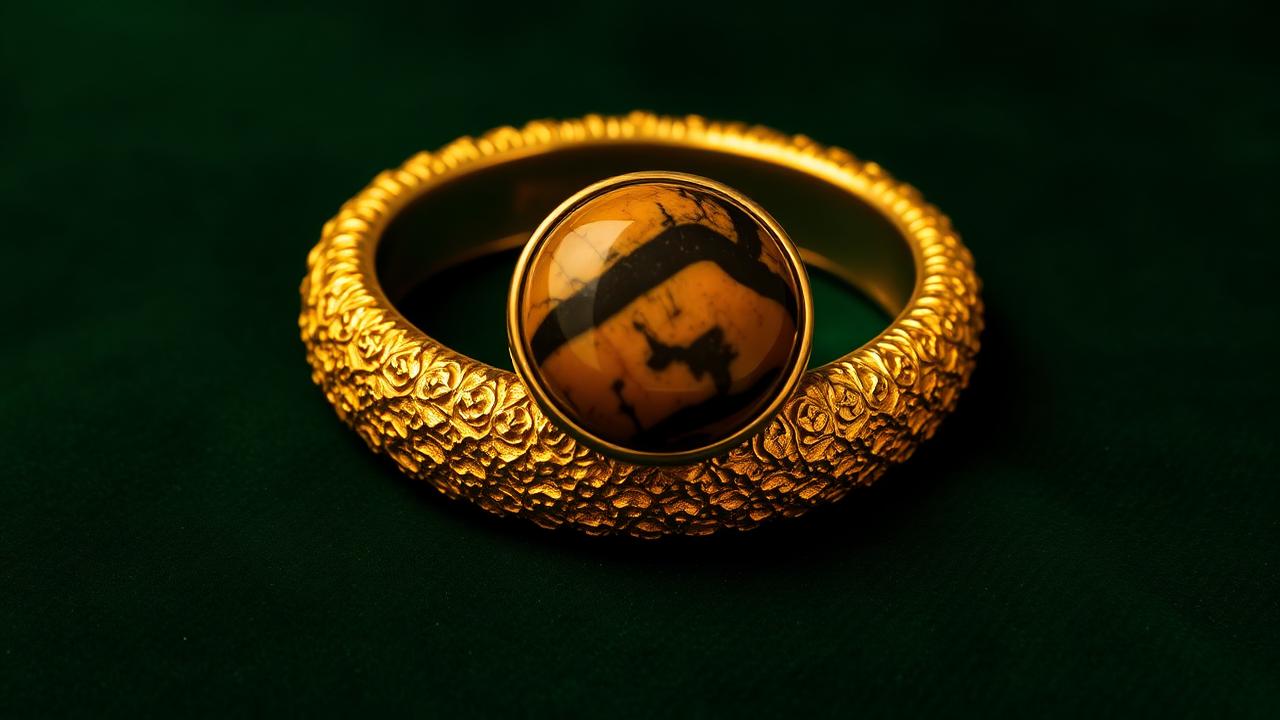
Yellow gold is dominant and heavy. Where mid-century used subtle textured gold, this period opted for bold, sculptural volumes. The brutalist movement (think of André Vassort's work in France) features jewellery that looks as if it has just broken out of a mould.
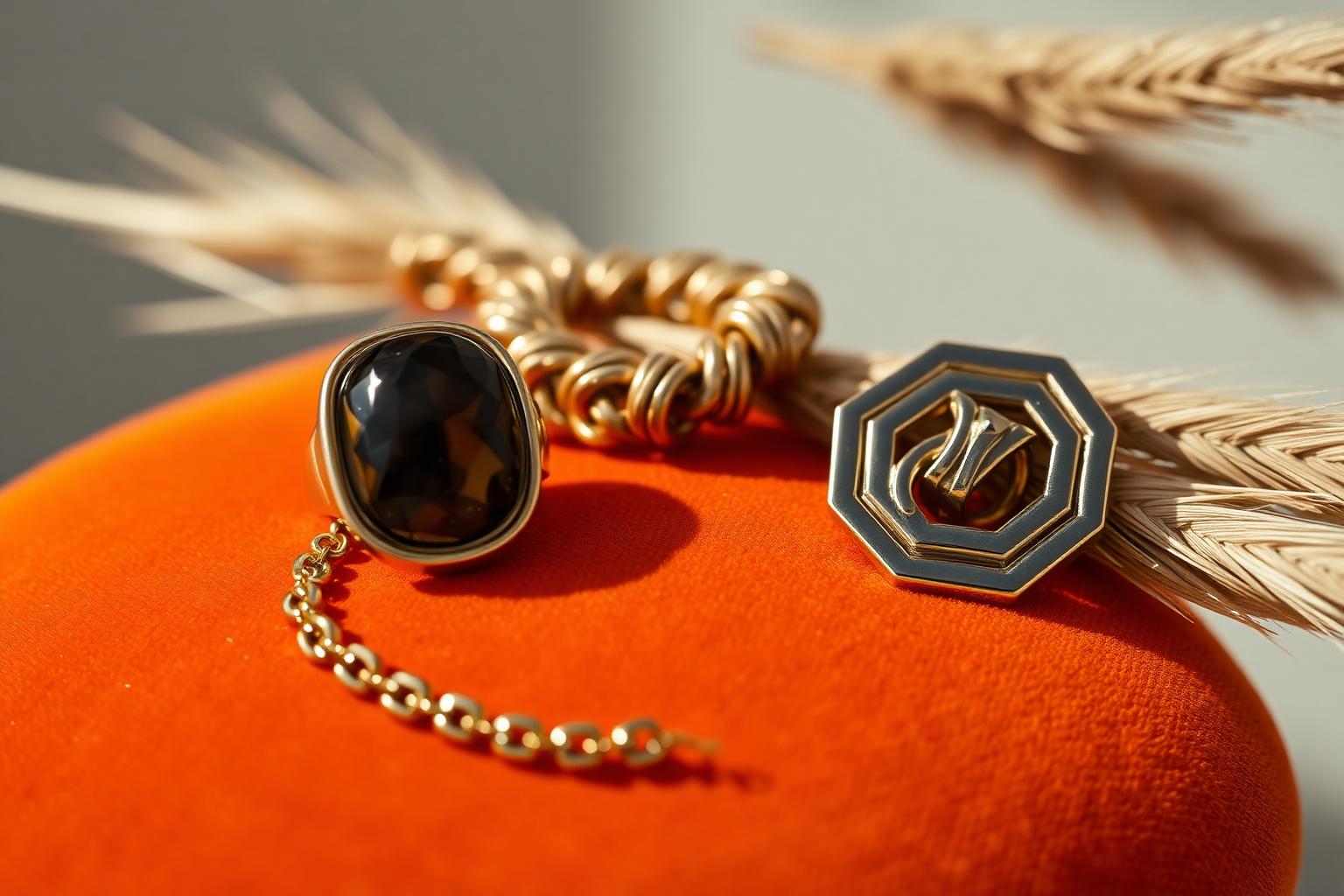
Chain links are wide and visible. Cuban links, Figaro links, wide curb chains, and the classic 'gourmette' are now worn as the main jewel, no longer as a carrier for a pendant. The chain itself is the jewel.
Coloured gemstones return in unpolished or semi-polished form: polished turquoise cabochons, beads of coral and lapis, tiger's eye. Cocktail rings once again become enormous — large sculptured gold sections with a central stone as a 'head'. In the 80s, synthetic and treated stones (heat-treated sapphire, irradiated topaz) also came into widespread use.
Yellow gold is dominant and heavy.