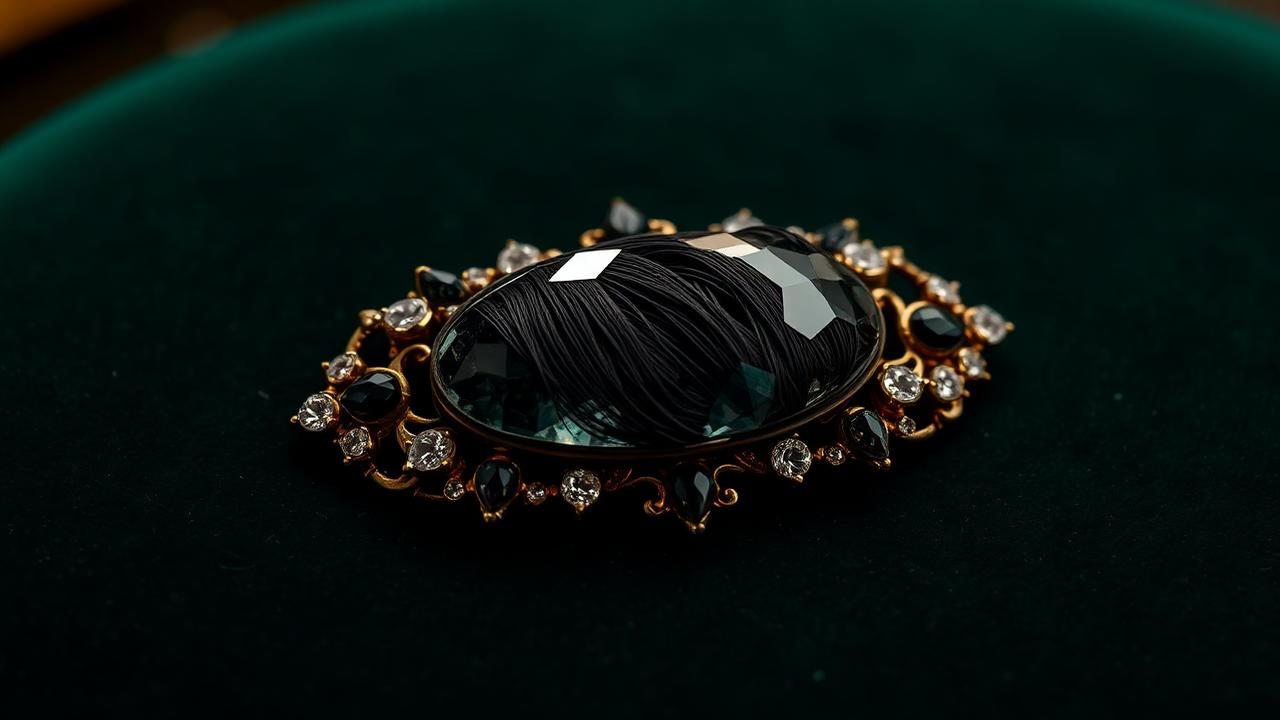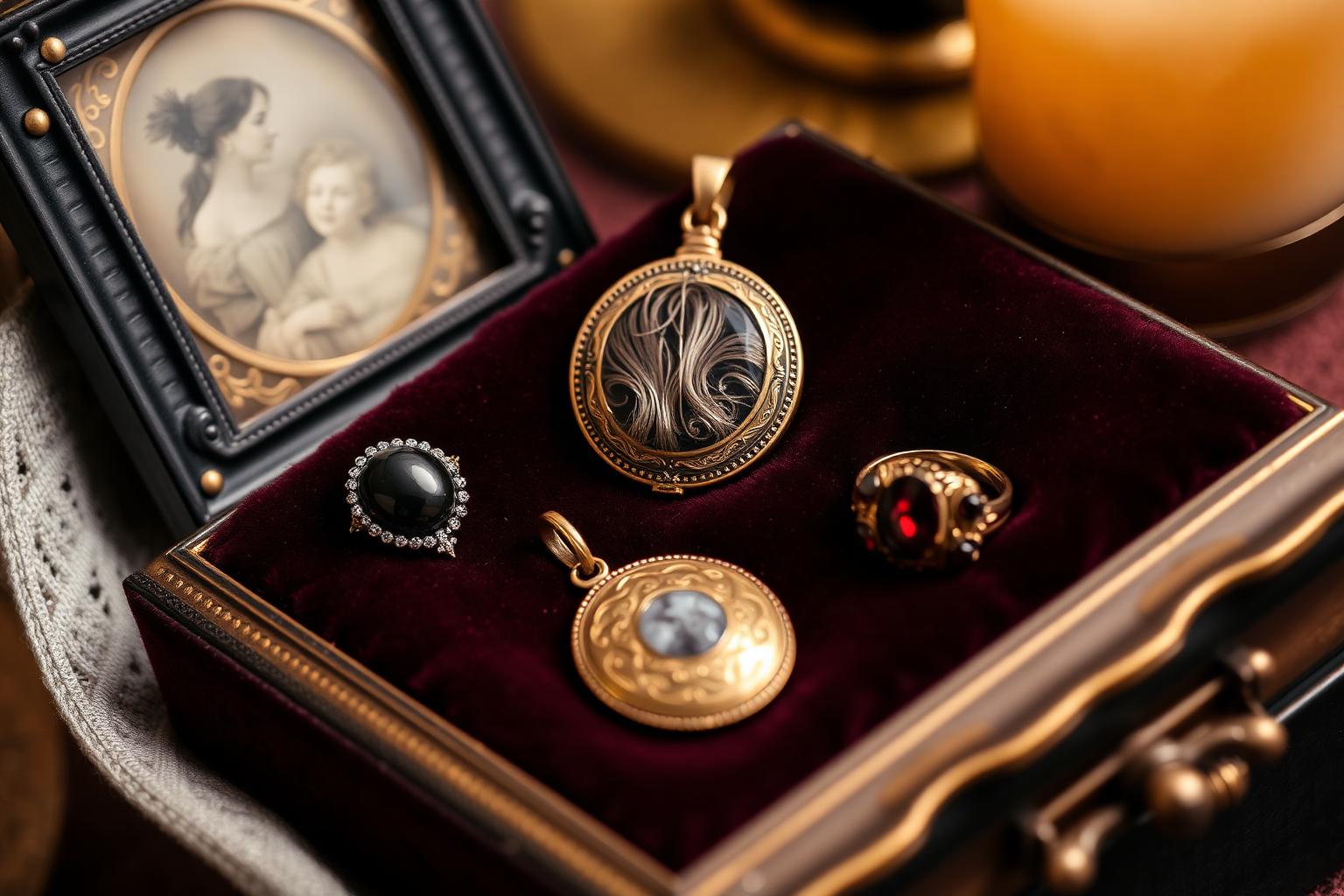
London, 1861. Prince Albert has just died, and all of Great Britain is draped in black. Queen Victoria will wear mourning attire exclusively for forty years — and with her, half the world. Brooches of jet, rings with hairwork of the deceased, medallions with miniature portraits under a layer of crystal appear in the shop windows of Bond Street. Mourning has become an industry, and the jewellers are kept busy.
But the Victorian period is not solely black. It spans sixty years, encompassing a romantic beginning, a sombre middle period, and a light-hearted, star-gazing end. Whoever holds a Victorian jewel holds a chapter from a long, multifaceted century — with its own materials, its own symbolism, and its own way of wearing.
The world in which this originated
The Victorian era coincided with the Industrial Revolution, the rise of the affluent middle class, and the first department stores. For the first time, jewellery was mass-produced in factories — often in Birmingham — and simultaneously crafted in exclusive artisan workshops in London and Paris. The middle class could now also afford gold, even if it was the more affordable 9 carat.
Women wore crinoline and later bustles, high collars, and gloves. Jewellery was chosen to complement these outfits: long earrings with an updo, belt buckles with a cinched waist, medallions over a pleated blouse. During the day, small, discreet pieces were worn; in the evening, the 'real' jewellery came out of the safe — parures of necklace, earrings, brooch, and bracelet designed as a set.
The language of flowers (floriography) was not trivial. A forget-me-not meant faithful remembrance, a pansy stood for 'think of me', an ivy leaf symbolised eternal connection. Giving a loved one a brooch with violets was a declaration — not merely decoration. See the floral symbolism motif guide for the full code.
The Victorian era coincided with the Industrial Revolution, the rise of the affluent middle class, and the first department stores.
How to identify it
Material in three waves. Early Victorian (up to circa 1860) is predominantly 15 or 18 carat yellow gold, often as thin gold leaf over a base metal (so-called rolled gold). Mid-Victorian shifts towards dark materials: jet from Whitby, onyx, black glass, jet-black enamelled gold. Late Victorian returns to lightness with 9 carat, silver, and natural pearls.
Gem setting is almost always closed at the back (closed back) until circa 1880 — the stone sits on foil that enhances its colour. From the Aesthetic period (1885–1901), open settings that allow light to pass through appear. Diamonds are old mine cut or old European cut, hand-cut, with a smaller table and deeper pavilion than modern brilliants.
Motifs tell the decade. Snakes (Prince Albert gave Victoria an emerald-eyed snake engagement ring — which instantly became fashionable), crowned hearts, hands holding a flower, four-leaf clovers, crescents and stars for the late period.
Material in three waves.