Paris, Hôtel Ritz, 1908. A hostess, in an ivory silk gown with a neckline like a long, low window, receives guests. Around her neck hangs a necklace that almost disappears in photographs — so light, so translucent is the platinum work. Yet she wears a veritable collar of diamonds, the gross value of which would buy a small mansion. That is Edwardian elegance: abundance disguised by delicacy.
The Edwardian period is brief — barely fifteen years — but it possesses a distinct signature. Named after the British King Edward VII, who succeeded his mother Victoria in 1901, the style coincides with the Belle Époque on the Continent. When World War I breaks out in 1914, French and British workshops close their doors; around 1915, the style definitively comes to an end.
The world in which this was created
Around 1900, platinum becomes available. That sounds technical, but it's a revolution. Platinum is stronger than gold, allowing goldsmiths to create much thinner structures — wirework so fine that it indeed resembles needlepoint lace. Cutting techniques improve simultaneously: diamonds become rounder, more brilliant, and open settings allow light to shine through them.
Fashion aids this development. Women wear white, ivory, and pastel-coloured silk gowns with long trains and deep necklines. The jewellery should not 'fight' with them — it should complement them like fine embroidery. Hence the garlands, bows, laurel wreaths, and floral festoons that dominate the range of motifs.
It is also the era of the great French and British houses at their peak. Cartier, driven by Louis Cartier, moved to 13 rue de la Paix in Paris as early as 1899 — the building that still exists today; in 1902, the house opened its London branch. Chaumet, Boucheron, and Fabergé supplied an aristocracy that mastered the art of entertaining down to the last hairpin.
Around 1900, platinum becomes available.
How to recognise it
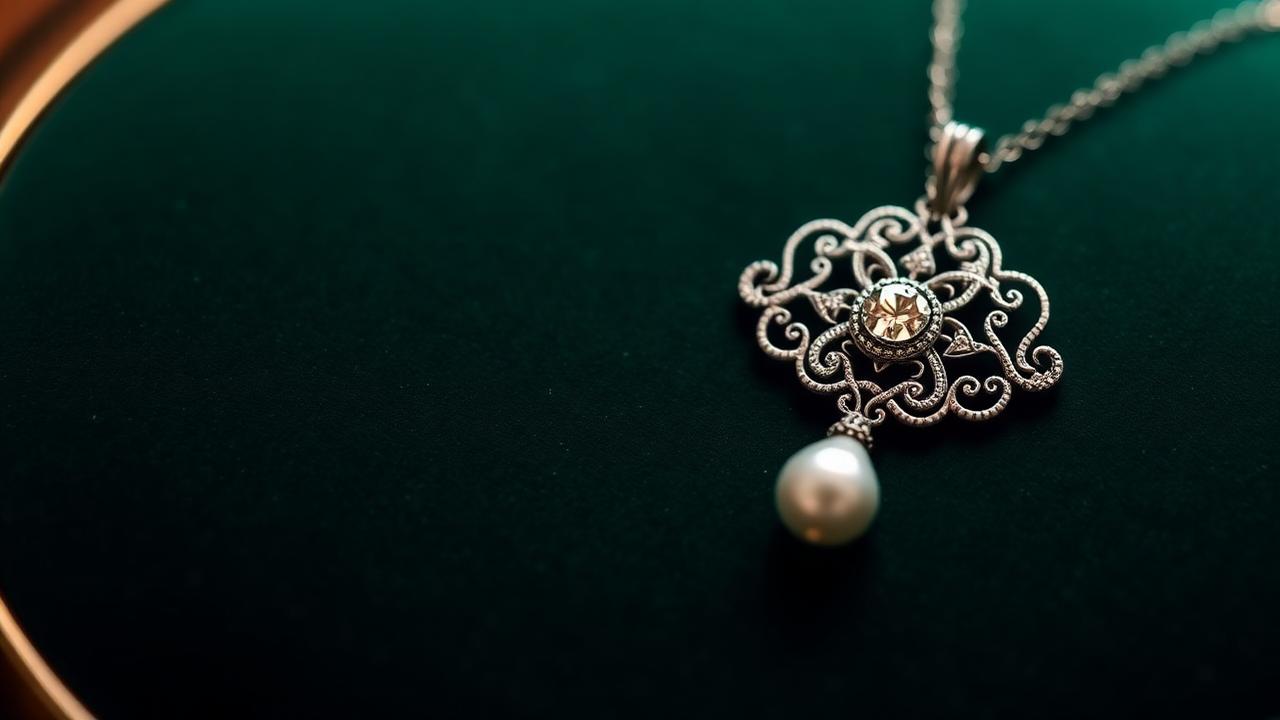
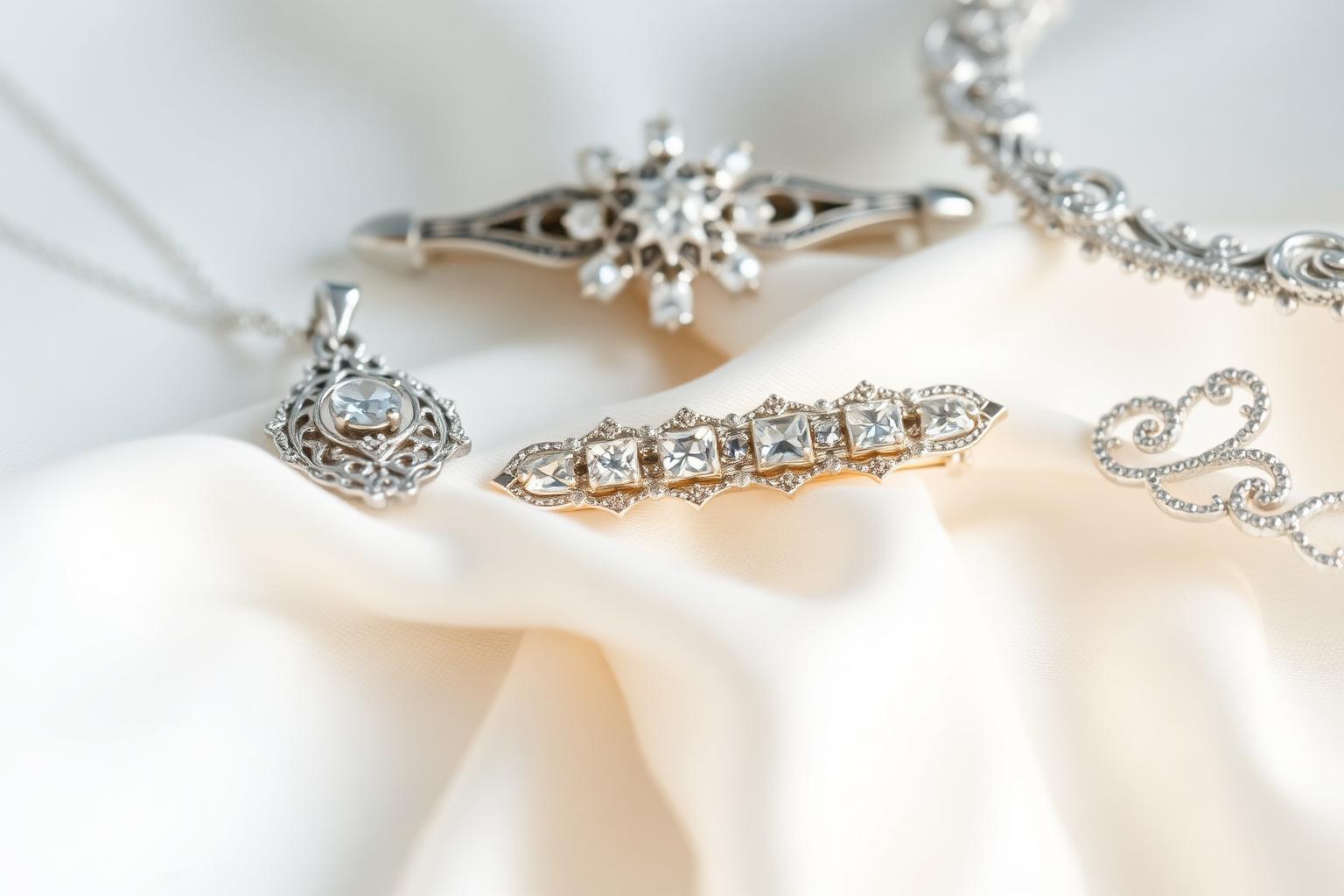
Platinum, always platinum — often on a gold base where direct skin contact or resilience is needed. The metal is greyish-white and retains its colour; white gold (which emerged after 1918 as a cheaper alternative) typically has a yellow undertone that is eliminated by rhodium plating. In authentic Edwardian work, this rhodium plating is absent, as white gold barely existed yet.
Millegrain — a border of tiny beads along a setting or design contour — is the signature of this period. Under a loupe, you will see regular, hand-applied beads; machine-made millegrain from later work appears more uniform.
Motifs are borrowed from the eighteenth century: garlands, bows (nœud motif), laurel wreaths, tassels. The symmetry is classic, the lines light and floating. Diamonds are rose cut or old European cut, natural pearls are preferably pear-shaped.
Platinum, always platinum — often on a gold base where direct skin contact or resilience is needed.