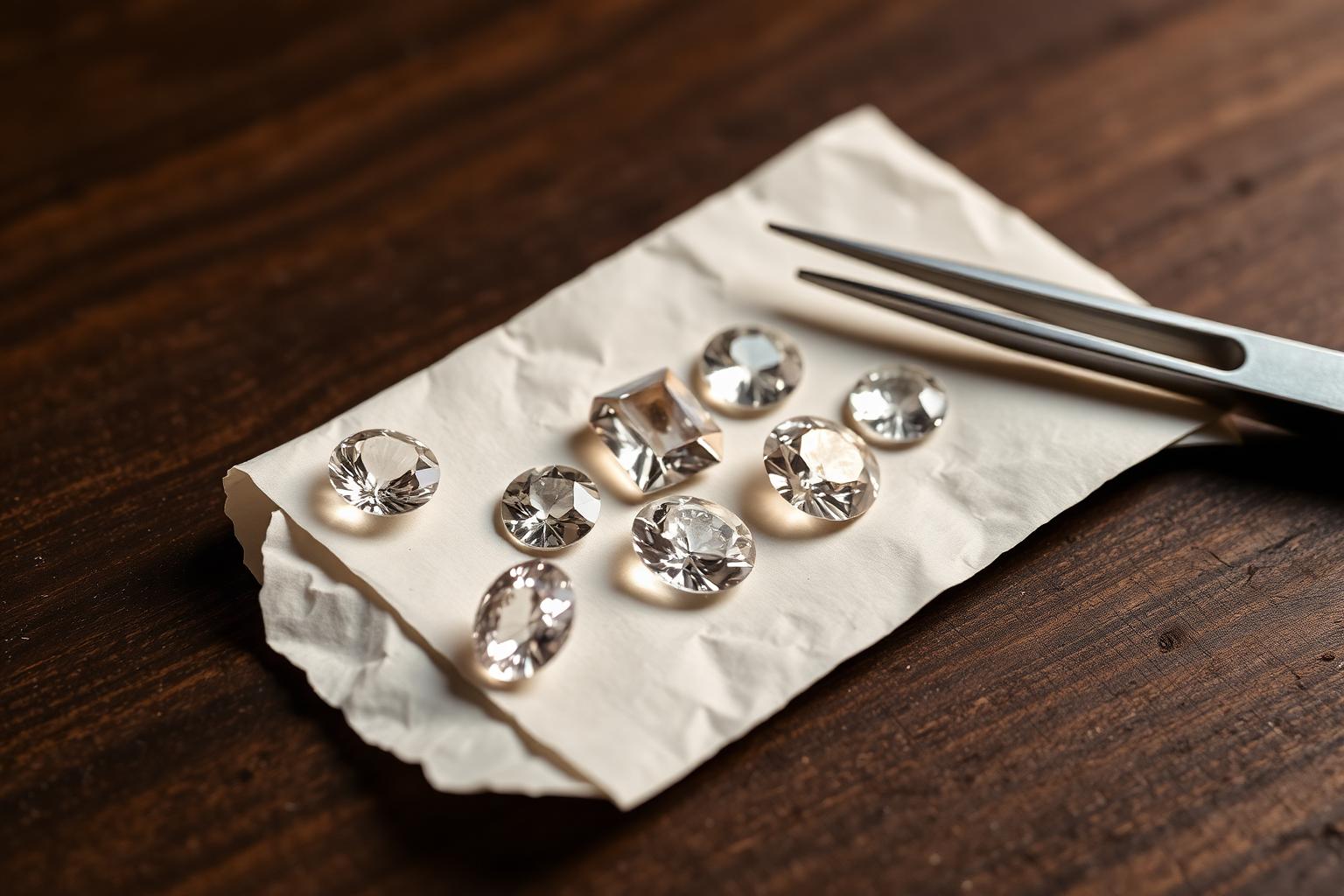
Why the cut dates more honestly than the setting
A mounting could easily be replaced: a broken shank, a modernisation in the 1930s, a new setting for an engagement proposal a generation later. The diamond or coloured gemstone remained virtually always the same and was re-used in the new setting. What you hold in your hand is therefore often a cross between two eras: a nineteenth-century gemstone in a twentieth-century setting, or vice versa.
The cut is the most robust dating indicator you have without a laboratory. Facet geometry, culet, and table size cannot be adjusted without extensive intervention — having a gemstone recut costs weight and always implies a visible alteration. By distinguishing successive generations of cuts, one can, with a loupe and a light, pinpoint the central period of each jewel to an accuracy of ten to twenty years.
A mounting could easily be replaced: a broken shank, a modernisation in the 1930s, a new setting for an engagement proposal a generation later.
Point cut and table cut — sixteenth and seventeenth century
The point cut is the earliest polished diamond cut we know. The rough octahedron of a diamond was polished but left in its natural shape: a pyramid with a square base. You can recognise it in early sixteenth-century rings, usually in yellow or rose gold, and in some surviving German and Flemish Renaissance rings. In the setting, you will see a small dark point facing upwards.
The table cut is the first deliberate intervention: the top of the pyramid is cut flat into a small square table, allowing light to enter directly. This cut dominated from approximately 1550 into the seventeenth century and appears on rings with enamel work (raised chatons) and on memento mori jewels. The gemstone appears dark with a square window of light in the centre — which is precisely the table facet.
Table cut in detail
The table cut has four main facets on the crown (sloping towards the table), four main facets on the pavilion, and a small square table. Later sixteenth-century tables also feature four star-shaped facets around the table. The gemstone is low and wide, with a cushion or square outline. In Amsterdam and Antwerp works, this cut persisted well into the seventeenth century, alongside the emergence of the rose cut.
Rose cut and its variations — 1500 to 1900
The rose cut has a flat bottom and a dome of triangular facets on top. The name refers to the bud shape of a closed rose. Rose cuts were developed from the late sixteenth century and remained popular well into the nineteenth — almost four centuries of continuous production, which makes dating solely by this cut impossible.
There are clearly distinguishable variations. The single rose (six-point rose, also known as rose recoupée) has six triangular facets and appears on small-work, stud earrings, and pavé work. The full Dutch rose has twenty-four facets in two rows — six pointed at the top, eighteen lower — and is the standard for finer eighteenth and nineteenth-century pieces from Amsterdam and Antwerp. The half Dutch rose has twelve facets in one row and is often found in Bohemian garnet work and Georgian silver work.
The double Dutch rose has two domes — one above, one below — instead of a flat bottom. This variation is particularly common in nineteenth-century memorial jewellery and larger silver work. The Antwerp rose is an intermediate variation with twelve facets and a slightly tapering outline.
Old mine cut — eighteenth to early twentieth century
The old mine cut is the first cut with true brilliant facet geometry: 57 facets (33 on the crown, 24 on the pavilion plus the culet). The outline retains the original cushion shape of the rough octahedron: square with rounded corners. The crown is high, the table small, and the culet — the point at the bottom — is not cut away but flattened into a small, flat facet.
In the setting, you will see a small dark square through the table: that is the culet visible from above. This is the most robust dating indicator in the entire history of gemstone cuts. Old mines virtually always date from before 1900. If you encounter an old mine in a modern setting, the gemstone is older than the jewel — a classic reset where the original diamond was retained.
Light returns slower and warmer from an old mine than from a modern brilliant. Under a regular household lamp, you will see broader flashes of light and more depth instead of sharp pinpoint scintillations.
Old European cut — 1890 to 1930
Around 1890, the outline of the cut became round instead of square: this is the old European cut. All other characteristics initially remained the same — high crown, small table, recognisable culet. This cut dominates Edwardian and art deco work until approximately 1930 and is therefore the quintessential gemstone of the 1890-1930 millennium for Western European and American work.
Late old Europeans (1920s) already have slightly larger tables and smaller culets — signalling the transition to the modern brilliant. Through the table, the culet then appears as a small dark dot instead of a square.
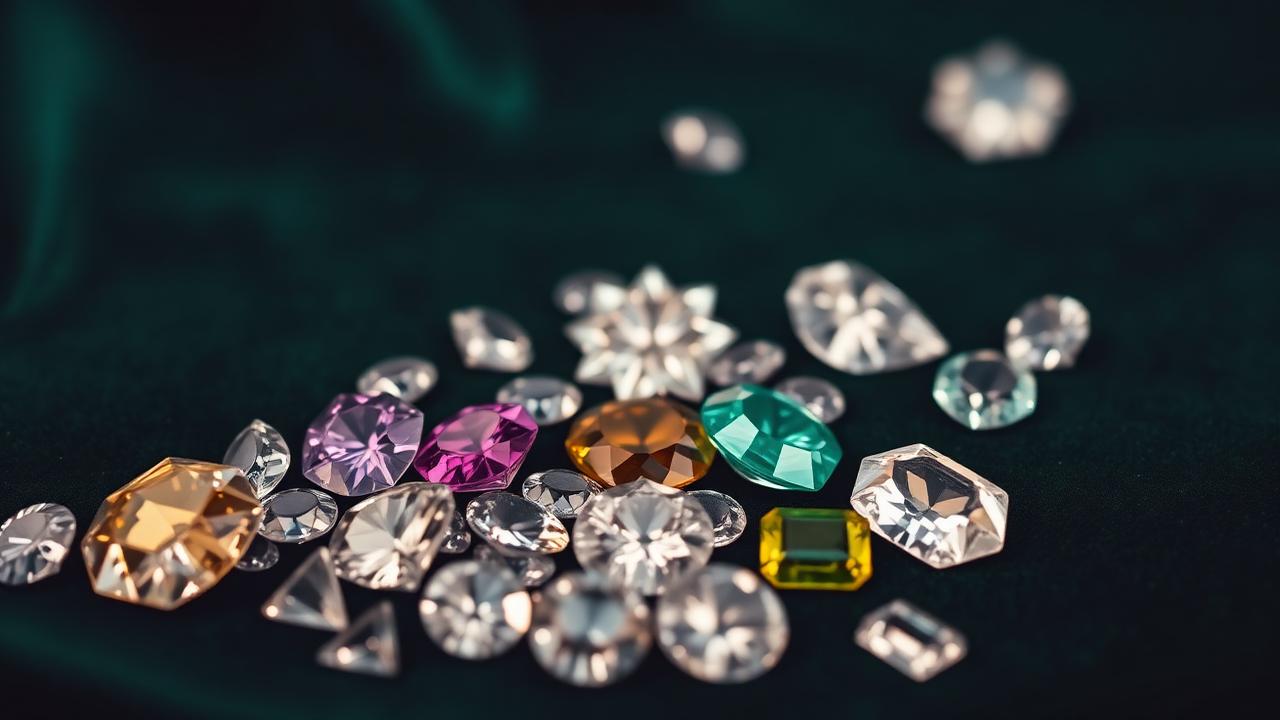
Transitional cuts — 1920 to 1940
Between the old European and the modern brilliant is an intermediate form that collectors call transitional. It has the round outline of the European, a larger table than its predecessor (around 50 per cent of the diameter instead of 40), and a significantly smaller culet. Often the culet is still present as a small dot — in later American transitionals, it disappears entirely.
Transitional cuts are rarer than both old Europeans and modern brilliants: it is a short production period of at most twenty years. They are sought after by collectors because they combine the crown glow of the European with a slightly more lively scintillation.
Modern brilliant — from 1919
In 1919, Marcel Tolkowsky published the mathematically ideal proportions for maximum brilliance: 57 or 58 facets, no culet, a larger table (approximately 53 to 60 per cent of the diameter), and a lower crown. This cut — today simply called 'brilliant' — spread from the late 1920s and became dominant after World War II. All standard engagement rings after 1950 feature this cut.
Recognise the modern brilliant by its perfectly symmetrical facets, broad table, and complete absence of a culet. Under a lamp, it produces sharp, short flashes of light instead of the warmer glow of its predecessors.
Fancy shapes in vintage context — baguette, marquise, emerald cut
Fancy shapes are all cuts that are not round. In a vintage context, three weigh heavily. The baguette — rectangular, with fourteen or eighteen step-facets — is the accent stone of art deco. Baguettes were developed in Parisian workshops from 1912 and are ubiquitous after 1925 in geometric deco brooches and watch settings. Early baguettes are often slightly irregular; the perfectly calibrated baguette dates from after World War II.
The marquise (or navette) — a pointed oval with fifty-five brilliant facets — has existed since the eighteenth century as a hand-cut unique piece, but the standardised marquise is a post-war development. Eighteenth-century marquises are irregular, with flatter outlines and visible culets.
The emerald cut — rectangular with stepped facets and bevelled corners — was originally developed for emeralds to prevent fracture due to tension. From approximately 1920, it was also applied to diamonds. An emerald cut in art deco work is almost always original to the jewel; in later work, it has remained a classic choice. For the four coloured vintage primary gemstones — sapphire, ruby, emerald, and opal — see the gemstone overview.
Marquise and emerald cut in image
The marquise has a sharp point at both ends and a slightly convex central part. In art nouveau work, the shape reappears as a 'marquise ring' where the gemstone field with pavé work or turquoise is rendered in the same pointed oval — without necessarily involving a marquise-cut central gemstone. For the context of this design language, see marquise ring in the motif register.
The emerald cut is higher on the side than a brilliant and has clearly stepped facets that form parallel plateaus. Light does not create flashes but broader streaks — 'the hall of mirrors effect', in collector's jargon.
Emerald cut in detail
In an emerald cut, the top view reveals three or four nesting rectangles following the step-cut from crown to table. Bevelled corners protect against chipping at the points. An emerald cut with sharp right-angle corners is almost certainly a modern intervention or a reproduction — vintage emeralds always have bevels.
Recognising a cut in three steps
This simple routine places most vintage gemstones in the correct century without a loupe or laboratory. Follow the steps in order — each step excludes several periods before you move to the next.
Recut gemstones — value and recognition
Up until the 1980s, a modern brilliant was considered 'better'. Thousands of old mines and old Europeans were lost under the polishing wheel: part of the weight is removed, the culet disappears, the facets are standardised. What remains is a modern brilliant with a history that is no longer visible.
Today, precisely the opposite is true: collectors pay a significant premium for original old cuts in original period settings. An original old European in an original art deco setting is sometimes two to three times more valuable than the same gemstone after recutting into a modern brilliant, even though the modern cut is technically 'more brilliant'.
You can recognise a recut gemstone by its proportions: too thin relative to the whole (weight lost), sometimes a slightly uneven outline, and almost always modern facet geometry in a setting clearly made for an older cut. The gaps between the gemstone and the setting are then the evidence. For the market context, see the value guide for old diamond cuts.
Recognising a cut in three steps
Place a vintage diamond or gemstone in the correct century without a loupe or laboratory.
-
Look through the table at the culet
Hold the gemstone directly over a light background. Do you see a small dark square or dot in the centre? If so, a culet is present — the gemstone almost certainly dates from before 1930. No culet and a perfectly symmetrical star: modern brilliant from 1930.
-
Assess the outline
Cushion shape (square with rounded corners) plus culet: old mine cut, eighteenth or nineteenth century. Round with culet: old European, 1890-1930. Round without culet: modern or transitional brilliant. Rectangular with step-facets: baguette or emerald cut, art deco or later.
-
Move the gemstone under a regular lamp
Slow, broad luminescence with a warm hue: old cut — old mine or old European. Bright, short flashes of light in the modern 'hearts-and-arrows' pattern: modern brilliant from circa 1950. Combine with steps 1 and 2 for certainty.
Overview in one table
| Cut | Period | Characteristic |
|---|---|---|
| Point cut | 1500–1600 | Pyramid with square base |
| Table cut | 1550–1700 | Flat square table on top |
| Rose cut (single/full/double) | 1550–1900 | Flat bottom, dome on top |
| Old mine cut | 1700–1900 | Cushion shape, square culet window |
| Old European cut | 1890–1930 | Round, high crown, small culet |
| Transitional cut | 1920–1940 | Round, larger table, mini-culet |
| Modern brilliant | 1930–now | 57 facets, no culet |
| Baguette | 1920–now | Rectangular, step-facets |
| Marquise (hand-cut) | 1750–1900 | Pointed oval, irregular |
| Marquise (standardised) | 1945–now | Pointed oval, brilliant facets |
| Emerald cut on diamond | 1920–now | Rectangle, stepped facets, bevels |
Periods are indicative; at the piece level, always combine with setting, clasp, and hallmark. Historical claims on this page have open fact-check status.