De waardefactoren
Een taxateur weegt bij deze categorie een vast aantal criteria. Hieronder leggen we ze uit, in de volgorde waarin ze doorgaans worden bekeken.
Signature and numbering
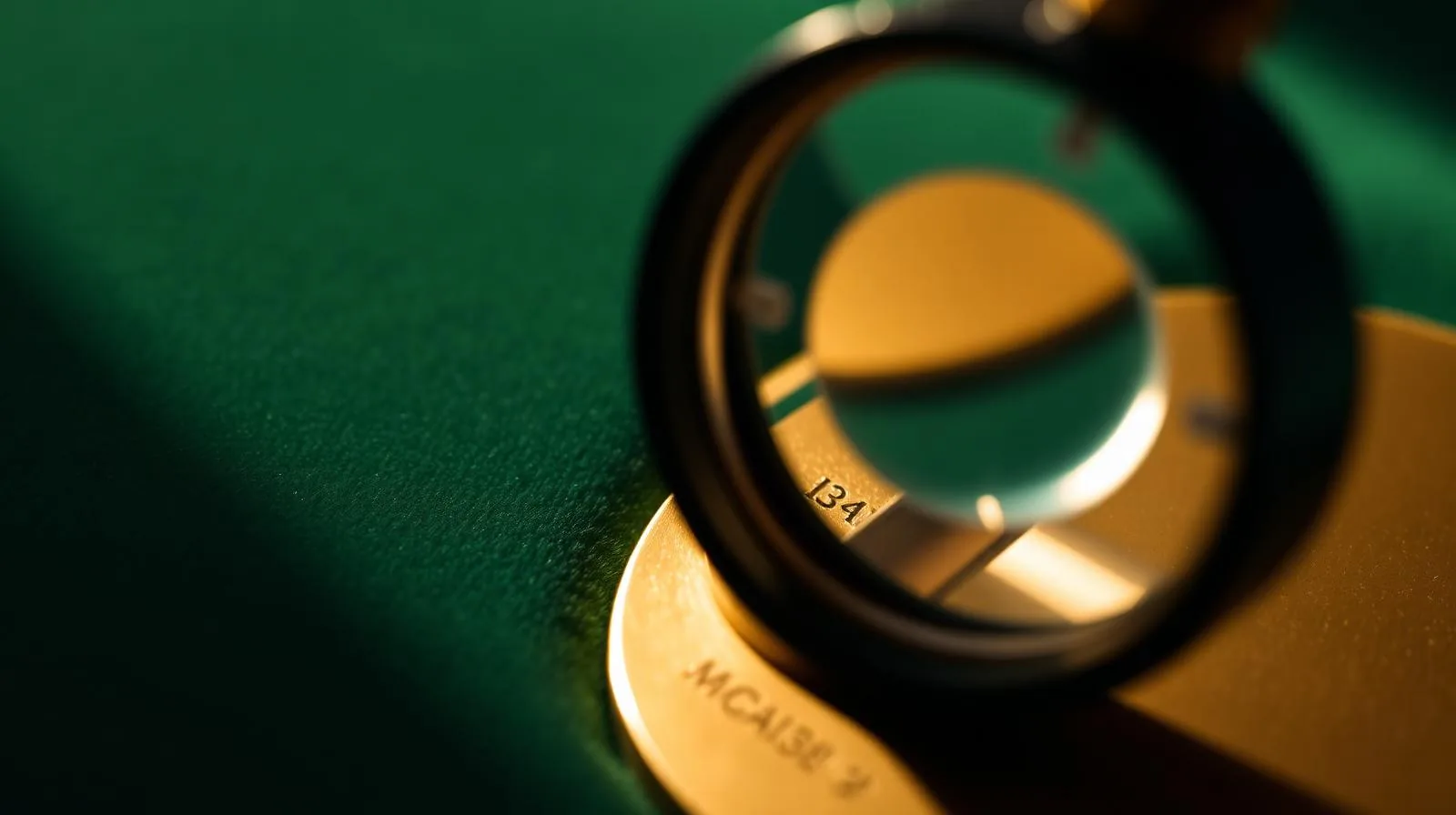
A genuine house signature consists of three to four elements: the brand name, a serial number, the metal hallmark, and (for earlier pieces) a maker's mark of the manufacturer who worked for the house. All these markings are small, precisely placed, and verifiable with a 10x loupe.
Counterfeit signatures are a real problem. They are often crooked, too coarsely engraved, or lack the serial number.
Verifiable provenance
House archives, old auction catalogues, and published monographs are the sources to confirm a signature. Serial numbers can be checked by the major houses for a fee — for pieces worth several thousand euros, this is an investment that pays for itself.
Provenance (demonstrable ownership history) through old appraisals, insurance, or family documentation works cumulatively: each additional piece of evidence strengthens the dossier.
Documentation and original box
Original box, original invoice, and (for larger pieces) a certificate of authenticity from the house weigh heavily. For modern collections (after 1970), this documentation is increasingly available; for art deco pieces from the 1920s, it is rare. So keep all paperwork that comes with a family heirloom — it is sometimes worth more than the jewel itself.
Factor 3–10 above unsigned
In practice, for comparable pieces (same metal, same stones, same period), we see a factor of three to ten between signed and unsigned. For iconic collection lines, this factor can be even higher. An unsigned piece from a major workshop is not worthless — it is appraised based on intrinsic and design value, without the signature premium.