VintageSieraden.nlKnowledge · provenance · value
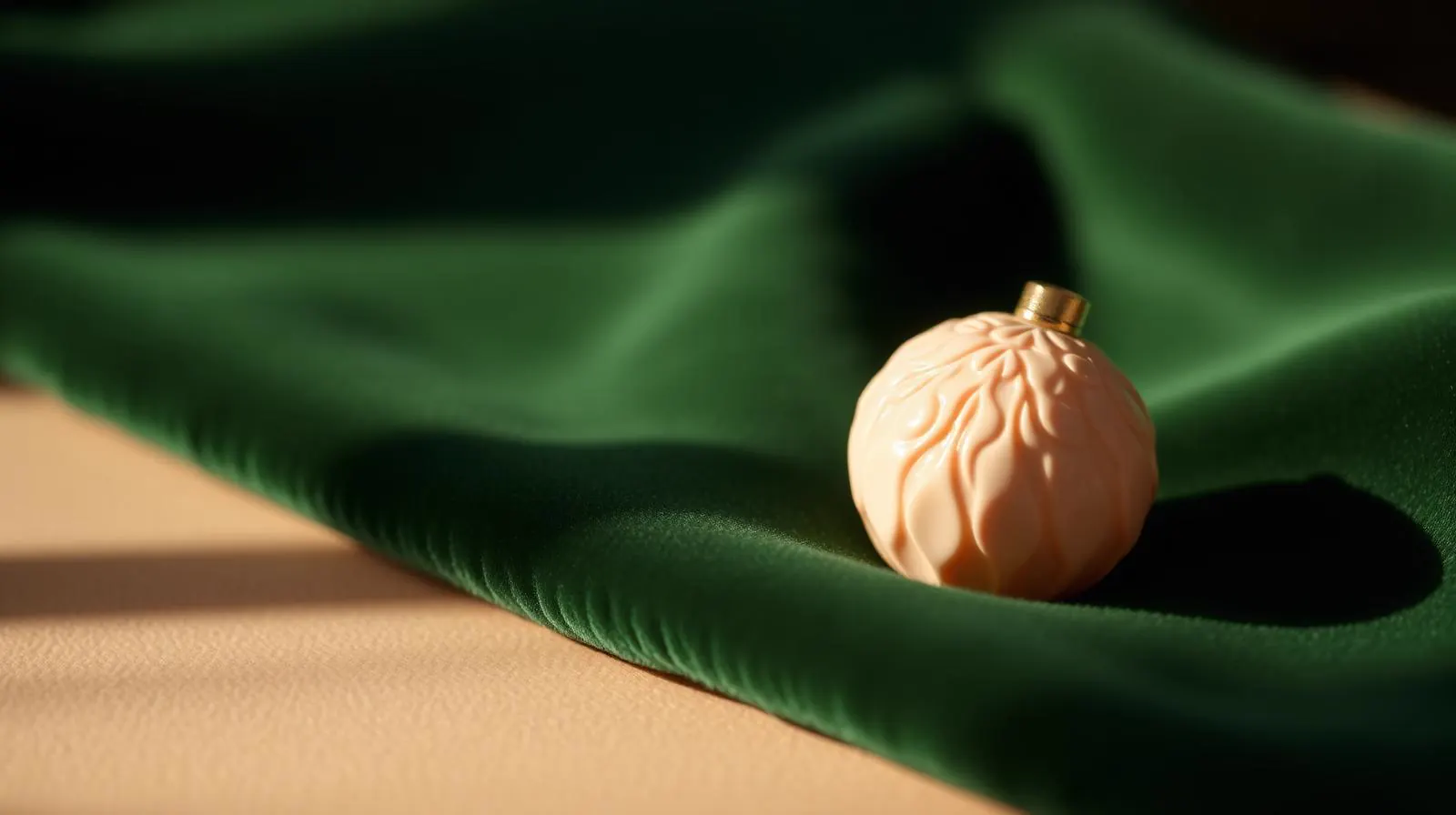
Klein guilloché-emaille objet met gouden montuur op flessengroen fluweel; sfeerbeeld, geen determinatievoorbeeld.
International masters
St Petersburg · pre-1917
Fabergé

Fabergé: het huis en de mythe

Door de redactie · Vakinhoudelijk getoetst · Bijgewerkt juli 2026

In St Petersburg around 1900, a network of workshops employing over five hundred goldsmiths and silversmiths worked for one house. The most visible end product — the Imperial Easter Eggs for the Romanov court — has since become world famous, but it is only a fraction of their production. What the house primarily produced were small utilitarian objects and jewellery for the Russian and European elite: cigarette cases, brooches, pendants, icons. After 1917, the house disappeared; what has since been called 'Fabergé' is almost never old, and what is old is almost never definitively from this house.

The house of Fabergé is one of the most complex categories for the vintage market — due to its reputation, the scope of its oeuvre, and the simultaneously enormous market of later copies, homages, and fanciful attributions. This guide describes what the house created and how to approach such pieces. We explicitly state that 'Fabergé' as a modern brand name is separate from the historical workshop before 1917.

In St Petersburg around 1900, a network of workshops employing over five hundred goldsmiths and silversmiths worked for one house.
Fabergé

Life and workshop

The house was founded in St Petersburg in 1842 by Gustav Fabergé and grew under his son Peter Carl Fabergé (1846–1920) to become a supplier to the Russian court and many European and Asian royal courts. At its peak, hundreds of craftsmen worked across specialised workshops (workmasters), with the most important also having their own maker's marks. This means a 'Fabergé' piece can typically bear two signatures: that of the house and that of the workmaster.

After the 1917 revolution, the house was nationalised in 1918 and the workshop closed; the family emigrated. Everything the house made in St Petersburg is, by definition, from before that date. Later uses of the name, commercial brands, and licenses are commercially separate phenomena that do not share a workshop with the historical production.
Recognising the style

The jewellery and trinkets of this house are characterised by an exceptionally high technical standard: guilloché enamel (machine-engraved metal with transparent enamel over it, making the underlying pattern luminous), very fine gem-setting in gold and platinum, inlaid mineral objects (rock crystal, jade, nephrite, agate), and fanciful forms — flowers on a mineral base, animal figurines, cigarette cases with surprise openings.

Stylistically, the work followed the dominant European fashions of 1880–1917, with a strong preference for historicising classicism and subtly applied art nouveau and art deco accents in later years. It is not a radically modern style but an extreme form of decorative refinement.

The jewellery and trinkets of this house are characterised by an exceptionally high technical standard: guilloché enamel (machine-engraved metal with transparent enamel over it, making the underlying pattern luminous), very fine gem-setting in gold and platinum, inlaid mineral objects (rock crystal, jade, nephrite, agate), and fanciful forms — flowers on a mineral base, animal figurines, cigarette cases with surprise openings.
Fabergé — stijl
Guilloché enamel jewellery on bottle-green velvet — atmospheric image, not a determination example.
Sfeerbeeld — atelier-impressie

Known pieces

The best-known pieces from this house — the Imperial Easter Eggs — are documented in several major public collections. For the vintage market, the jewellery production is more relevant.

  • Guilloché enamel pendant or locket

    Small worn jewel in gold with transparent enamel over an engraved base pattern, often with a central gemstone (diamond, sapphire, ruby). Guilloché is the core signature of the house and simultaneously the most difficult technique to convincingly fake.

  • Cigarette or calling card case

    Small utilitarian objects in gold or silver-gilt, with enamel or inlaid stonework. These are the most common original pieces found on the vintage market.

  • Flower on a mineral base

    Small table objects of a stylised flower (gold, enamel, gemstones) on a rock crystal or nephrite base, modelled after a specific botanical species. Exceptional as a category.

  • The Imperial Egg (as context)

    The Imperial Easter Eggs are a separate category of gifts for the Russian court — a series of documented pieces, almost all of which are in museums or identified private collections.

    Works from this series are described in the Fabergé Museum in St Petersburg, the Kremlin Museum, and the Virginia Museum of Fine Arts.

Naslag — toeschrijving

Signature and attribution

Original work typically bears the Cyrillic house mark, an 84 zolotnik fineness mark (for silver), or the usual Russian gold mark, plus the maker's mark of the relevant workmaster. The absence of one of these elements is a reason for caution, though not immediately for exclusion — but in the absence of all three, 'attribution' is almost always wishful thinking.

This category is one of the most faked in jewellery history. Even before 1917, unauthorised pieces were in circulation; after 1917, millions of 'Fabergé-style' objects were made, and modern commercial licensed pieces legally bear the name without representing a historical workshop. Anyone wishing to offer a piece as old work from this house needs independent expertise and documentation.

Collecting and value

For documented original work from the pre-1917 period, international auction prices range from a few thousand euros for a small brooch to millions for an Imperial Egg. For 'Fabergé-style' without documentation, the trade value is based on the intrinsic quality of the piece — good guilloché enamel and fine gold work have value even without the name.

Our advice is explicit: a 'Fabergé' without papers, auction catalogue reference, or an recognised expert appraisal report is not a 'Fabergé' for the vintage market — it is a well- or less well-executed piece in the style. Treat the name as a hypothesis until a specialist proves otherwise.

→ Signed pieces: value guide
Veelgestelde vragen

Wat lezers vaak vragen

I inherited an egg — is it real?

Almost certainly not. The Imperial series is described and located; millions of commercially made 'Fabergé-style' eggs exist. For an informed answer: show the piece to a specialist who understands the broader category.

What is guilloché enamel and why is it important?

Metal is first machine-engraved with a pattern, then covered with transparent enamel — which makes the pattern luminous when viewed. It is a difficult technique and therefore difficult to imitate; mediocre guilloché is one of the first signs that a piece is not old.

Is the modern brand name the same as the historical house?

Commercially, no. After the workshop closed, the name was used under various licenses; these pieces are legally legitimate but have no historical production link with the St Petersburg workshop from before 1917.

How do I recognise a good candidate for research?

A complete set of Russian hallmarks, a Cyrillic house mark, a workmaster's mark, an objectively high technical standard (guilloché, setting), and provenance documentation or a family history consistent with the type of piece. If two or three of these elements are present, then expertise is the logical next step.

Verder lezen

Curious what you have in your hands?

Twijfel je of een stuk uit dit atelier komt — of gewoon wat je precies in handen hebt? Stuur foto's; een specialist bekijkt het en adviseert binnen twee werkdagen over een logische vervolgroute.

Request free advice

Independent advice about what you have and your options — not a purchase offer, not a formal appraisal.

Andere makersgidsen
Voorschoten · Zeist · Zoetermeer
Van Kempen & Begeer
Amsterdam · Kalverstraat
Bonebakker
Amsterdamse School · Nieuwe Kunst
Frans Zwollo
Parijs · 1890–1930
René Lalique
Londen · Cymric · 1900–1910
Liberty & Archibald Knox
Den Haag · Hofleverancier
Steltman
Utrecht · 1856–1961
Edelsmederij Brom
Parijs · art nouveau
Georges Fouquet
Pforzheim ↔ Londen · 1896–1916
Murrle Bennett & Co.
Wenen · 1903–1932
Wiener Werkstätte
Kopenhagen · skønvirke
Deens zilver (skønvirke)
Vintagesieraden.nl is niet verbonden aan de genoemde makers, ateliers of hun rechtsopvolgers.