VintageSieraden.nlKnowledge · provenance · value
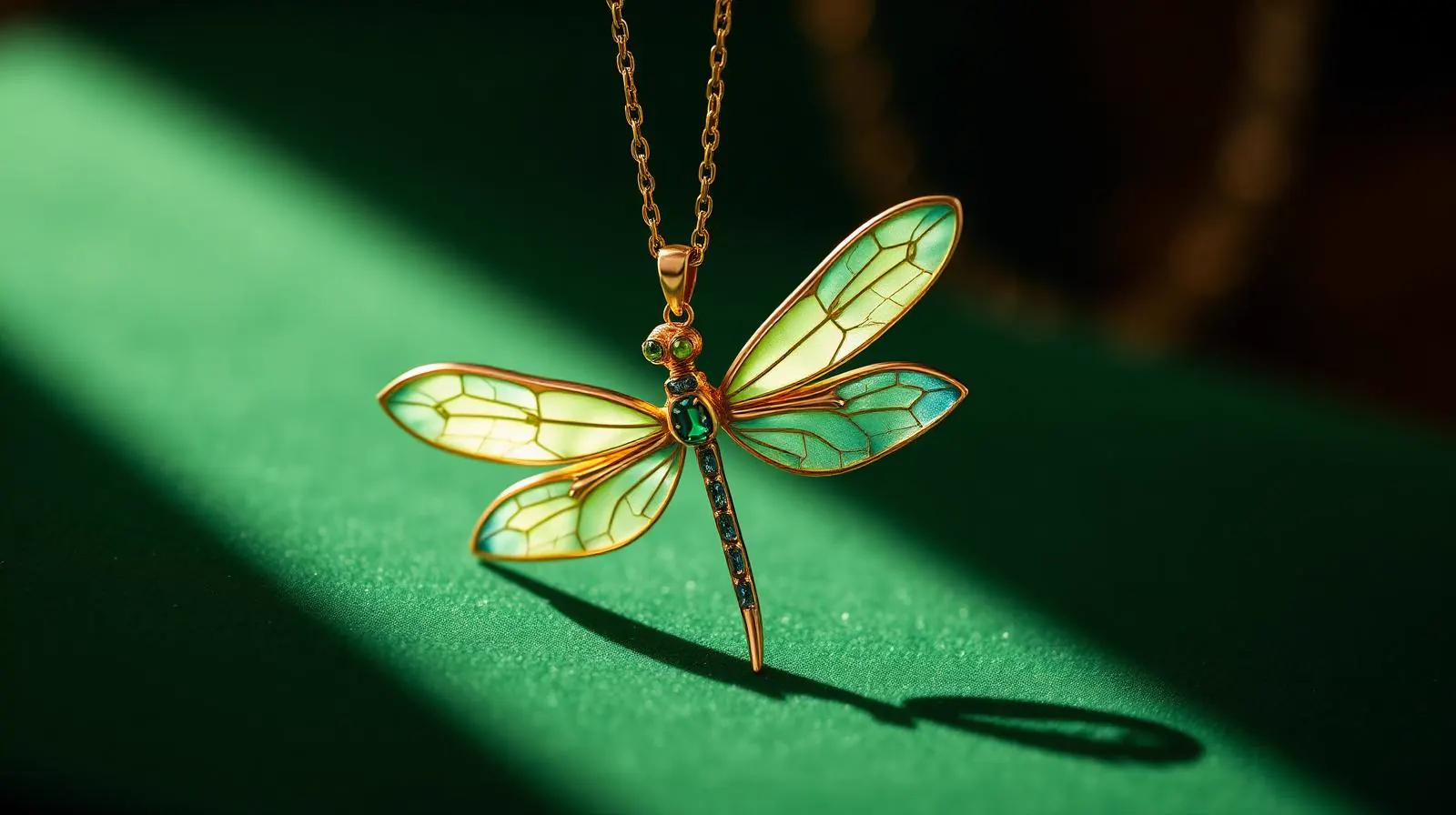
Art nouveau libelle-hanger met plique-à-jour vleugels op flessengroen fluweel; sfeerbeeld, geen determinatievoorbeeld.
International masters
Paris · 1890–1930
René Lalique

René Lalique: van juwelenkunst naar glas

Door de redactie · Vakinhoudelijk getoetst · Bijgewerkt juli 2026

In the Paris of around 1900, a jeweller worked in a workshop near the Cours-la-Reine, fundamentally disrupting his craft. Where colleagues continued to focus on large diamonds and classical motifs, he chose dragonflies with quartz wings, female figures in demi-relief, horn and enamel, opal and glass. At the 1900 World Exhibition, his display was a sensation — and forty years later, his work hung in museums around the world, while he himself had long since transitioned to glass art.

René Lalique (1860–1945) is one of the most definitive figures of French art nouveau. The jewellery period of his oeuvre — roughly 1890 to 1912 — is a standalone highlight in jewellery history; the later glass period is a separate discipline that belongs to decorative arts. This guide describes the jewellery side. Name only as text; many pieces from this oeuvre are documented in public collections, where you can see images of them.

In the Paris of around 1900, a jeweller worked in a workshop near the Cours-la-Reine, fundamentally disrupting his craft.
René Lalique

Life and workshop

Lalique studied in Paris and London, initially working for other Parisian jewellers and opening his own workshop in the 1880s. In the 1890s, he developed the idiom for which he became famous: jewellery in which the artist's hand and the motif were more important than the intrinsic value of the gemstones used. At the World Exhibition in Paris (1900), he presented a display that is retrospectively considered a turning point in French jewellery art.

From roughly 1912 onwards, he shifted his attention to glass design: perfume bottles, tableware, lighting, and car radiator ornaments. This glass line became his main activity after the First World War — and is the side most people associate with his name today. The jewellery period is therefore temporary and relatively short, which partly explains the scarcity and collectible value of his jewellery work.
Recognising the style

The jewellery work is immediately recognisable, both thematically and in terms of materials. Thematically: dragonflies (sometimes as female figures), peacocks, snakes (see also our guide to snake jewellery), butterflies, orchids, stylised female heads with long hair that defines the piece as line work. In terms of materials: an explicit preference for non-classical materials — horn, ivory, glass, opal, moonstones, plique-à-jour enamel — alongside and sometimes instead of diamond.

The compositions are asymmetrical and suggest movement. The metal (usually gold) serves as a support and line work, not the main feature. This is in direct contrast to contemporary haute joaillerie, where the stone is dominant and the metal provides technical support.

The jewellery work is immediately recognisable, both thematically and in terms of materials.
René Lalique — stijl
Art nouveau dragonfly pendant on bottle green velvet — atmospheric image, not an identification example.
Sfeerbeeld — atelier-impressie

Well-known pieces

Iconic pieces from this oeuvre are described and displayed in public collections. Below is a general description of the types; museum websites show the works themselves.

  • Dragonfly or woman-dragonfly brooch

    Large brooches in which a woman's body transitions into dragonfly wings of plique-à-jour enamel, with semi-precious gemstones as accents. Iconic for the idiom and highly sought after by collectors.

    Works from this category are documented in the collections of the Musée d'Orsay and the Museu Calouste Gulbenkian in Lisbon.

  • Female head pendant with long hair

    Pendants with a relief face where the hair forms the contour of the piece, often in yellow gold with opal or glass accents. Smaller in size, widely imitated — genuine work requires tactile comparison.

  • Tiara with botanical motif

    Large, sculptural tiaras with flowers, leaves, or fruits in horn and enamel. Exceptional as a category and almost always found in museums or documented private collections.

    Examples are included in the Musée des Arts Décoratifs (Paris) and the Victoria & Albert Museum (London).

  • Glass jewellery from the transitional period

    From the period when the maker transitioned to glass, there exists jewellery in which cast glass is the main material. This is a separate category between jewellery and glass object.

Naslag — toeschrijving

Signature and attribution

Jewellery work from this oeuvre is generally signed, but the signature is in discreet places and varies by period. For the jewellery period (before approx. 1912), the signature is usually incised on the back or along an edge; for the glasswork from the later period, there are multiple types of signatures that should not be confused with the jewellery period.

Attribution to the jewellery period is specialist work due to the extensive production by contemporaries in a similar idiom and the continuous history of forgeries. For this category, a reputable auction house with jewellery specialists is the standard, not an ordinary jeweller.

Collecting and value

Documented jewellery from the peak period of this oeuvre belongs to the most expensive segment of the art nouveau market and is almost exclusively traded at international auctions. Sales often reach hundreds of thousands of euros. Later and less central pieces from the same workshop are more affordable but still specialist material.

Be extremely careful with pieces offered as 'work of' without independent authentication. The name is one of the most forged in jewellery history.

→ Signed pieces in the value guide
Veelgestelde vragen

Wat lezers vaak vragen

Why did this maker use glass as a jewellery material?

For aesthetic rather than financial reasons: glass could be cast in colours and transparencies that were technically or financially unachievable with gemstones. It is a conscious choice of visual language over material value.

Is a signed piece from the glass period jewellery?

Usually not. The glasswork from the later period consists of decorative items (perfume bottles, vases, ornaments). There are jewellery objects from the transitional period, but these form a separate, small category.

How do I recognise modern copies?

By the metal quality (modern copies often use lighter, machine-worked metal), by the enamelling technique (plique-à-jour is technically demanding and rarely convincingly replicated), and by the signature position. Verification should be done by a specialist.

Can I safely buy such a piece online?

Only through auction houses with a jewellery department and explicit provenance. A marketplace purchase of a signed piece from this oeuvre is almost always a bad investment.

Verder lezen

Curious what you have in your hands?

Twijfel je of een stuk uit dit atelier komt — of gewoon wat je precies in handen hebt? Stuur foto's; een specialist bekijkt het en adviseert binnen twee werkdagen over een logische vervolgroute.

Request free advice

Independent advice about what you have and your options — not a purchase offer, not a formal appraisal.

Andere makersgidsen
Voorschoten · Zeist · Zoetermeer
Van Kempen & Begeer
Amsterdam · Kalverstraat
Bonebakker
Amsterdamse School · Nieuwe Kunst
Frans Zwollo
Sint-Petersburg · voor 1917
Fabergé
Londen · Cymric · 1900–1910
Liberty & Archibald Knox
Den Haag · Hofleverancier
Steltman
Utrecht · 1856–1961
Edelsmederij Brom
Parijs · art nouveau
Georges Fouquet
Pforzheim ↔ Londen · 1896–1916
Murrle Bennett & Co.
Wenen · 1903–1932
Wiener Werkstätte
Kopenhagen · skønvirke
Deens zilver (skønvirke)
Vintagesieraden.nl is niet verbonden aan de genoemde makers, ateliers of hun rechtsopvolgers.