VintageSieraden.nlKnowledge · provenance · value
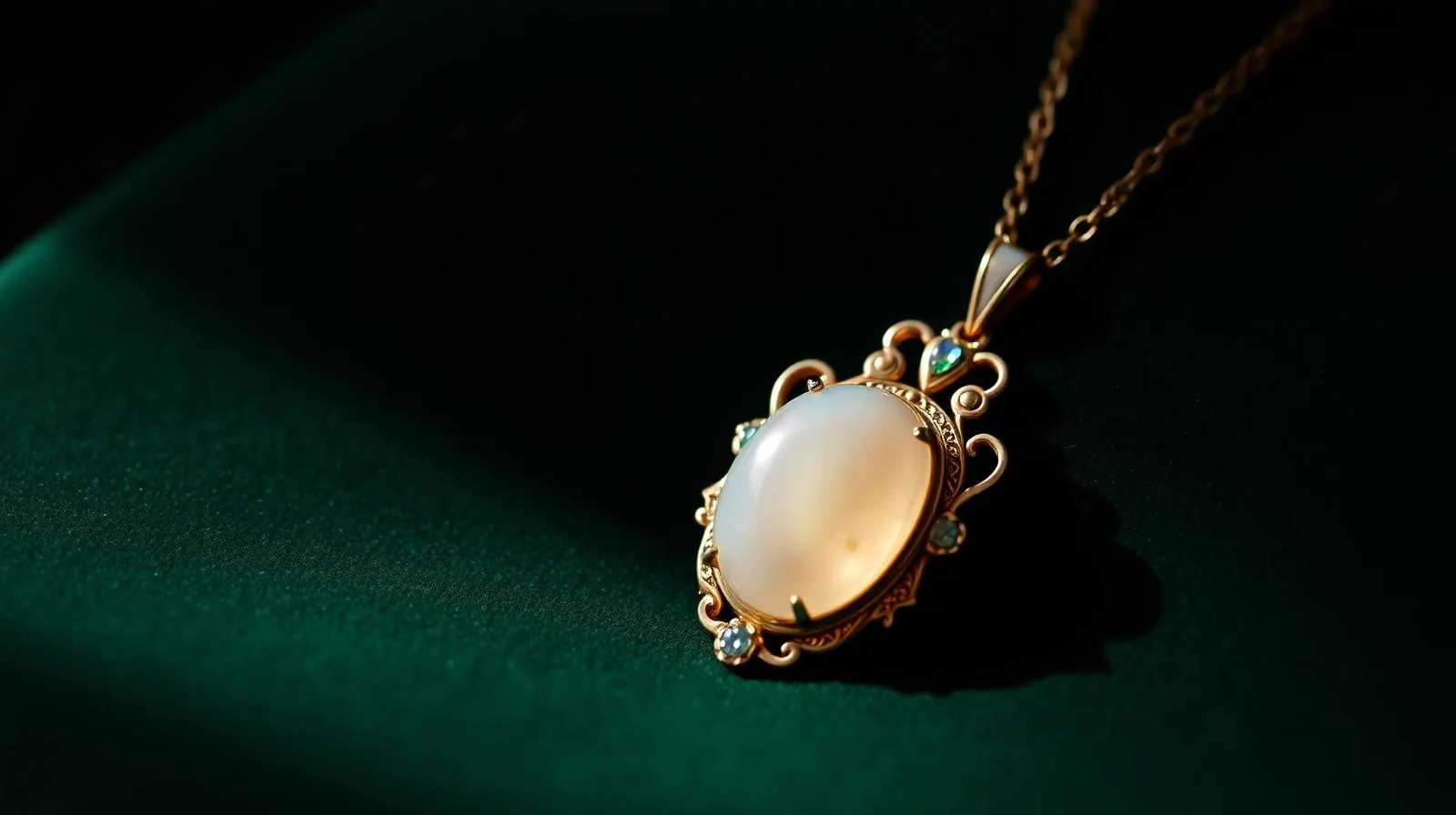
Belle époque gouden hanger met opaal-cabochon op flessengroen fluweel; sfeerbeeld, geen determinatievoorbeeld.
International masters
Paris · art nouveau
Georges Fouquet

Georges Fouquet: Parijse art-nouveau juwelier

Door de redactie · Vakinhoudelijk getoetst · Bijgewerkt juli 2026

In Paris around 1900, a jewellery shop opened on the rue Royale whose interior was a jewel in itself: a decor designed by Alfons Mucha, with curved wooden sliding panels, bronze serpent reliefs and stained-glass windows. Behind the display cases lay jewellery that conversed with that same decor: golden serpents coiling around a wrist, pendants with opal and plique-à-jour, brooches with female figures in half-relief. The jeweller who ran this establishment embraced art nouveau as his own language and, with a painter-poster artist, elevated it to a level of total art.

Georges Fouquet (1862–1957) is one of the key figures of Parisian art nouveau jewellery. He continued his father Alphonse's firm, shifted it to the new idiom in the 1890s, and from 1899 collaborated with the painter-poster artist Alfons Mucha, who designed both jewellery and the legendary shop interior for the house. This editorial guide describes that period at a general level and places the best-known pieces in their context. For the broader style history in which this name stands, we refer to our style guide on art nouveau.

In Paris around 1900, a jewellery shop opened on the rue Royale whose interior was a jewel in itself: a decor designed by Alfons Mucha, with curved wooden sliding panels, bronze serpent reliefs and stained-glass windows.
Georges Fouquet

Life and workshop

The Fouquet firm was founded in 1860 by Alphonse Fouquet in Paris. His son Georges took over the workshop and, in the 1890s, broke with the Neo-Renaissance style his father had cultivated. He oriented himself towards the new movement taking shape in Paris (with René Lalique as a leading figure) and developed his own variant: more theatrical, larger in size, and with a pronounced preference for the combination of enamel, opal, and baroque pearls.

His collaboration with Alfons Mucha began in 1899, when he asked Mucha to design jewellery for the actress Sarah Bernhardt. This collaboration produced, among other things, the so-called "Sarah Bernhardt bracelet" (1899): a golden serpent coiling around the wrist and fingers, attached to a ring by a chain. The piece was made for the role of Medea and remained so famous that Fouquet kept the model in production for years. In the same year, Mucha also designed the shop interior on the rue Royale, one of the most documented art nouveau interiors in Paris.

After the First World War, the firm moved with art deco. Georges' son Jean Fouquet took over much of the design work in the 1920s and positioned the house as one of the modernist voices within the deco period. For the art nouveau collecting market, however, the period 1895–1914 is particularly relevant.
Recognising the style

Work from this period is characterised by a theatrical scale (brooches and pendants are grand rather than modest), a pronounced colour palette (opal, yellow and green enamel, sapphire, semi-precious gemstones), and compositions in which a figurative motif (female figure, serpent, insect, plant form) determines the silhouette. The metal (usually gold, sometimes silver) serves as the support and linear work; the stone and the enamel provide the colour.

In the Mucha collaborations, the painter's influence is directly visible: flowing line work directly from his posters, female figures with long hair transitioning into tendrils, and a compositional logic that is more reminiscent of a painting than of traditional jeweller's work. In Fouquet’s own designs, the emphasis is slightly more on material experimentation (enamel, opal, baroque pearl) and less on figurative detail.

Compared to Lalique, Fouquet's work is explicitly more decorative in composition and less subtle in material use: where Lalique sought implicit symbolism with horn and glass, Fouquet chose richness and theatricality. Both are central to Parisian art nouveau and are described alongside each other in our style guide.

Work from this period is characterised by a theatrical scale (brooches and pendants are grand rather than modest), a pronounced colour palette (opal, yellow and green enamel, sapphire, semi-precious gemstones), and compositions in which a figurative motif (female figure, serpent, insect, plant form) determines the silhouette.
Georges Fouquet — stijl
Belle époque pendant with opal on bottle green velvet — mood image, not a determination example.
Sfeerbeeld — atelier-impressie

Known pieces

Iconic pieces by this firm have been described and displayed in public collections. Below is a general description of types; museum websites show the works themselves.

  • The Sarah Bernhardt serpent bracelet (1899)

    Designed by Alfons Mucha, in collaboration with Georges Fouquet. A golden serpent coiling around the wrist and fingers, executed with enamel and opal, connected by a golden chain to a ring. Made for Sarah Bernhardt in the role of Medea; the model remained in production for years afterwards.

    Documentation and variants are described at the Musée des Arts Décoratifs in Paris.

  • Large brooch with opal and plique-à-jour

    Brooches with a central figurative motif (female head, butterfly, plant) in a composition where plique-à-jour enamel makes the wings or leaves translucent. Characteristic of the theatrical scale the house aimed for.

  • Pendant with female figure and flowing hair

    Pendants with a relief face where the hair transitions into tendrils or flowers, in gold with enamel and opal. In this category, Mucha's influence is directly recognisable.

  • Rue Royale shop interior (1899, Mucha)

    The complete interior of the shop on rue Royale (sliding panels, windows, bronze decorations) has been preserved as a whole. Not a jewel, but the physical context in which the jewellery from this period was shown to clients.

    The interior has been reconstructed and is on display at the Musée Carnavalet in Paris.

Naslag — toeschrijving

Signature and attribution

Work from this house typically bears the signature "G. Fouquet" (sometimes as a monogram GF), supplemented by French fineness marks (eagle's head for 18-carat gold, mercury's head for smaller work or export, and the usual hallmarks). The signature is usually on the back or along a discreet edge. For Mucha designs, design documentation and original drawings also serve as an additional basis for attribution.

Attribution without a signature is risky. During the same period, several Parisian workshops worked in a related idiom (Lalique, Vever, Boucheron, Gautrait), and at auction, a mistaken attribution is not uncommon. For pieces in this category, a specialised international auction house with a jewellery department is the norm.

Collecting and value

Documented art nouveau work from this house belongs to the highest segment of the style period and is traded almost exclusively at international auctions. Returns for signed masterworks range from tens of thousands to hundreds of thousands of euros; iconic Mucha collaborations are above that level.

For smaller and less central pieces (more modest brooches, pendants, rings), the market is more affordable but still specialist material. Be very cautious with pieces offered as "work by" without independent authentication: as with Lalique, the name is one of the most counterfeited in jewellery history.

→ Art nouveau in the style guides
Veelgestelde vragen

Wat lezers vaak vragen

Was Mucha the resident designer of this house?

No. Mucha designed a limited number of pieces and the famous shop interior (1899). The other work came from the workshop itself, under the artistic direction of Georges Fouquet.

How does Fouquet differ from Lalique?

Both belong to Parisian art nouveau, but Fouquet is more theatrical in scale and more decorative in composition, while Lalique focuses more on subtle material use (horn, glass, plique-à-jour) and symbolic themes.

Is there still work by this firm in public collections?

Yes. Work is held in, among others, the Musée des Arts Décoratifs and the Musée Carnavalet (for the interior) in Paris. Current displays can be found on the museum websites themselves.

Is a signed "G. Fouquet" brooch always authentic?

No. Signatures are transferred and re-engraved; only a specialist assessment (in combination with material and technique verification) is proof.

Verder lezen

Curious what you have in your hands?

Twijfel je of een stuk uit dit atelier komt — of gewoon wat je precies in handen hebt? Stuur foto's; een specialist bekijkt het en adviseert binnen twee werkdagen over een logische vervolgroute.

Request free advice

Independent advice about what you have and your options — not a purchase offer, not a formal appraisal.

Andere makersgidsen
Voorschoten · Zeist · Zoetermeer
Van Kempen & Begeer
Amsterdam · Kalverstraat
Bonebakker
Amsterdamse School · Nieuwe Kunst
Frans Zwollo
Parijs · 1890–1930
René Lalique
Sint-Petersburg · voor 1917
Fabergé
Londen · Cymric · 1900–1910
Liberty & Archibald Knox
Den Haag · Hofleverancier
Steltman
Utrecht · 1856–1961
Edelsmederij Brom
Pforzheim ↔ Londen · 1896–1916
Murrle Bennett & Co.
Wenen · 1903–1932
Wiener Werkstätte
Kopenhagen · skønvirke
Deens zilver (skønvirke)
Vintagesieraden.nl is niet verbonden aan de genoemde makers, ateliers of hun rechtsopvolgers.