VintageSieraden.nlKnowledge · provenance · value
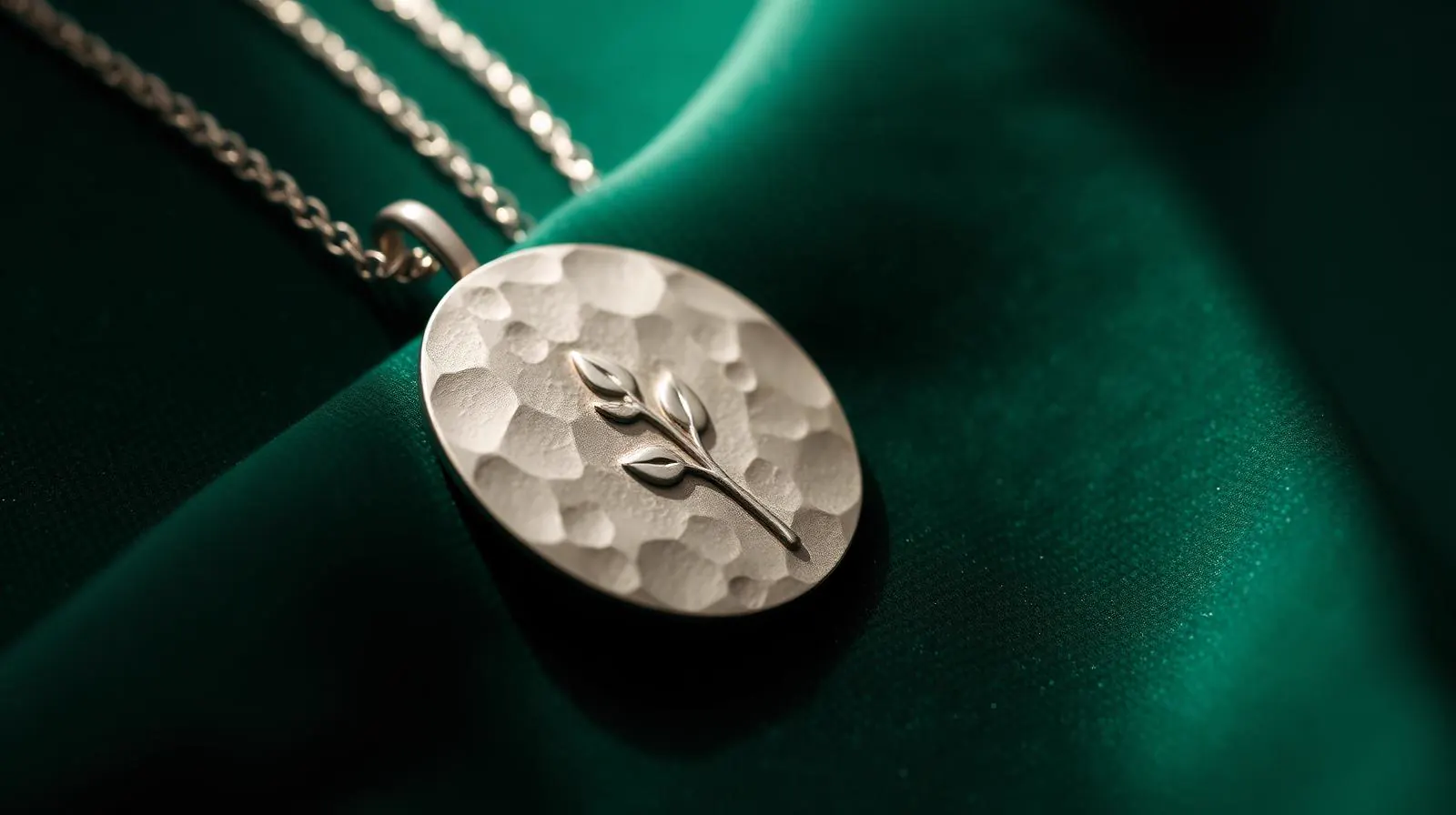
Handgehamerde zilveren hanger in Nieuwe Kunst-idioom op flessengroen fluweel; sfeerbeeld, geen determinatievoorbeeld.
Dutch makers
Amsterdam School · Nieuwe Kunst
Frans Zwollo

Frans Zwollo: edelsmid van de Nieuwe Kunst

Door de redactie · Vakinhoudelijk getoetst · Bijgewerkt juli 2026

In an Amsterdam workshop around 1900, the sound of a hammer on a steel anvil rings out: a silver sheet is not cast or pressed, but raised — millimeter by millimeter lifted from a single flat disc until it takes the form of a bowl or a handle. What is happening here is an explicit stance against the factory production dominating the Dutch market at that time. This goldsmith wants you to be able to see from the piece that a hand made it.

Frans Zwollo Sr. stands on the Dutch side of the broader European Arts and Crafts movement: hand-raised goldsmith work as a conscious counter-movement against factory-made silver. This guide describes his position in Nieuwe Kunst and the Amsterdam School and provides the context to interpret work attributed to him. Name only as text; attribution is specialist work.

In an Amsterdam workshop around 1900, the sound of a hammer on a steel anvil rings out: a silver sheet is not cast or pressed, but raised — millimeter by millimeter lifted from a single flat disc until it takes the form of a bowl or a handle.
Frans Zwollo

Life and workshop

Frans Zwollo Sr. (1872–1945) learned the goldsmith's craft in the Dutch tradition and, influenced by Nieuwe Kunst (the Dutch art nouveau idiom), developed into one of the most important independent goldsmiths of his generation. He worked in Amsterdam and later in Haarlem, taught, and had apprentices who furthered hand-raised work.

His son Frans Zwollo Jr. worked in a related direction — the family line is relevant for the vintage market because work from both generations is traded in the same category and sometimes gets mixed up. Attribution to senior or junior requires archive and signature knowledge.
Recognising the style

Hand-raised work in silver or, less often, in copper — usually with visible hammer marks as an explicit signature of the hand craftsmanship. The shapes are organic and stylised, with a preference for floral motifs, leaf forms, and sometimes figurative accents that align with the broader art nouveau style. In contrast to more elaborate French art nouveau, Dutch work often remains simpler in composition: one strong motif, one carefully modelled form.

Materials: predominantly silver of Dutch fineness (925/1000), sometimes with enamel or inlaid semi-precious gemstones (blood coral, agate, opal). Brooches and buckles are common, less often necklaces or rings — the formal language is better suited to flatwork.

Hand-raised work in silver or, less often, in copper — usually with visible hammer marks as an explicit signature of the hand craftsmanship.
Frans Zwollo — stijl
Hand-hammered silver in Nieuwe Kunst idiom on bottle-green velvet — atmospheric image, not an example for identification.
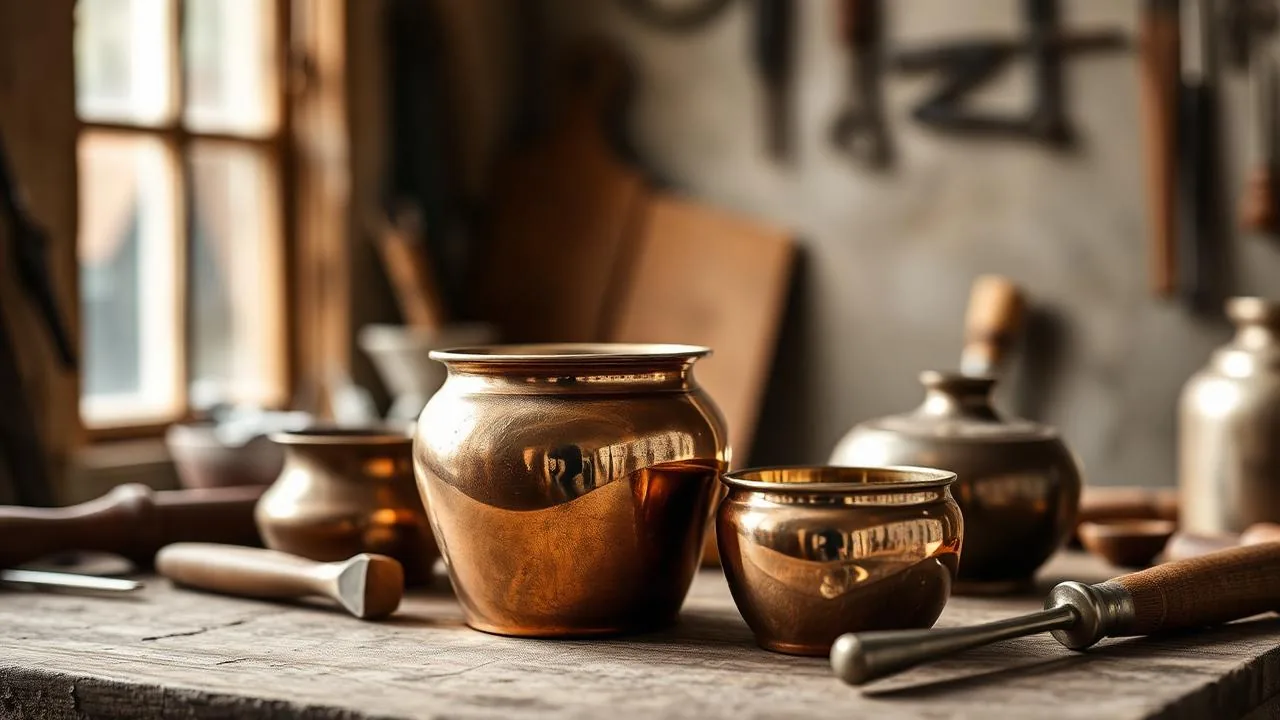
Sfeerbeeld — atelier-impressie

Well-known pieces

Work from this oeuvre is held in Dutch museum collections. Below is a general description of categories.

  • Hand-raised silver brooch with floral motif

    Rectangular or oval flatwork in which a stylised flower or leaf emerges with visible hammer marks. Sometimes with a central semi-precious stone in a simple setting.

    Work in this style can be found in the collections of the Rijksmuseum and the Drents Museum.

  • Belt buckle or clasp

    Silver belt buckles with organic edges — a popular genre in Nieuwe Kunst, where the functional object was seen as a vehicle for artistry.

  • Silver utilitarian object

    Bowls, coffee pots, and trays in the same hand-raised technique as the jewellery — the distinction between 'jewel' and 'utilitarian silver' is, in principle, not great with this goldsmith.

Naslag — toeschrijving

Signature and attribution

Work from this oeuvre generally bears a maker's mark plus the usual Dutch hallmarks, and sometimes a monogram. The signature is in inconspicuous places and is not always immediately legible — this is normal for hand-raised work from this tradition.

Distinction between senior and junior is made via maker's marks and, where present, date letter — plus stylistic characteristics that only a specialist with tactile comparison can reliably assess. In case of doubt, 'Dutch Nieuwe Kunst, Zwollo circle' is a more responsible designation than a firm attribution.

Collecting and value

Hand-raised Nieuwe Kunst work has its own active collecting market in the Netherlands and internationally. The value is determined by the certainty of attribution, the composition, and the condition — with a strong preference for untouched hand-raised surfaces (no later polishing layers that remove the hammer marks).

For this category, an independent specialist with knowledge of Dutch Nieuwe Kunst is the designated route; general jewellers rarely value this market accurately.

→ Art nouveau in the style guides
Veelgestelde vragen

Wat lezers vaak vragen

Why are hammer marks important?

They are proof of hand craftsmanship. Factory-made work is pressed or rolled, resulting in a smooth surface. Hand-raised work leaves the hammer marks visible — often intentionally. A later 'polished away' surface destroys that visual signature.

How do I distinguish this work from factory-made art nouveau?

Factory art nouveau is usually produced in larger series, with smoother surfaces and factory stamps. Hand-raised work is unique or produced in very small series, with visible working marks and an individual maker's mark.

Is Dutch Nieuwe Kunst work rare?

Compared to French or Belgian art nouveau, the oeuvre is small, which enhances the collecting value per piece. But rare also means a lot of stylised work by contemporaries is wrongly attributed to well-known names.

Can I polish this work?

No, not without a specialist. Chemical cleaning or machine polishing removes its character. A soft cloth and, if necessary, a light bath in lukewarm water with some household soap is the maximum — beyond that, a restoration workshop is the appropriate route.

Verder lezen

Curious what you have in your hands?

Twijfel je of een stuk uit dit atelier komt — of gewoon wat je precies in handen hebt? Stuur foto's; een specialist bekijkt het en adviseert binnen twee werkdagen over een logische vervolgroute.

Request free advice

Independent advice about what you have and your options — not a purchase offer, not a formal appraisal.

Andere makersgidsen
Voorschoten · Zeist · Zoetermeer
Van Kempen & Begeer
Amsterdam · Kalverstraat
Bonebakker
Parijs · 1890–1930
René Lalique
Sint-Petersburg · voor 1917
Fabergé
Londen · Cymric · 1900–1910
Liberty & Archibald Knox
Den Haag · Hofleverancier
Steltman
Utrecht · 1856–1961
Edelsmederij Brom
Parijs · art nouveau
Georges Fouquet
Pforzheim ↔ Londen · 1896–1916
Murrle Bennett & Co.
Wenen · 1903–1932
Wiener Werkstätte
Kopenhagen · skønvirke
Deens zilver (skønvirke)
Vintagesieraden.nl is niet verbonden aan de genoemde makers, ateliers of hun rechtsopvolgers.