VintageSieraden.nlKnowledge · provenance · value
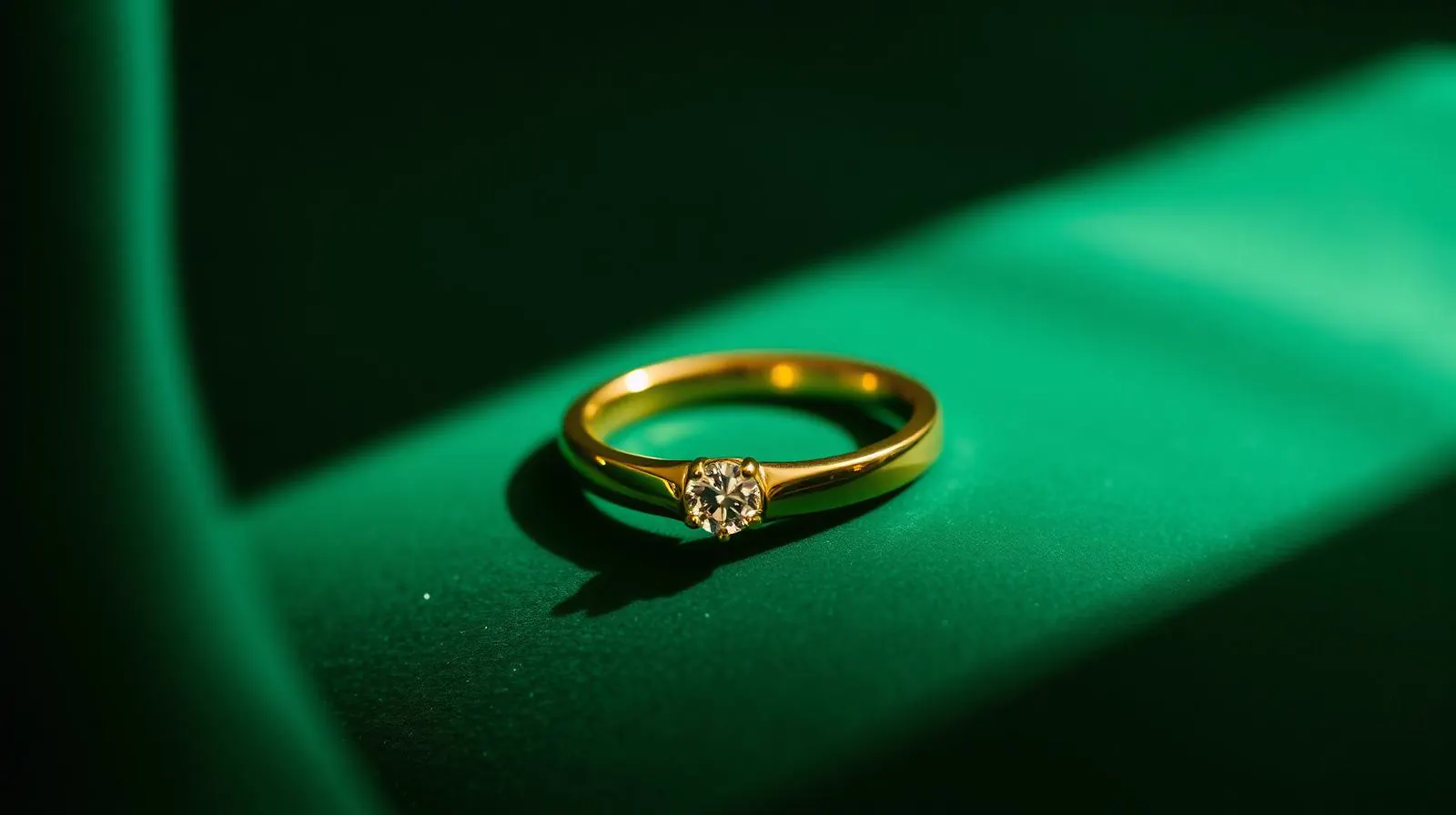
Modernistische gouden band met briljant op flessengroen fluweel; sfeerbeeld, geen determinatievoorbeeld.
Dutch makers
The Hague · Royal Warrant Holder
Steltman

Steltman: Haags juweliershuis met hofconnectie

Door de redactie · Vakinhoudelijk getoetst · Bijgewerkt juli 2026

In one of the stately buildings in The Hague city centre, at the beginning of the twentieth century, a jewellery shop window opened, positioning itself immediately differently from its Amsterdam counterparts. While Amsterdam catered to trade and the stock exchange, The Hague focused on the court, the diplomatic world, and the governing elite. Engagement rings lay alongside insignia of orders, necklaces next to presentation boxes; behind the shop, commissions were executed which often went unnoticed in the country but, decades later, became visible in the heirlooms that returned to The Hague for appraisal.

Steltman is a Hague jeweller with a long history, a pronounced royal connection and, for the jewellery connoisseur, a name primarily associated with one famous ring design: the so-called Steltman-ring. This editorial guide describes the firm on a general level, places that ring design in its context, and provides the reading context to recognise work from this tradition in the vintage market. We mention the name exclusively as text and do not display house brands; attribution of an individual piece is work for an independent specialist with auction experience.

In one of the stately buildings in The Hague city centre, at the beginning of the twentieth century, a jewellery shop window opened, positioning itself immediately differently from its Amsterdam counterparts.
Steltman

Life and workshop

The firm originated in The Hague in the first half of the twentieth century and, from that moment on, established a position among the established Hague jewellers. The city itself provided the clients: members of the court, ministerial guests, envoys, and the Hague bourgeoisie who wore a jewel adapted to the occasion at official events. For such commissions, The Hague was a logical location, as the shop was close to the client and adjustments (size changes, new settings, commemorative engravings) could be carried out quickly.

The firm holds the title of Royal Warrant Holder, which in the Netherlands is a restricted and periodically reviewed distinction. This designation does not mean that every piece from this shop was executed as royal work; it does mean that the shop has dealt with commissions from that quarter over the years, and that the workshop was familiar with the demands placed on representational work: calm composition, durable settings, and a finish that looks, in the long term, as it did upon initial presentation.

For the vintage market, the firm today is primarily a source of jewellery from the period 1920–1970: engagement rings, necklaces, insignia of orders, and typical civil jewels for special occasions. Later work from the same name exists but falls outside the scope of this guide.
Recognising the style

There is no unambiguous house style in the sense of one recognisable motif. What characterises the work is execution quality within the prevailing styles of its time: art deco in the interbellum, modest retro style in the 1940s and 1950s, and later more streamlined modernism. The common thread is in the finish: calm mounting, precise setting, attention to the back of brooches and pendants (where often repoussé or openwork is applied that you only see when you turn the piece over).

Materials follow the pattern of comparable Dutch jewellery houses: 18-carat gold for the better series, platinum for the art deco line with diamond, and 14-carat for the broader middle-class production. For gemstones, the preference is classic: diamonds in antique cuts (see our cut guide), ruby, sapphire, emerald, and natural pearls. Semi-precious gemstone work occurs in commemorative pieces.

The Hague location also implies a certain taste: somewhat more restrained than its Amsterdam counterpart, with less emphasis on visible bling and more on technique that you feel when wearing it. This aligns with the city's identity and explains why this name is often mentioned in appraisals in the same breath as other Hague jewellers from the same period.

There is no unambiguous house style in the sense of one recognisable motif.
Steltman — stijl
Modernist gold band with diamond on bottle-green velvet — mood image, not an identification example.
Sfeerbeeld — atelier-impressie

Known pieces

From this firm, the best-known design category is the so-called Steltman-ring, to which the company name is most often linked by outsiders. The descriptions below are types, not catalogue numbers.

  • The Steltman-ring

    An elongated ring with two stacked stones placed lengthwise along the finger (classically: two equal or slightly unequal brilliants in a polished platinum or gold setting). The ring is known for its horizontal silhouette, pressed against the back of the hand, and its remarkably restrained lines; it is one of the few twentieth-century Dutch ring designs mentioned as a name-ring in broader jewellery trade literature. Later variants from the same firm and interpretations by other workshops exist; for unambiguous attribution, the firm's signature and original documentation are the basis.

  • Classic setting engagement and wedding ring

    Solitaires and three-stone rings in the common settings of their time, executed with the care expected from an established firm. For the vintage market, these are the most frequently encountered pieces from the firm.

  • Occasion brooch and necklace

    Flower-shaped brooches, necklaces with a central pendant, dress studs and cufflinks for gentlemen, and commemorative pieces for an anniversary or promotion. In appraisals often recognisable by the combination of a firm's signature and a contemporary engraving on the reverse.

  • Insignia of orders and decorations

    Execution and mounting work for Dutch orders of chivalry and commemorative medals. This category is less relevant for the regular jewellery market but is typical for the firm's position within The Hague's representational circuit.

Naslag — toeschrijving

Signature and attribution

Work from this firm generally bears the firm's signature, Dutch fineness and hallmarks and, on older pieces, a date letter from which the period of manufacture can be read. The signature is usually on the inside of a ring, the back of a brooch, or on the clasp of a necklace. On engagement rings, the signature may be worn away by daily wear; in that case, an original box or purchase receipt is a strong indication that should be weighed alongside the style.

For the Steltman-ring, in addition to original examples, variants and interpretations exist that adopt the design language without originating from this firm. If a seller uses the designation "Steltman-model" or "in the style of," an explicit explanation should be provided; if this is missing, caution is advised.

Collecting and value

For documented work from this firm, there is a clear premium in the vintage market above unsigned work of comparable quality. This premium is modest for common silver and engagement rings, and more significant for the distinctive Steltman-ring in good condition, for which a separate collecting market exists.

For sale, The Hague auction circuit is a logical first channel, followed by specialist jewellers in the region. For better Hague addresses (shops, workshops, and auction partners in the immediate vicinity), we refer to our guide for The Hague; that page belongs to this maker's guide as a practical counterpart.

→ The Hague jewellers and selling addresses
Veelgestelde vragen

Wat lezers vaak vragen

What makes the Steltman-ring so recognisable?

The horizontal placement of two stones lengthwise along the finger, in a calm, polished setting. The silhouette rests against the back of the hand and appears flat; this is unusual for a classic ring and creates an instantly recognisable shape.

Is every two-stone ring in that shape a Steltman?

No. The shape has been adopted by multiple workshops; only examples with a firm's signature and, preferably, original documentation may be offered as such.

Did this firm only make rings?

No. It is a full-fledged jeweller with a broad production of rings, brooches, necklaces, insignia of orders, and commemorative pieces. The ring's name has simply become more visible to outsiders than the rest of the oeuvre.

Where is the best place to sell a documented Hague jewel?

At an auction house or specialised jeweller with knowledge of The Hague market. Our page for The Hague provides a selected entry point for this.

Verder lezen

Curious what you have in your hands?

Twijfel je of een stuk uit dit atelier komt — of gewoon wat je precies in handen hebt? Stuur foto's; een specialist bekijkt het en adviseert binnen twee werkdagen over een logische vervolgroute.

Request free advice

Independent advice about what you have and your options — not a purchase offer, not a formal appraisal.

Andere makersgidsen
Voorschoten · Zeist · Zoetermeer
Van Kempen & Begeer
Amsterdam · Kalverstraat
Bonebakker
Amsterdamse School · Nieuwe Kunst
Frans Zwollo
Parijs · 1890–1930
René Lalique
Sint-Petersburg · voor 1917
Fabergé
Londen · Cymric · 1900–1910
Liberty & Archibald Knox
Utrecht · 1856–1961
Edelsmederij Brom
Parijs · art nouveau
Georges Fouquet
Pforzheim ↔ Londen · 1896–1916
Murrle Bennett & Co.
Wenen · 1903–1932
Wiener Werkstätte
Kopenhagen · skønvirke
Deens zilver (skønvirke)
Vintagesieraden.nl is niet verbonden aan de genoemde makers, ateliers of hun rechtsopvolgers.